


Leveraging Middle Powers
Leveraging Middle Powers
By Mehmet Enes Beşer
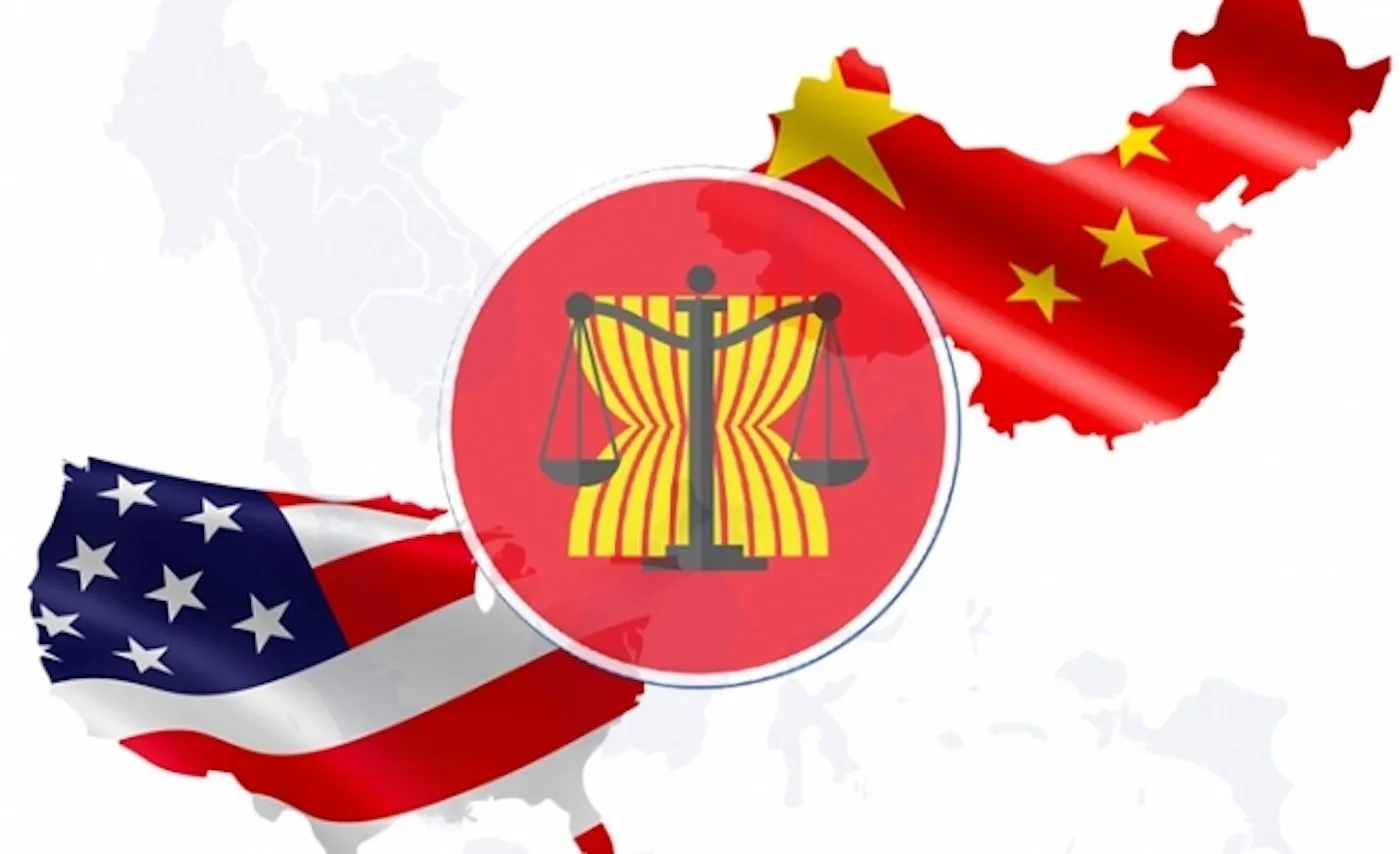
Southeast Asia is uncomfortably in the middle of 21st-century great power rivalry. China-US competition speeding up with military interventions, economic decoupling, and competing visions of the region has placed ASEAN countries uncomfortably in the middle. With the South China Sea, cyberspace, and sea lanes as the fulcrums, regional strategic contours are increasingly defined by the hopes and fears of two superpowers. But in an age of increasing polarization, Southeast Asia is no waiting game. One realistic means of securing regional stability and sovereignty is increased engagement with middle powers.
The middle powers of Japan, South Korea, Australia, India, and the EU have the potential to be the greatest stabilizers in the Indo-Pacific. They do not possess America’s or China’s resources in the form of raw materials but are endowed with diplomatic clout, economic strength, and a shared interest in a rules-based order. Most importantly, they are not pursuing becoming great powers preponderant in Southeast Asia and thus less polarizing and more palatable allies for ASEAN states worried about great power expansionism.
The advantages of middle power alignments are extensive. Economically, Japan and the EU are sources of investment and technology available to ASEAN as alternative choices to diversify their dependences. Japan’s infrastructure development, for example, is typically done without geopolitically strings-attached and with quality products. The EU Green Deal and digital trade mandates provide Southeast Asian countries with a platform to experiment with sustainability, data policy, and innovation. Not only do these policies guarantee economic resilience, but they also employ the negotiating table to counter the great powers.
Strategically, middle powers prefer to assign primacy to multilateralism and international law—the same virtues ASEAN’s diplomatic values are pursuing. Japan and South Korea, on their part, have been vocal promoters of ASEAN centrality and regional institutions such as the East Asia Summit and the ASEAN Regional Forum. India, as diplomatically cautious within its regional alignment too, is gradually moving in the direction of ASEAN as the fulcrum of its “Act East” policy and thus has strengthened maritime and cultural interactions accordingly. These nations are able to play the buffer as well as catalytic roles for regional conversations so that issues of contention may easily get depoliticized along with facilitating the development of majorities for salient concern-based issues. Further, more profound convergences with middle powers can allow ASEAN to tackle technological competition, the new frontier of US-China competition.
It is middle powers such as South Korea, Germany, and the Netherlands that control 5G networks, AI regulation, and even semiconductor value chains. Interactions with them allow Southeast Asian countries to tap needed technologies without getting trapped in the US or Chinese binary choice. Technological collaboration is subsequently translated into a means of not just development but strategic diversification. Military cooperation with middle powers is also on the rise. Australian involvement with Indonesia and the Philippines, for instance, has progressed from historical defense to cybersecurity and human assistance. Japan has rolled back post-war reserve to provide defense equipment and capacity-building support to most ASEAN nations. Such “soft balancing” measures neither reveal themselves to hard alliance escalation while still maintaining deterrence and watches on seas.
At the same time, Sen and other exclusions aside, ASEAN would have to address middle powers on a strategic and non-opportunistic scale. Exclusive reliance on one actor, even one of a middle power, would be reminiscent of dependency threats. Second, ASEAN middle power commitment should be guaranteed to solidify regional cohesion, rather than erode it. Coordination is the catchword: coordinating diversified middle power effort in a way that supports ASEAN’s solidity, enhances its negotiating clout, and sustains its visions of impartiality and generosity.
Conclusion
Southeast Asia cannot help but be exposed to Sino-US competition but can establish its own niche therefrom. By developing more serious and significant relationships with middle powers, the region can increase its strategic options, maintain in balance the risk of polarization, and attain a multipolar, rule-of-law Indo-Pacific.
This is neither bandwagoning nor classical balance of power. This is, instead, the building of robust diplomatic architecture—a world in which there is no single leading state, and regional stability derives not from coercion but from cooperation, connectivity, and shared responsibility. Middle powers in times of great power competition may be Southeast Asia’s passport to peace.