


Bridges Over Balance Sheets
Bridges Over Balance Sheets
By Mehmet Enes Beşer
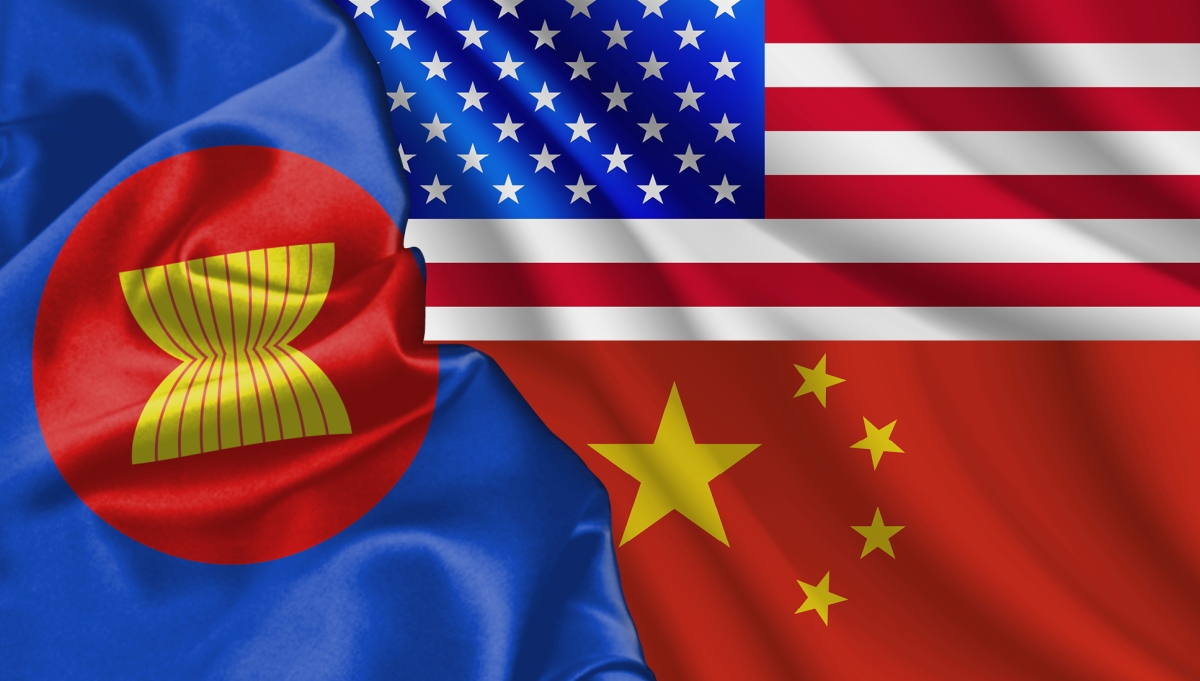
The United States likes to cite one number boastfully in its relations with Southeast Asia: it is still ASEAN’s single largest foreign investor. On paper, the statistic verifies Washington’s economic significance to a place that is central to global trade and geopolitics. Behind the balance sheets, however, is a more nuanced—and growingly precarious—reality. While US investment dominates the finance, service, and manufacturing sectors, its share in Southeast Asia’s most obvious and revolutionary need—basic infrastructure—is still inconsequential. And in this vacuum, China persists in marching in with steel, concrete, and strategic vision.
The dichotomy is increasingly clear across the region. From Indonesia and Laos’s high-speed rail projects to Cambodia’s deep-sea ports and Malaysia’s roads, China’s Belt and Road Initiative (BRI) has recharted physical geographies and political imaginations. For all the controversy they have caused—debt sustainability and transparency to begin with—these projects offer something that U.S. investments do not: immediacy, visibility, and nation-building optics. Chinese bridges and railroads, not Western capitals, are now the icons of growth and cooperation in most ASEAN countries. The United States continues to retain its economic influence through private sector activity and regulatory practices.
Its comparative strengths lie in high-value-added investment, technology, and financial markets. However, these strengths are largely invisible to the common people and are not connected with country stories of development. A shareholding in a local financial services company can produce GDP but fails to connect rural provinces or cut transport costs. The disconnect generates an image problem: the U.S. seems rich but far away, active but not engaged in infrastructure—the very foundation of inclusive growth in emerging markets. Furthermore, China has paired its infrastructure push with a broader political and diplomatic campaign.
It comes across as a sovereignty-revering, condition-avoiding, and rapid-delivering partner. The United States, with its emphasis on governance, transparency, and risk avoidance, comes across as slow, choosy, and less responsive to Southeast Asian development agendas. While these assurances are needed to prevent corruption and ensure sustainability, they can also appear paternalistic or detached from urgent infrastructure requirements. Washington has not been blind to this shortcoming and has tried to act.
Blue Dot Network and the Partnership for Global Infrastructure and Investment (PGII) were stand-ups to challenge the BRI on the basis of quality, values-driven alternatives. But so far, these initiatives are underfunded, undercoordinated, and symbolically based. ASEAN countries, in words supportive, have seen little tangible action or disbursement. The result is growing skepticism regarding the capacity of the U.S. to support its strategic rhetoric with development delivery. China’s strategy, though sometimes mistaken, is consistent and improving.
It has rebranded successfully its infrastructure diplomacy—migrating away from mega, blockbuster deals towards smaller, smarter, and greener investments. It is also leveraging digital infrastructure, smart cities, and green energy projects to place itself on ASEAN’s long-term development trajectory. From data centers and fiber-optic cables to 5G networks, China is increasingly shaping the region’s digital future as well as its physical one. The stakes are strategic, not just economic.
Chinese infrastructure as it reshapes trade routes, energy flows, and logistics chains redefines regional dependence and influence. ASEAN’s realignment is not toward traditional formal military blocs, but to whomever supplies development. Its soft alignment, rooted in economic pragmatism, subtly realigns regional equilibrium. Even such long-time U.S. allies like Thailand and the Philippines now hedge openly, maintaining defense ties with Washington while speeding infrastructure and trade engagement with Beijing. For America, reversing the trend will not only involve catching up with China. It must make its own substantial development footprint. That means offering genuine alternatives in financing infrastructure, forming consortiums with like-minded nations like Japan and Australia, and empowering regional institutions like the Asian Development Bank to provide the funding shortfall. No less important, it means listening to what Southeast Asian governments value most—connectivity, logistics, sustainability—and matching aid accordingly.
Conclusion
America can still master balance sheets, but China is winning on blueprints. Southeast Asia’s infrastructure is not just a question of development—it is a strategic currency. If Washington does not redefine its economic engagement to make room for this reality, its position as ASEAN’s partner of choice will continue to erode, not by coercion, but by inertia.
Southeast Asia is not asking for a Washington-or-Beijing decision. It is asking for relevance, partnership, and delivery. If America is unable to meet the region where it is—to the roads, rails, and energy corridors—it will be pushed further to the outside, not due to absence of power, but absence of capacity to be where it most counts. In this competition, presence is policy—and policy without presence is just a noise.