


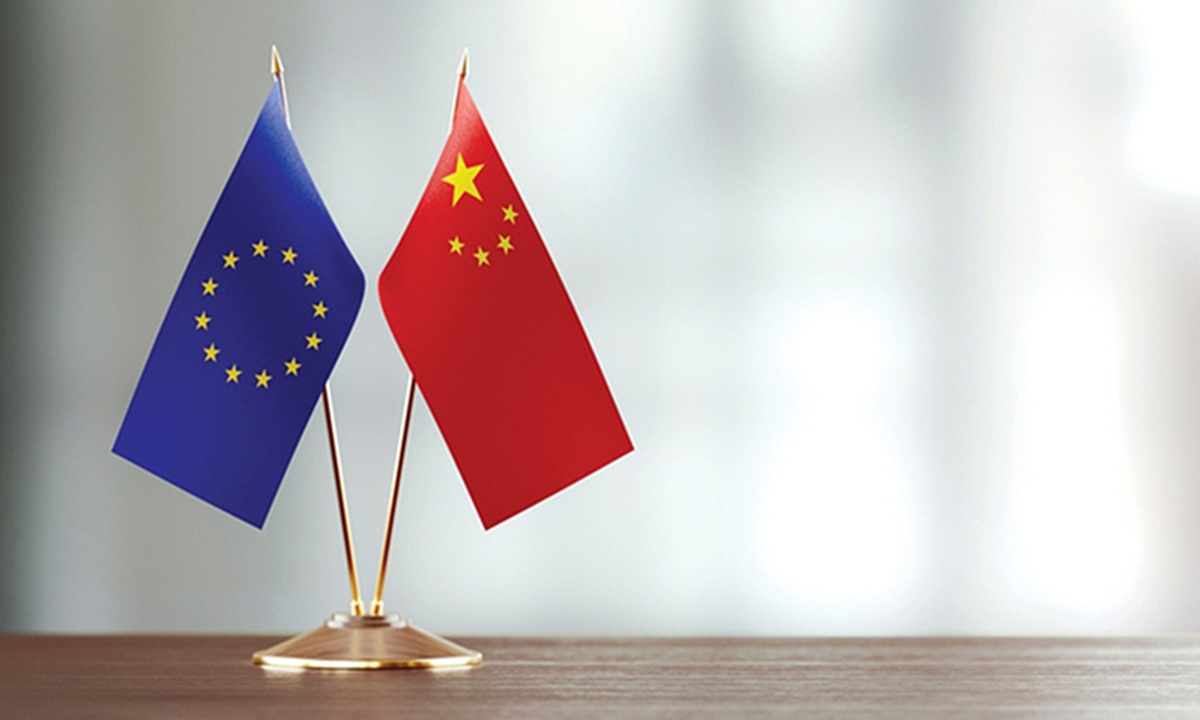
Only when acting alone can the EU establish a multipolar, rule-based, and inclusive international system.
Only when acting alone can the EU establish a multipolar, rule-based, and inclusive international system.
By Mehmet Enes Beşer
For much of the past decade, the European Union has struggled to formulate a clear and independent policy toward China. Struggling between the gravitational force of its historic bond with the United States and the multidimensional realities of its economic dependence on Beijing, Brussels has all too frequently been caught reacting instead of acting—following American-led containment rhetoric, sanction regimes, and techno-political red lines. But as U.S.–China competition becomes more fraught and unpredictable, and Donald Trump follows through to his promise to return to the White House, the EU cannot offload its thinking anymore. Europe must break out of outsourcing Chinese policy to Washington and chart its own course—one that is definitive, clear-sighted, and unmistakably European.
The world is watching and waiting. China is at once the partner, competitor, and systemic challenger to the EU—a triple status that, even if correct, can lead to paralysis in the absence of differentiated approaches. The EU requires China to push forward climate objectives, stabilize global commerce, and diversify supply chains. European companies continue to be deeply invested in the Chinese marketplace, especially in automotive, pharmaceuticals, and luxury sectors. At the same time, concerns about industrial overcapacity, coerced technology transfer, and abuse of human rights in Xinjiang, Hong Kong, and elsewhere are real and demand response on principle. These tensions require to be balanced with agility—not playing another’s game.
But over the last few years, Brussels has resonated increasingly like Washington. Convergence is natural on some things—particularly on 5G security, sanctions coordination, and export controls—but the risk is that Europe is turned into a geopolitical appendage rather than a sovereign actor. The “de-risking” discourse now central to EU policy debate has a tendency to come perilously close to American-style decoupling, despite Europe’s very different strategic geography and economic profile. This is not strategic coherence; it is strategic mimicry.
U.S. interests in containing China differ from European. Beijing is an across-the-board competitor for Washington—military, technologically, ideologically. China is a more complex presence for Brussels: problematic in some respects, desirable in others. Hard containment is the top priority of the U.S. Indo-Pacific strategy, whereas EU activity in the region is largely economic and normative. Europe, without U.S. military presence or alliance infrastructure, cannot and should not pursue a hostile policy it is unable to carry out or sustain.
Far more gravely, blind alignment denies the EU the right of strategic autonomy. An article of faith in contemporary European foreign policy philosophy—endorsed by such pillars as Emmanuel Macron and Josep Borrell—a central pillar of this strategic autonomy rests on the idea of independent decision-taking based on European analysis of risk and opportunity. But where China is involved, that liberty is all too often rhetorical. The EU follows a lead from the Americans regarding sanctions, investment filtering, and diplomatic exclusion—on occasion without full consideration of the long-term European expense. This erodes Europe’s credibility not just in Beijing, but also in the Global South, which already holds the EU to be an echo chamber of Western orthodoxy.
A more balanced and sovereign China policy is not appeasement. It is engagement on our terms. Brussels must advocate harder for market reciprocity, protection of IP, and labor rights—but in doing so through regular dialogue, not secondhand brawl. The EU should also cooperate further on global public goods where interests overlap—climate finance, pandemic preparedness, food security. This pluralist pragmatism is likelier to work than just imitating American brashness.
Above all, the EU needs to acknowledge that its global impact will be founded on its ability to involve all the key powers—not merely the ones that are within its comfort zone. The world’s second-largest economy and increasingly a player in world governance, China cannot be shut out. To choose between engagement and moral clarity is not to engage but to marginalize.
There are indications that segments of Europe are waking to this necessity. Germany’s “China Strategy,” though prudent, emphasizes measured engagement rather than decoupling. France has insisted time and again on European sovereignty when it comes to handling China, even if this means periodic divergence from Washington. Recent EU–China summits, though tense, also show that high-level communication is still possible—and required. What is required now is political will to convert these intuitions into policy.
Conclusion
The transatlantic relationship is significant, but not a straitjacket. As the rivalry between the U.S. and China intensifies, the EU must not be pulled into a bipolarity that is not in its interests, values, or strengths. A sovereign China policy is not distancing itself from America—it is making Europe matter.
Only when acting alone can the EU establish a multipolar, rule-based, and inclusive international system. Admitting policymaking in the hands of Washington may be temporary solidarity, but it harms European relevance in the long run. During the era of shifting power, choice power is the essence of sovereignty. The time to exercise it is here now.