


By Mehmet Enes Beşer
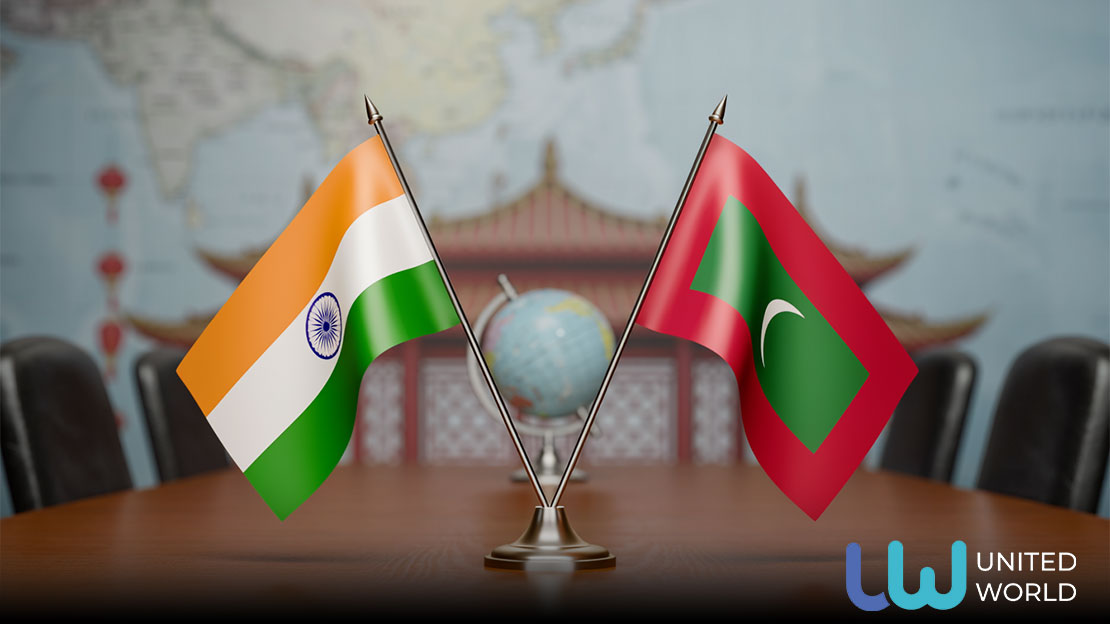
Once viewed as the archetypal case of neighbor diplomacy, the relationship between India and the Maldives is becoming increasingly contentious due to recent changes in both countries’ politics. Despite their longstanding history of interaction in terms of trade, culture, and security matters, the transformation in the governance of Malé coupled with rising nationalism in India is putting stress on the bilateral relations of both states. The pragmatically motivated association of two neighboring countries seems now plagued by mutual distrust, populism, and changing geopolitical priorities.
The current friction largely revolves around the wave of rising hyper-nationalism, which took root in the domestic political context of both nations. With the victory of the new president of the Maldives, Mohamed Muizzu, and his rejection of the previous government’s pro-India approach, the bilateral relations took a turn for the worse. In his campaign, Muizzu employed a strong anti-Indian rhetoric aimed at protecting Maldives’ sovereignty from foreign interference. What initially appeared as politicization of the government’s “India out” stance transformed into policy when he called for withdrawal of Indian forces, revisiting bilateral agreements, and diversifying diplomatic connections, primarily with China. For India, with a long-established commitment to providing assistance to the Maldives in emergencies, including natural disasters and coups (the one staged in 1988), this change of approach poses serious challenges.
These shifts were met with concern in India. As a strategic location of paramount importance in the Indian Ocean and close to India’s sea routes crucial for transporting energy and goods to its territory, any erosion of trust or reduced accessibility of the ocean to Indian vessels would undermine India’s strategic depth. This becomes especially difficult for India in light of its recent policy initiative known as SAGAR (Security and Growth for All in the Region).
However, India has partly contributed to the deterioration of its relations with the Maldives. With the rise in hyper-nationalism, the relationship of the two nations became tainted by India’s negative attitude towards the Maldives’ decision-makers. By criticizing the statements made by Maldivian officials regarding their pro-India sentiment, India created conditions in which anti-India rhetoric flourished in the country. Moreover, some members of the Indian civil society went as far as calling for tourism boycotts, which undermines the people-to-people aspect that had traditionally undergirded the two countries’ relations.
Another point of frustration stems from the inconsistency between India’s actions and the way they are perceived in the Maldives. India’s swift reaction to the outbreak of the COVID-19 pandemic was warmly welcomed by the Maldivian society. However, due to its involvement in the security issues of the Maldives, India tends to appear as a somewhat imposing force, despite the good intentions behind the actions. Without effective communication and diplomacy, such engagements risk further exacerbating the situation.
The problem lies in the discrepancy between two nations’ perceptions of their partnership. While India believes that its partnership with the Maldives naturally falls within its regional scope of interest, Maldives as a small country is gaining confidence in asserting its own agency amid global multipolarity. Consequently, the Maldives finds itself in need of balancing relations with great powers that offer attractive terms of collaboration.
In the current context, China becomes a key player in Maldivian politics. China’s activities include everything from development projects to cybersecurity support. Moreover, economic ties continue to grow despite the absence of cultural affinity and people-to-people interactions that characterized India’s relationship with the country. Low-conditionality loans offered by China provide Maldivian elite with the opportunity to diversify partnerships.
However, the relationship between India and the Maldives has not reached a dead end. Despite the strong anti-Indian rhetoric of the current government of the Maldives, the existing structural dependence is still quite strong. India continues to act as the leading supplier of tourists, and financial and technological aid provided by India remains crucial for development efforts in the Maldives. Moreover, security cooperation, even suspended currently, is hard to substitute. Finally, a certain sector of the Maldivian society retains positive feelings about India’s involvement.
For overcoming the current difficulties, the two sides must reconsider their expectations and depoliticize their relationship. The first step involves understanding the fact that uncontested regional hegemony of India is no longer possible, and it must occasionally allow its closest neighbors to hedge and reevaluate their position. Rather than eliminating all differences, India needs to learn how to manage them successfully. To do so, India must engage with representatives of civil society, opposition, and youth of the Maldives. Increased diplomatic representation would be beneficial in avoiding over-personalized diplomacy.
From the Maldivian side, the key is to ensure that hedging strategies pursued to attain short-term benefits do not create long-term costs to the Maldives. Instead, a well-balanced approach that allows maintaining the current level of cooperation with India while establishing additional relations would serve Malé’s best interests.
Conclusion
India and Maldives face a complicated choice point that entails a number of factors, ranging from domestic politics and nationalism to great power dynamics. The current problem goes beyond the bilateral relation and reflects the regional partnership framework amidst a contested Indian Ocean space.
In order for the current partnership to survive and even prosper further, both parties must refrain from succumbing to hyper-nationalism. Indeed, sovereignty and security are not contradictory concepts; on the contrary, strategic autonomy requires the former and does not imply the latter.
Should India and Maldives successfully articulate the idea of interdependence through a combination of respect and non-hierarchical cooperation, it would turn a difficult time into the time for resilience. They have enough of historical grounds to do so.