


By Yıldıran Acar, Political Scientist
Ukrainian President Vladimir Zelenskyy’s statement on 1 September regarding Russian airspace has reignited discussions on the war’s impact on civil aviation. Zelenskyy stated that Ukraine would step up its drone operations in Russia, arguing that Russian airspace was becoming increasingly risky for civilian flights and calling on airlines and insurance companies to take this situation into account. In the same statement, Zelenskyy also emphasized that Ukraine was not directly targeting civilian aircraft.
The statement drew a sharp response from Moscow. Russian President Vladimir Putin described the remarks regarding the possibility of targeting civil aviation as “a call for state terrorism”. Dmitry Medvedev, Deputy Chairman of the Russian Security Council, also issued a message of retaliation to Kyiv.
The statements from Moscow did not stop there. Russian Transport Minister Andrey Nikitin stated that a significant disruption to civil aviation would not be permitted, whilst noting that temporary restrictions could be imposed at airports for security reasons during a drone threat. Russian aviation authorities also announced that air traffic was continuing.
Will Russian airspace close?
Following the statement, one of the key debates in Russia centred on the extent to which Russian airspace would remain operational should Ukraine intensify its drone attacks.
Marat Başırov, a professor at the Higher School of Economics (HSE University), noted that take-offs and landings at Russian airports could be temporarily restricted should the risk of a drone attack arise. According to Başırov, these measures are taken for security purposes and flights resume once the threat has passed. Therefore, an increase in Ukraine’s drone activities does not necessarily mean that Russia’s airspace will be completely closed.
Two distinct situations must be distinguished here. The temporary closure of an airport to flights during a drone threat is a direct security measure. However, the public’s perception of such measures as a permanent and comprehensive closure of airspace could lead to different consequences.
In particular, disruptions to flights to Russia’s major cities could heighten the perception of risk across various sectors, from tourism to business travel.
The perception surrounding Pegasus
Following Zelenskyy’s statement, the cancellation and return of some flights to Russia were also widely discussed on social media. Pegasus’s flights to Moscow were also linked to Zelenskyy’s statement in these posts.
However, there is an important detail here. In a statement issued on 2 September, Pegasus announced that some flights on its Russian routes had been cancelled for technical and operational reasons during the night of 1 to 2 September, and that flights had resumed as scheduled from 2 September onwards.
It is therefore incorrect to present these cancellations as a direct consequence of Zelenskyy’s statement.
The real issue lies in how such developments are linked together on social media. When a flight cancellation due to technical reasons coincides with Ukraine’s statement regarding Russian airspace, an unverified link can be drawn between the two events. This can be further compounded by the circulation of footage from previous drone attacks.
This tactic, commonly encountered during times of war, seeks to produce an effect not so much through the event itself as through how it is perceived. Sharing footage of an old explosion or attack as if it were a new one can make it difficult for users to access real-time information, whilst amplifying fear and uncertainty.
From the perspective of hybrid warfare, there is also an economic dimension to this. People planning to travel to Russia becoming concerned about flight safety, tourists changing their travel plans, airlines adopting a more cautious approach, or insurance costs rising could, over time, lead to economic consequences.
The dissemination of the same content within Russia, however, creates a different effect. In a society constantly exposed to images of attacks, it can become increasingly difficult to distinguish between the true scale of the threat and the perception created on social media.
Why did Moscow react so strongly?
Two distinct approaches are evident in the statements made by Russian authorities. Whilst political and security authorities have reacted strongly to the possibility of civil aviation being targeted, transport authorities have emphasized that air traffic will continue and that the necessary security measures will be taken.
There is also an economic dimension to this approach. Prolonged disruption to international air links in Russia’s major cities, particularly Moscow, would not merely be a matter of concern for passengers. Tourism, trade and business travel could also be affected.
From Kyiv’s perspective, any disruptions to Russia’s air transport could have consequences that go beyond military targets, potentially exerting economic and psychological pressure. The fact that Zelenskyy’s statement specifically addressed airlines and insurance companies is significant in this regard.
What would change if there were an actual attack?
The most sensitive aspect of the debate in Russia is Moscow’s reaction should a civilian aircraft actually come under attack.
Andrey Kolesnik, a member of the State Duma’s Defense Committee, stated that a genuine attack on a civilian aircraft could lead to a change in Russia’s military operational strategy. Kolesnik also argued that foreign airlines should take Zelenskyy’s statements into account.
There is a significant difference between the current situation and a potential attack on civil aviation. The imposition of temporary restrictions at airports is one thing; a passenger aircraft being directly targeted is quite another. The latter scenario could alter Moscow’s threat assessment and the scope of its response.
United Nations Spokesperson Stéphane Dujarric also voiced his concerns on 2 September regarding the escalation of the conflict, emphasizing the need to protect civilians and civilian infrastructure.
The role of drones in warfare is growing
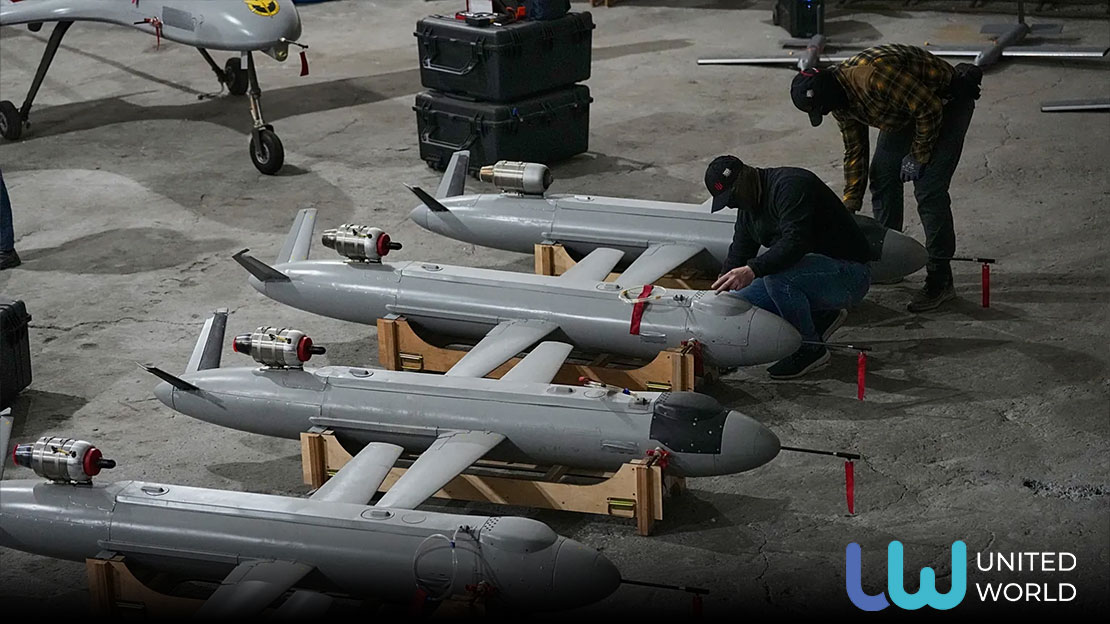
Ukraine’s increased use of long-range drones targeting Russia’s interior regions is causing the effects of the war to be felt even far from the front line. Putin, meanwhile, noted in his latest statements that drones are becoming an increasingly important tool in modern warfare. Pointing out that drones are now used not only in the air but also on land, at sea and underwater, Putin indicated that the role of these technologies in the conduct of warfare is steadily expanding.
These developments make it difficult to view the 1 September statement as merely a political message. The rise in the number of drone attacks is placing pressure not only on Russia’s air defenses and critical infrastructure but also on civil aviation. Temporary restrictions at airports or flight delays are among the consequences of this pressure that are reflected in daily life.
Furthermore, content circulating on social media can lead to real attacks being conflated with old footage. When the cancellation of a flight for technical reasons, a short-term restriction at an airport and footage of a past attack are presented in the same news feed, this can create a perception of a far greater threat than actually exists.
The information front of the war
The likelihood of Ukraine utilizing its drone capabilities more extensively in Russia’s interior regions is complicating Moscow’s security calculations. However, it is not sufficient to assess the potential consequences solely based on the targets struck by the drones.
Just as important as the physical damage caused by an attack is how people perceive that attack. The decisions of airlines, insurance costs, tourists’ travel preferences and the sense of security among people living in Russia may all be affected by this process.
In the coming period, it will be just as important to assess how these developments are received by the public as it is to gauge the extent to which drone attacks will disrupt air transport in Russia. The blurring of lines between actual attacks and old footage, and between verified information and rumors, could further amplify the war’s impact on society.