


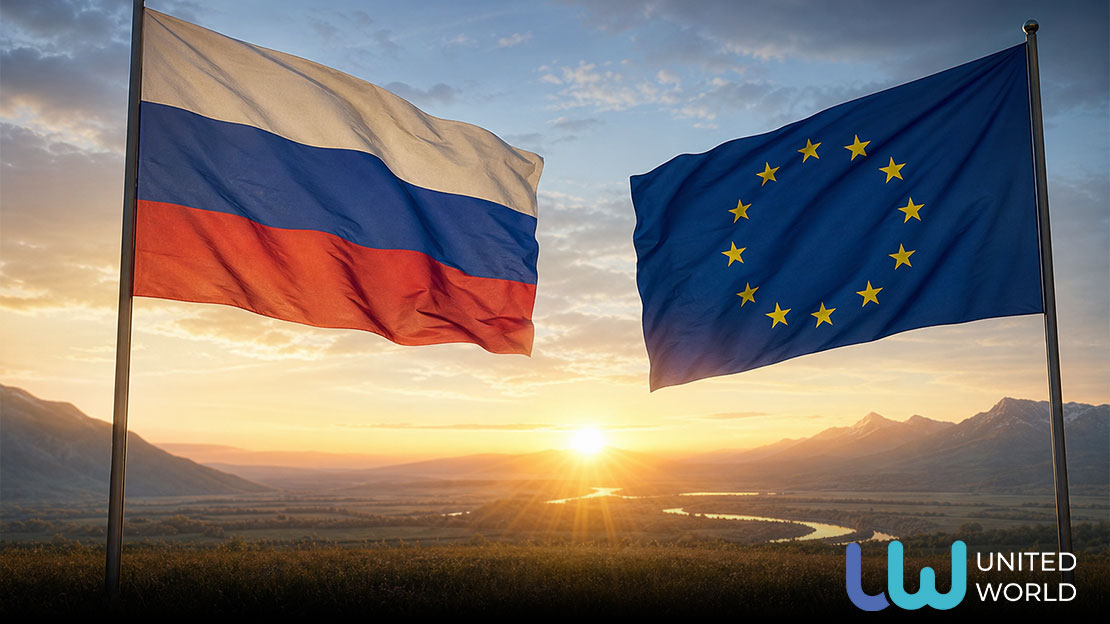
Tensions between Russia and Europe appear to have entered a more complex phase.
The concrete and recent development has taken place in Germany. On the night of August 4–5, a drone allegedly carrying explosives had been at Leipzig Airport, which is said to be an important logistics hub for Ukraine and NATO. On September 4, German authorities claimed that Russia was behind the incident. Russia denied.
Following these allegations, Berlin and Moscow took reciprocal diplomatic steps, while other European countries also became involved in the tensions. The European Union signaled that it could begin working on new sanctions.
With the possibility of negotiations still on the agenda, does this suggest that the confrontation between Moscow and Europe is no longer confined to the battlefield in Ukraine?
On the other side of the war, Russia attended the Shanghai Cooperation Organization (SCO) summit held in Bishkek from 31 August to 1 September. Here, the multipolar world and mechanisms of cooperation outside the West came to the fore on a broad platform that included Russia, China, India and Iran.
Following the SCO summit, Russia’s orientation toward “outside the West” was also highlighted at the Eastern Economic Forum in Vladivostok between 1–4 September.
UWI author and political scientist Dr. Onur Sinan Güzaltan joined CGTN Türk to share his evaluation on these developments.
————————————————————————————————————————-
Mr. Güzaltan, how should we describe the point tensions between Russia and Europe have now reached? Should this be viewed as a crisis centered on the war in Ukraine, or as a longer-term geopolitical rupture between Russia and Europe?
In fact, both the origins of the Ukraine issue and everything that has happened since show us one thing: there is a structural problem between Russia and the US, Europe and their allies, what Russia calls the “collective West.” When you look at the process as a whole, they are pursuing hostile policies toward Russia. In the Ukraine issue, the fundamental aim of the Western side is to destabilize Eurasia and prevent integration between Russia and Europe.
If you look at both geography and energy resources, Russia and the European countries, Germany in particular, are natural partners. They used to import energy from Russia. There was mutual trade, cultural interaction and demographic interaction between these countries. But with the Ukraine issue, the integration of Europe and Russia was prevented.
Today, the current governments in Europe, particularly in Germany and France, but also in Eastern European countries, have turned toward these old-style Atlanticist policies, policies pursued in line with US interests. So, they continue their aggressive policies toward Russia.
How do you expect the increasing sanctions imposed on Russia to affect the European economy in the coming period?
Europe is facing a dilemma: If you look at the polls in France and Germany, the two driving forces of the European Union, the parties currently in second place, and therefore potentially capable of coming to power or becoming coalition partners in the next elections, the National Front in France and the AfD in Germany, advocate more positive policies toward Russia. Yet the current governments in Europe, remnants of the Biden era I would call, remain stuck in the politics of a bygone era, insisting on Atlanticist policies that identify Russia as the main enemy. Even though these policies run against the interests of the European peoples, and this is particularly clear in the fields of energy and the economy, they continue their sanctions and aggressive policies against Russia.
This has, of course, already triggered major crises in Europe. In Germany, we see major factories and industrial giants downsizing. In France, we are witnessing both economic and demographic crises. We can see this on the streets as well, as in the case of the Yellow Vests. The middle class in Europe has reached an impasse. Also, Europe is under migration pressure, leading in demographic problems, which turn into security problems. Ultimately, all of this leads to political problems.
In 2011, we had the Arab Spring across West Asia. I believe that in the coming period we will witness something similar in various European countries, a “European Spring.” That would mean major popular movements and major political changes.
The Shanghai Cooperation Organization summit and the Eastern Economic Forum. Does Russia’s presence on the same platforms as countries such as China, India and Iran expand Moscow’s room for maneuver in the face of Europe, and if so, how?
Russia is actually redefining its identity through this process, or we could say that it is turning back to its former identity.
During the 1990s, the Russian political elite had an orientation toward the West, Europe and the US. But through this process Russia has once again remembered its Eurasian identity, Asian identity, Eastern identity, and even its identity as part of the Global South.
Russia is strengthening its relations not only with Asian countries but also with states in Latin America, Africa and West Asia. It has political initiatives aimed at doing this. The steps taken and statements made at the two summits you mentioned demonstrate this orientation once more.
And this is not merely an economic orientation. It goes beyond a maneuver to counterbalance Europe and the US. Let me give a small example. Education tends to remain somewhat in the background in these discussions, but it is actually important if you want to understand a country’s strategic tendencies. Today in Russia, Chinese is increasingly becoming a primary foreign language particularly in elementary schools. As I said, this is not a temporary orientation. Russia is now shaping its future, its coming decades, together with Asia.
Russia and China delivered important messages at both the SCO and the Eastern Economic Forum about advancing their cooperation. How do you think this cooperation and the rise of multipolarity will affect the world’s crisis regions, particularly West Asia?
We can see that there are regions where the US simply does not have enough power anymore. The latest attacks against Iran point to this. They failed to subdue Iran. The US and Israel have attacked Iran many times, but Iran responded without backing down. Through the Strait of Hormuz, Iran brought the petrodollar system that economically sustains the US to a standstill. These are major strategic moves and, in fact, historic turning points.
This process is a reflection of multipolarity. The US is weakening, but as it weakens, it is not retreating peacefully. Instead, it is causing new wars and new conflicts, as seen in Ukraine and Iran. The new order does not replace the old order overnight, this is an arduous process.
As for our region, there is an increasing tendency towards regional cooperation. There are also attempts to form alliances. Of course, there are historical impasses and prejudices in certain areas. There are problems stemming both from history and from these countries’ existing alignments, those with the West.
But I believe that over the next ten years, West Asia, particularly through Türkiye, Egypt and Iran, since these are the region’s deep-rooted states, will emerge a “West Asian bloc,” a “West Asian pole”, within the multipolar structure.
The critical issue for multipolarity to take root in West Asia is the establishment of a Türkiye-Egypt-Iran triangle. If you establish this triangle, you can overcome the sectarian, religious and historical prejudices in the region, and develop a common policy against radical terrorist organizations as well.
Economically, this would be a triangle of enormous geography, controlling major trade routes: the Black Sea, the Eastern Mediterranean, the Suez Canal, the Persian Gulf, the Strait of Hormuz and all the way down to Bab el-Mandeb. It could even extend into the Gulf.
In recent days, Putin has emphasized Russia’s upper hand on the battlefield, while at the same time he slightly talks of a possibility of a peace agreement. Should we understand this to mean that the war will continue, but that peace is also possible?
In general terms, we can identify a tendency toward expansion in the war in Ukraine, and this is moving ever closer to becoming a reality.
The European side is increasing its pressure and provocations against Russia. Most recently, Zelensky made a statement threatening civilian aircraft in Russian airspace. Russia is making its own military, economic, political and diplomatic preparations accordingly. The turn toward Asia that we have been discussing, the developing relations with China and West Asia are actually all parts of preparations for a new and much more difficult period, perhaps a difficult period not only for Russia, but for Eurasia and the entire world.
I don’t believe that an agreement between Moscow and Kyiv is possible in the short term, or even in the medium term. Europe is seeking to deepen the war and even spread it over a wider area. As for the US, although it has assumed the role of “mediator” here, I believe this is part of the plan and that Washington is playing the role of the “good cop”. Ultimately, I don’t think either the European states or the Kiev government could undertake such harsh actions against Russia without US approval and US intelligence and military support.
Then should we not attach too much importance to recent talks that the US is withdrawing its support from Ukraine?
They are playing a two-sided game. When Trump’s second term began, a Chinese academic had a very good way of describing it. Referring to Trump saying “peace” one day and “war” the next, he said this was a tactic to throw the other side off balance.
First of all, US support for Ukraine in satellite technology and intelligence is continuing. Similarly, we were told that the United States would withdraw from West Asia. Instead, it became directly involved in the war against Iran, and the attacks are still continuing. There is a difference between Trump’s rhetoric and reality.
The Russian side is, of course, aware of this. But it is keeping diplomatic channels open. Also, it is developing policies based on the contradictions that may emerge between the US and Europe.
Ultimately, the war won’t end until one side exhausts its will and ability to continue fighting, which is a matter to be decided on the battlefield. Diplomacy is a secondary factor here. Many attach far too much importance to mediation efforts and negotiation processes.
Mr. Onur Sinan Güzaltan, thank you for your contribution
Thank you for having me.