


Interview with Hakkı Erman Ergincan, Chairman of Türkiye-Korea Friendship Association
Interview with Hakkı Erman Ergincan, Chairman of Türkiye-Korea Friendship Association
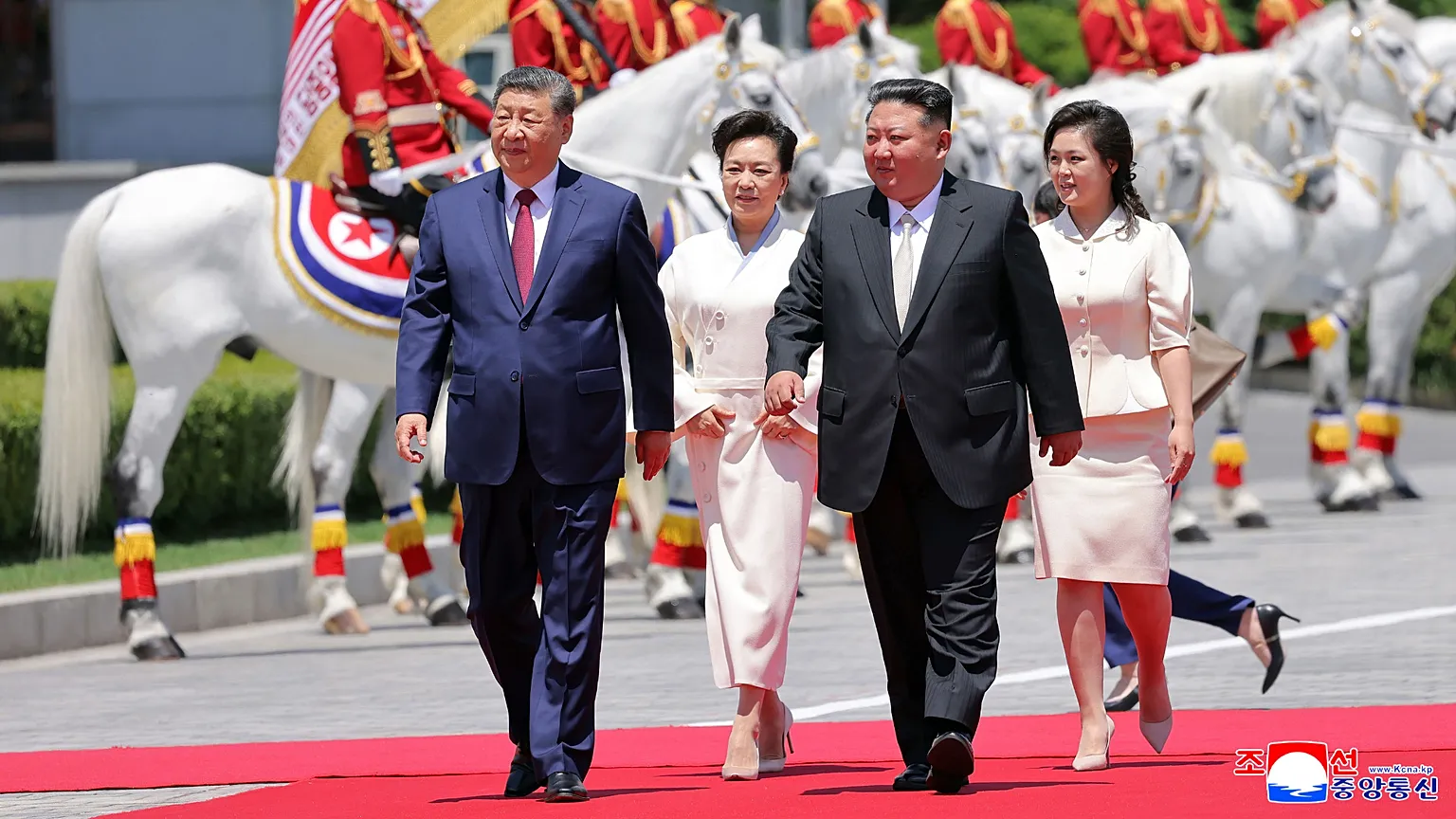
Chinese President Xi Jinping visited Democratic People’s Republic of Korea on June 8-9. This visit was for the first time in seven years.
Hakkı Erman Ergincan, Chairman of Türkiye-Korea Friendship Association, answered our question in an interview regarding Xi’s visit and the relations between the two countries.
Xi Jinping paid an official visit to the Democratic People’s Republic of Korea (DPRK) for the first time in seven years. It was also his first overseas trip of the year for Xi, and Xi’s previous first foreign visits of the year have often been followed by significant political developments. What would you say about the timing and importance of the visit?
Although seven years may seem like a long period of time for two countries that have historically been close allies, one should keep in mind that half of that time coincided with the global pandemic. China was at the very center of the outbreak, and Korea was among the countries that implemented the earliest, strictest, and longest-lasting measures against COVID-19. Given that even embassy operations between the two countries were disrupted during this period, returning contacts to their frequency took time.
The 65th anniversary of the China–Korea Treaty of Friendship
Despite the length of this pause, there was no decline in the friendship between the two countries. The first signs of this visit had emerged during Chinese Foreign Minister Wang Yi’s visit to DPRK. This year marks the 65th anniversary of the China–Korea Treaty of Friendship. As far as I know, China does not have a similar treaty with any other country. The Treaty includes important provisions ranging from military cooperation to trade and the protection of shared regional interests. So developments in the coming are expected to unfold within this framework.

Taiwan and “nuclearization”
At present, one of the issues that we might see new developments, is the issue of Taiwan. Korea supports the One-China policy. As China’s contradictions with imperialist powers over this issue continue to intensify, Beijing could receive all forms of support from Korea.
From Korea’s perspective, the current pressing issue is nuclearization. China is expected to side with Pyongyang against the US policy of denuclearizing DPRK.
An area with potential for development is trade. This could be an opportunity both for China, whose economic growth has slowed in recent times, and for Korea, whose trade volume declined during the pandemic period. The recent increase in Korea’s demand for modernization and consumer goods also creates new opportunities for China.
Western sources’ claims about China-DPRK relations
Western sources have been arguing that China is unhappy with the rapidly developing military alliance between the DPRK and Russia since 2022, as well as with the increase in Korea’s nuclear capabilities. Is there such a tension between China and the DPRK?
China generally seeks to avoid direct military conflicts. A hot war would force China to shift resources and investment away from commercial production into the defense industry. Moreover, as a country that is a supplier of goods to the entire world, instability caused by conflicts anywhere around the globe negatively affects China’s trade. Also, China’s ability to benefit economically from wars is also limited because of Western dominance, and even UN sanctions in the defense export sector. So we can speak of China’s general unease regarding wars and military conflicts, but it would be inaccurate to say that this has translated into specific tensions between DPRK and Russia.
Socialisms on respective paths
One of Xi’s main emphases during the visit was on “socialist paths suited to the national conditions of the two countries.” Considering the recent economic achievements in the DPRK, which have even surprised some Western observers, how would you assess the current stage of socialist construction in North Korea?
Since their establishment, both countries have presented unique examples of adapting socialism to their own national circumstances. China refers to its model as “socialism with Chinese characteristics,” while Korea describes its approach as “Juche.” Both have achieved significant successes along their respective paths.
In recent times, the DPRK has been focusing on improving public prosperity. It has made major advances in addressing housing needs. Access to automobile ownership has also expanded, and new residential areas now include car dealerships and service centers. China is a world leader in the automotive sector, and it may provide particular support to Korea in this field.
In general, one can say that the DPRK is at a stage of socialist development focused on increasing prosperity and affluence.