


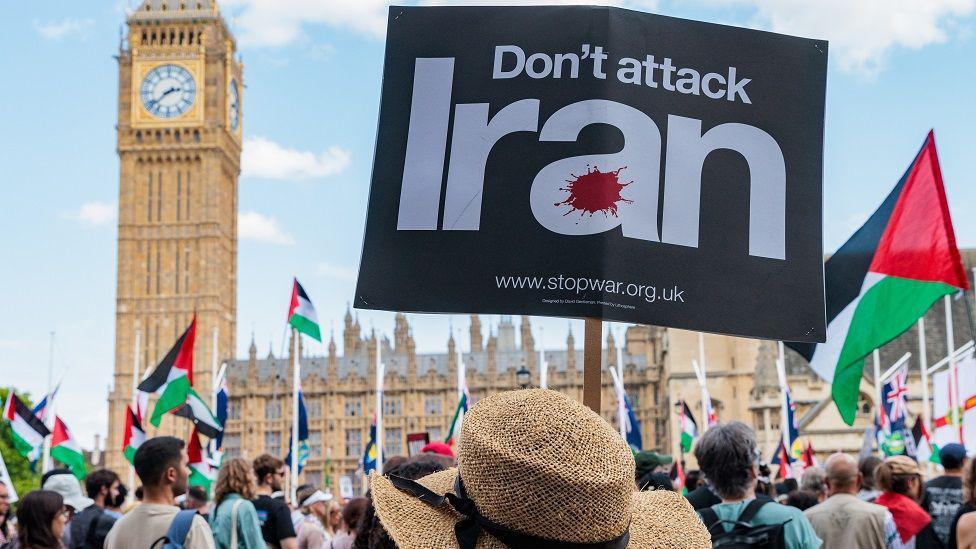
How RUSI, Chatham House and others from the UK view and report about the war.
How RUSI, Chatham House and others from the UK view and report about the war.
Over the past month, leading British think tanks—including the Royal United Services Institute (RUSI), Chatham House, the International Institute for Strategic Studies (IISS), and the Foreign Policy Centre—have converged on a strikingly sober assessment of the evolving US–Iran war. Their analyses, published in March–April 2026, reject narratives of decisive victory and instead describe a conflict reshaping the Middle East, straining Western alliances, and accelerating structural changes in the global order.
1. Who is winning the war?
The short answer from British think tanks remains: no one is clearly winning—but Iran may be performing better than expected, while the United States is falling short of its strategic objectives.
RUSI analysts emphasize Iran’s resilience and capacity for prolonged conflict, highlighting its continued ability to threaten Gulf shipping and sustain asymmetric operations. Iran’s strategy is not to defeat the United States outright but to deny it a decisive victory.
Chatham House similarly argues that US goals—degrading Iran’s nuclear program, weakening its regional networks, and restoring deterrence—have only been partially achieved. Iran’s internal system remains intact, and its “axis of resistance” continues to function, albeit under strain.
Across these analyses, a consistent theme emerges: military superiority has not translated into strategic success. The United States has demonstrated overwhelming force, yet Iran’s dispersed assets, proxy warfare, and escalation management have prevented collapse.
The result is a strategic stalemate:
- The US dominates tactically
- Iran survives strategically
- Neither side achieves decisive victory
2. What scenarios are expected for the Middle East?
British think tanks outline three main trajectories for the region.
a) Prolonged, regionalized conflict
Chatham House warns that the war is likely to evolve into a long-duration, multi-front confrontation, involving indirect clashes across Lebanon, Iraq, the Gulf, and possibly beyond.
Iran’s doctrine favors horizontal escalation—activating allied groups and widening the battlefield. This increases pressure on US forces while avoiding direct, large-scale confrontation.
b) Fragmentation of the regional order
A second scenario is the progressive breakdown of the Middle East’s existing geopolitical structure. Analysts highlight:
- Declining confidence in US security guarantees
- Increasing hedging behavior by Gulf states
- Greater diplomatic space for China and other external actors
This fragmentation is not sudden collapse, but a gradual erosion of the US-led regional system.
c) A new equilibrium of deterrence
Despite escalation risks, some analyses suggest a managed equilibrium could emerge. This would resemble a Cold War–style balance:
- Persistent tensions
- Periodic flare-ups
- No decisive resolution
Energy markets and global trade systems, while disrupted, are already adapting—suggesting the conflict may become structural rather than exceptional.
3. What are the effects on the global order?
British think tanks are particularly clear here: the war is accelerating a shift toward a fragmented, multipolar world.
a) Erosion of US leadership
The conflict reinforces a longer-term trend identified by Chatham House: the relative decline of US global authority. Military power alone is proving insufficient to shape outcomes, especially against resilient regional actors like Iran.
b) Strategic opportunities for rivals
China and Russia are positioned to benefit:
- China expands economic and diplomatic influence
- Russia leverages Western distraction to consolidate its own geopolitical position
Even limited gains contribute to a redistribution of global power away from the West.
c) Normalization of high-intensity conflict
RUSI and IISS analyses stress that wars like Iran and Ukraine indicate a broader shift: state-on-state conflict is becoming normalized again. The post-Cold War expectation of limited warfare is fading.
d) Economic and systemic stress
The war is producing long-term volatility in energy markets, inflationary pressures, and fiscal strain—especially in vulnerable economies. While not necessarily triggering global collapse, it is contributing to a more unstable international economic environment.
4. A Transatlantic Fault Line: US–NATO Relations Under Strain
A critical additional dimension identified by British think tanks—and confirmed by recent reporting—is the deepening strain within NATO and the broader transatlantic alliance as a result of the Iran war.
a) A “breaking point” in the US–Europe relationship
RUSI analysis is unusually direct: the war is pushing the US–Europe relationship toward a “breaking point”, exposing fundamental disagreements over strategy, risk, and alliance obligations.
One RUSI expert notes that Washington increasingly treats NATO as an instrument for its own operations, rather than as a collective decision-making body. This reflects a broader shift toward unilateralism in US policy.
b) Diverging threat perceptions
At the heart of the tension is a difference in priorities:
- The United States views Iran as an immediate strategic threat requiring military action
- Many European allies see the conflict as optional, risky, and potentially destabilizing
This divergence has translated into limited European participation in the war effort, particularly in areas such as naval deployments and operational support.
Recent developments underline this divide. NATO allies have been reluctant to provide direct military backing, with some even restricting US access to bases and airspace.
c) Crisis of alliance solidarity
The Iran war has effectively become a stress test for NATO cohesion. According to recent reporting, US leadership has expressed frustration at what it perceives as European inaction, while European governments question the legitimacy and risks of the conflict.
This has led to:
- Open criticism of NATO from Washington
- Threats of reduced US commitment to the alliance
- Growing uncertainty about the alliance’s future role
Analysts warn that NATO may be facing its most serious internal crisis in decades, with the possibility of partial US disengagement now openly discussed.
d) European strategic autonomy gains momentum
Chatham House analysis suggests that the war is reinforcing European debates about strategic autonomy—the idea that Europe should reduce dependence on the United States in defense and security.
The logic is straightforward:
- If US priorities can diverge so sharply from European interests
- And if alliance solidarity cannot be assumed
- Then Europe must develop greater independent capability
This does not necessarily mean the end of NATO, but it does imply a rebalancing of the transatlantic relationship.
e) Long-term implications for NATO
British think tanks do not predict an immediate collapse of NATO, but they do point to structural transformation:
- NATO may become less cohesive and more transactional
- US leadership within the alliance may weaken
- European members may pursue parallel or complementary security frameworks
In this sense, the Iran war is not just a regional conflict—it is a catalyst for redefining Western security architecture.
Conclusion
British think tanks portray the US–Iran war not as a decisive clash but as a transformative geopolitical event without a clear winner. The United States dominates militarily but struggles to convert force into political outcomes. Iran, though weakened, retains sufficient capacity to resist defeat and shape the conflict’s trajectory.
For the Middle East, the likely future is one of prolonged instability and shifting alliances. For the global order, the consequences are even more far-reaching: the war is accelerating multipolarity, empowering rival powers, and normalizing sustained geopolitical conflict.
Yet perhaps the most immediate and tangible impact lies within the West itself. The Iran war has exposed deep fractures in the transatlantic alliance, raising fundamental questions about NATO’s cohesion, purpose, and future.
In that sense, British analysis suggests that the most important outcome of the war may not be who wins in the Gulf—but how profoundly it reshapes the unity of the West.