


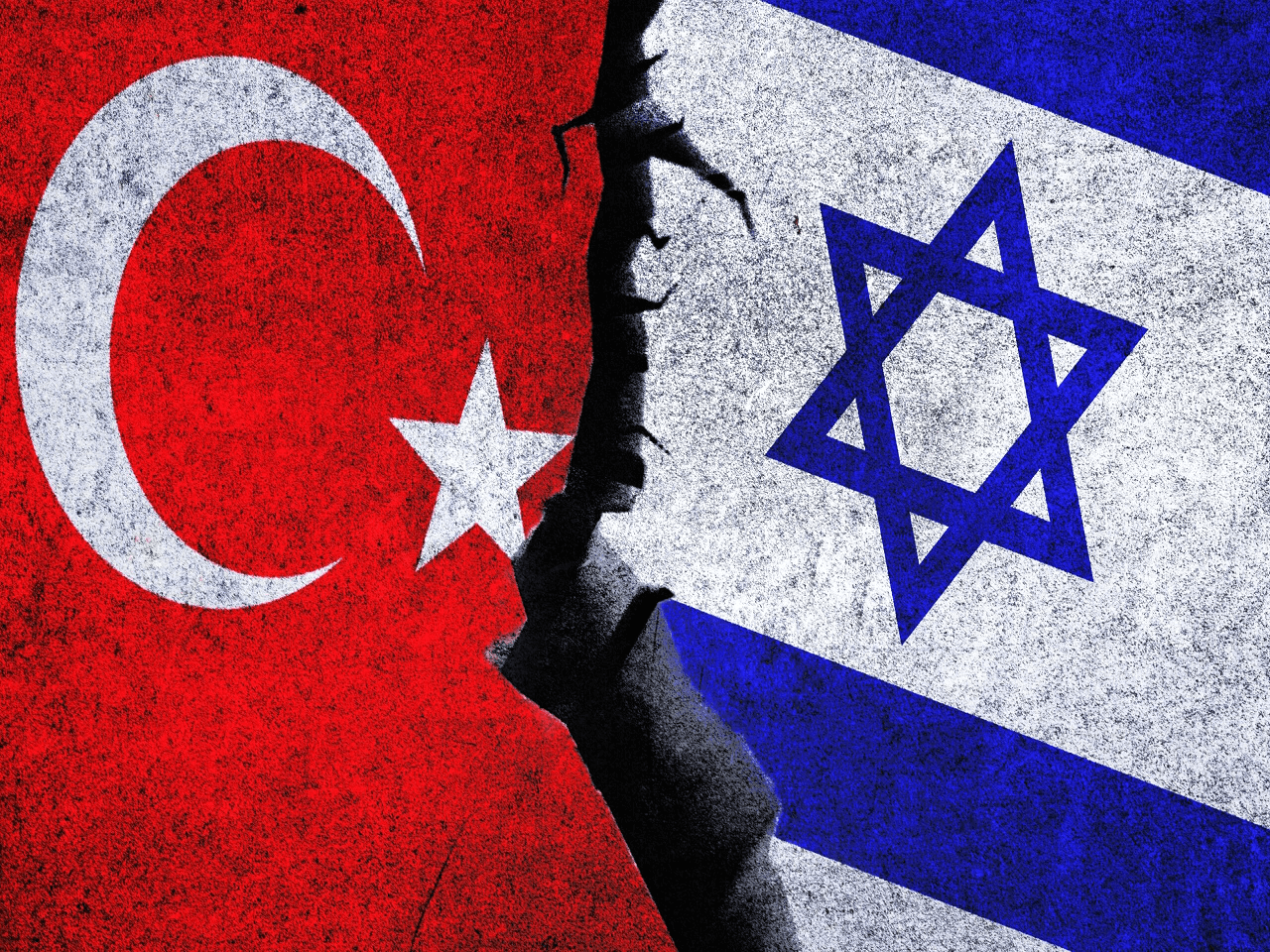
New threats emerging from both Israeli and US media and Israeli politicians targeting Türkiye. Turkish experts explain their goals.
New threats emerging from both Israeli and US media and Israeli politicians targeting Türkiye. Turkish experts explain their goals.
As the United States and Israel continue their attacks on Iran, political and media voices from these countries are claiming that “Türkiye is the new Iran”.
Although at a lower level, Israel and Türkiye maintain diplomatic relations. But threats are coming to Ankara from Israel and its ally, the United States. The Jerusalem Post warns that after Iran, Türkiye is positioning itself as a regional leader, while the Wall Street Journal in New York warns that the country must be contained.
For Ceyhun Bozkurt, international relations expert, there are structural reasons for this positioning.
“The United States and its ally Israel have always targeted countries like Russia, China, Iran, and Türkiye as part of Asia, to control energy sources, trade routes, and militarily dominate the geography. In the case of Türkiye, we are talking about a country capable of containing Israel in Syria, Libya, Egypt, the Gulf, and Iraq”, he says.
Dr. Fahri Erenel, general ret. Türkiye Armed Forces, emphasizes that in Israel doctrines, both Türkiye and Iran hold a special position.
“Israel’s periphery doctrine argues that the country’s depth is insufficient for defense. Therefore, they envision a broader offensive circle, where they identify two adversary countries, Iran and Türkiye, both with strong militaries and extensive history and institutions.”
But it’s not just newspapers, and the tone is clearly threatening. In February, former Israeli Prime Minister Naftali Bennett bluntly declared: “A new Turkish threat is emerging… Türkiye is the new Iran.” Bennett is expected to be a candidate for the position of Prime Minister in this year’s elections in Israel, with a chance of winning.
Beyond the strategic rivalry, there are tactical objectives, experts say.
“We observe their attacks against Türkiye’s economic path, attempts to impede the advancement of our defense industry. Israel and CENTCOM politicians are also against the disarmament of the PKK and its arms in the region, because they now seek to carry out an operation through their arm in Iran”, states Bozkurt.
For Erenel, the US pressures Türkiye in the context of a ground operation. “I believe the United States is planning a two-pronged operation against Iran. For this, they need Türkiye. With these threats, they seek to pressure Türkiye into abandoning its neutrality.” Erenel reminds that during the Iraq War, Washington wished to open a front from the north, but failed to convince Türkiye.
For the Turkish government, President Recep Tayyip Erdoğan repeatedly condemned the threats as part of a psychological campaign, which Türkiye knows how to resist. Recently, Erdoğan declared that Zionist Israel will pay the price for the thousands of innocent people it has killed in the Middle East. Bozkurt proposes a profound change in foreign policy.
“Of course, it’s not easy to leave these alliances, but Türkiye must prepare for the day it will leave NATO or NATO will dissolve. We need to build a truly independent defense, economy, and political system, and develop relationships with countries like Russia, Iran, China, and the Turkic world to have an alternative to the West.”
The Turkish government separates clearly between the US and Israel, or rather Netanyahu, when it comes to addressing these threats. But public opinion and many experts argue that Israel is not acting alone against Türkiye. The aggression against Iran and the incoming threats are causing Türkiye to once again question its international standing.