


What message did the Aleppo fragment send to the east of the Euphrates?
What message did the Aleppo fragment send to the east of the Euphrates?
By Adem Kılıç, Political scientist
Those clinging to the wings of US aircraft at Kabul Airport in Afghanistan, trying to ‘escape’, were not only a symbol of defeat, but also of the price of misplaced alliances.
And today, the same scene has been re-enacted in Syria, specifically in Aleppo.
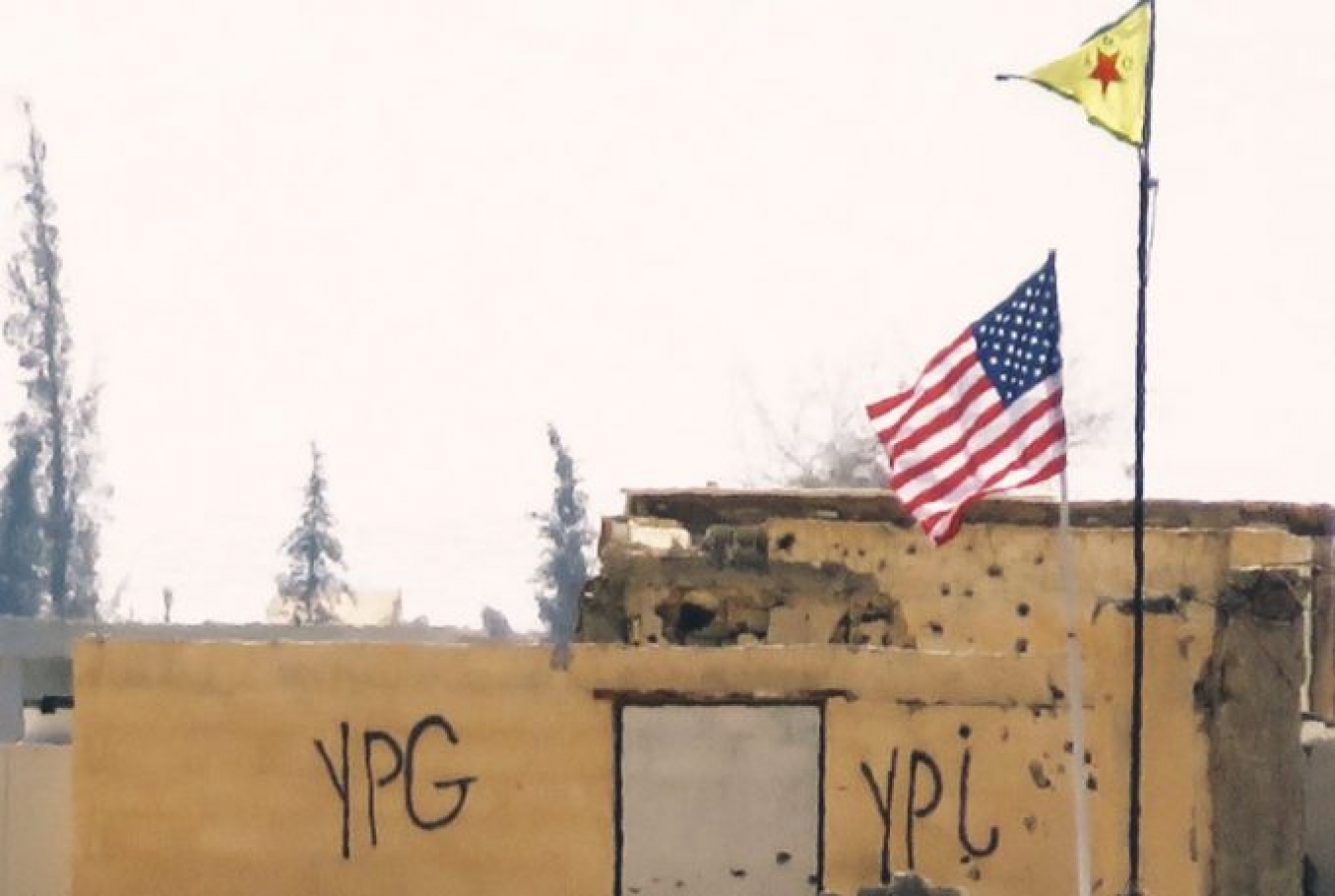
The only thing that changed was the geography and the fact that it was the end of the road for the SDG, an extension of the terrorist organization PKK, which had been bolstered by thousands of trucks of weapons support from the US.
However, it was no different from the scenes in Afghanistan.
For what happened in Aleppo was not so much a military defeat as the moment of collapse for an organization that had been trying to exist on another country’s soil, leaning on Washington.
The Syrian army’s advance in Ashrafiya and Sheikh Maksud was undoubtedly made possible by Turkey’s overt support, provided invisibly on the ground, and Ankara’s deliberate decision to remain in the background framed the process as an internal Syrian matter, removing it from the context of ‘foreign intervention’.
Thus, no political space was left for any actor, primarily the US, to intervene.
Despite the call to ‘lay down arms’ from baby killer Abdullah Öcalan on 27 February 2025, the response from terrorist organization leader Mazlum Abdi, ‘it doesn’t concern us,’ was a breaking point for both Ankara and Damascus.
It was precisely at this point that the US military, which had built up heavy military forces along the Hasakah and Qamishli line prior to the Syrian army’s Aleppo operation, remained inactive during the clashes, which was no coincidence.
The US officially declared that it would not take risks for the terrorist organization SDG, which it had used as a ‘mine donkey’ for years, in an area outside its sphere of interest.
Israel’s role and new regional balances
The contacts established by the terrorist organization SDG with Israel following the collapse of the dictatorial Assad regime in Syria, and Tel Aviv’s intention to act as an instrument of its ‘divide, fragment, rule’ strategy, are being neutralized by Turkey.
The events in Aleppo demonstrated that this line is now being shaped by a common reflex between Ankara and Damascus, revealing that Israel’s objectives, alongside those of the US-backed SDG, cannot be realized.
As I have written in these lines since the very first minutes of the so-called agreement signed in March last year, this organization will never agree to a compromise, and the SDG’s integration into Syria’s national army will never happen.
The mask falls in Aleppo
The rapid clearing of Ashrafiya, the use of civilians as human shields in Sheikh Maksud, and the counterattacks that occurred despite the evacuation envisaged by the ceasefire, exposed the military and political exhaustion of the terrorist organization SDG.
Aleppo was one of the strongest links in this organization’s defense, and it was razed to the ground in just 48 hours.
Conclusion
The knot in Syria is now tied to the east of the Euphrates. Developments here mark the beginning of the end for the terrorist organization SDG, which has the support of both the US and Israel.
Despite the US and Israel, Turkey sent a message to the east of the Euphrates with the determination shown in Aleppo.
In conclusion, the actors are changing, but the fate of those who trust the US remains unchanged.
And those who fell from the wings of US planes in Afghanistan are preparing for the same fate.