


The fairytale of ‘Free Trade’
The fairytale of ‘Free Trade’
By Orçun Göktürk, from Beijing / China
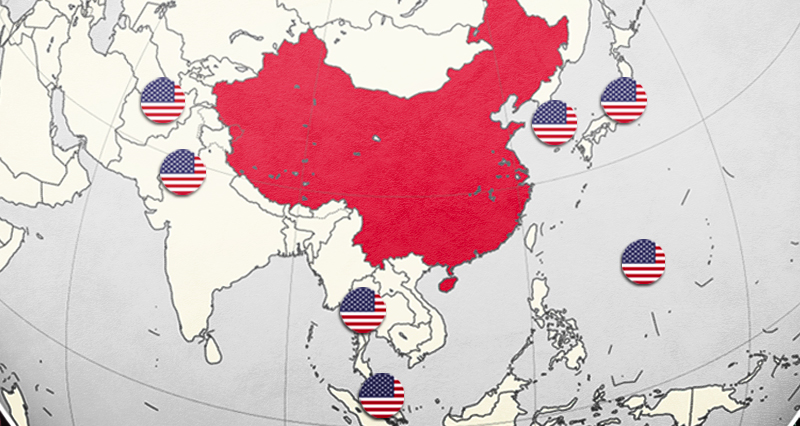
A new bill submitted to Congress in the US clearly demonstrates the stage Washington’s containment strategy against China in the Pacific has reached. According to the proposal, the US will negotiate new free trade agreements with Pacific Island countries; it will eliminate tariffs on certain products and deepen economic relations. The rationale is familiar: “maintaining regional posture”, “strengthening strategic balance” and creating an alternative to China’s increasing influence.
In other words, the issue is not fish, coconuts, or the development of island economies. The issue is clear: detaching the Pacific from China.
This “free trade” hand extended by the US to the Pacific islands is not a classic economic opening, but a geopolitical intervention. Where military bases and security agreements are insufficient, Washington is now trying to use trade as a weapon. However, there is a serious problem: does the US still possess the economic power to promise free trade?
A proposal for political loyalty, not trade
When looking at the text of these agreement proposals and the way they are defended, it is immediately noticed that trade is a secondary element. The main emphasis revolves around concepts such as “China’s influence”, “regional security”, and a “free and open Pacific”. Free trade here is not a goal, but a tool.
The message from the US is this: “Limit your economic relations with China, and engage in free trade with us.” But at this point, Pacific countries may ask the following question: what will we get in return?
Free trade of an economy detached from production?
Free trade works as long as the parties can offer tangible economic value to each other. The fundamental problem the US faces today starts right here. Because the US has long ceased to be a production economy. Industrial production has shifted to China and Asia. Not only production, but dependence on China in supply chains has not decreased; on the contrary, it has deepened. The US economy, however, is built on finance, services, and speculation.
Within this picture, what the US can offer to Pacific Island countries is not a broad production capacity or sustainable trade volume. What is offered is mostly limited access to the US market, a few customs facilities, and political alignment in return.
This is not free trade; it is conditional trade
Pacific’s engagement with China is high
For Pacific countries, relations with China are not an abstract geopolitical debate. China builds ports in these countries, finances infrastructure projects, makes energy investments, and establishes long-term trade agreements. In other words, it offers a concrete, tangible economic relationship.
The US, on the other hand, often cannot go beyond saying “stay away from China.” Free trade proposals are being put into play to fill this gap. However, the free trade of an economy without production remains nothing more than a promise.
What does the National Security Strategy say?
The latest National Security Strategy of the US also clearly reveals this approach. In the document, the economy is no longer defined as a tool for prosperity, but as a tool for competition and deterrence. Trade, investment, and supply chains have been made a direct part of the strategic struggle with China.
This means that the free trade the US offers to the Pacific is fueled by security calculations rather than free market ideals. For this reason, it is not universal but selective; it is not inclusive but exclusive.
Pacific countries see the game
Pacific island countries may be small, but they are aware of the global competition. Both the timing and the language of the US proposal are extremely clear. For these countries, the issue is not the “US or China?” dilemma; the main question is, which one offers concrete development?
The US track record so far does not provide a strong answer to this question. The rhetoric of free trade is not convincing unless it is supported by production capacity and investment power.
Containment under the guise of free trade
The fact that the US is putting forward the free trade card in the Pacific shows that its options are decreasing, not that its power is increasing. At a stage where military pressure has reached its limits and ideological rhetoric finds no response, Washington is reheating an old recipe.
However, the world has changed.
The call for free trade from a hegemon that lacks production and cannot offer investment no longer generates attraction.
This is exactly what is happening in the Pacific: The US wants to contain China, but it is gradually losing the economic weight required to do so.