


Independence from the US, social justice, lifting Russia sanctions
Independence from the US, social justice, lifting Russia sanctions
By Deniz Yıldırım – Emre Ünver, from Berlin / Germany
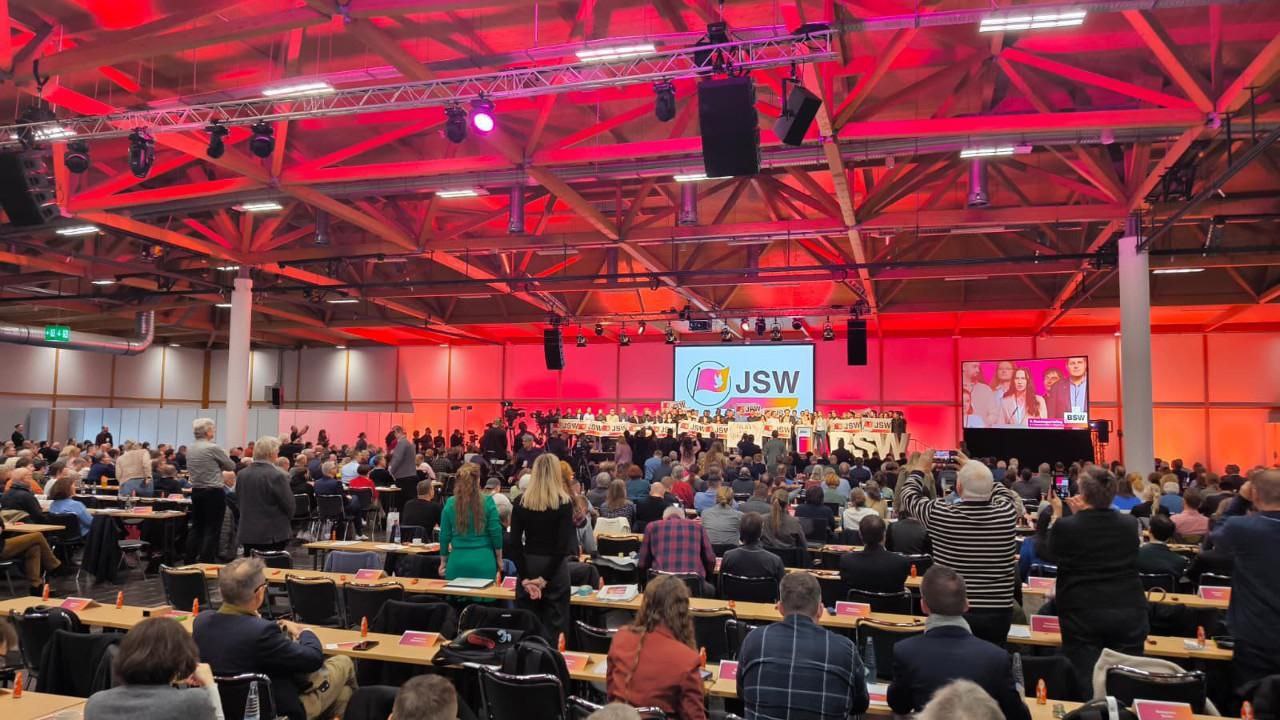
The general congress of BSW, whose support is rapidly rising in Germany, was marked by calls for independence, anti-US/NATO policies, and workers’ rights. The resolution passed in the Congress called for an end to military aid to Ukraine and a resumption of natural gas imports from Russia.
BSW’s new leader
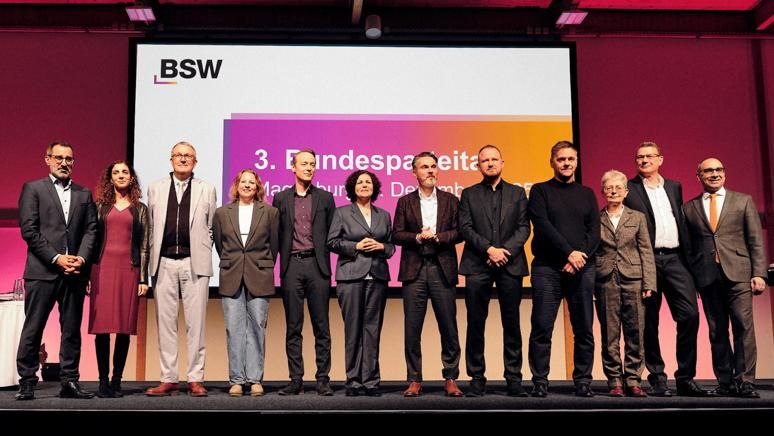
The Sahra Wagenknecht Alliance (BSW) held its 3rd General Congress in Magdeburg on December 6–7. BSW was founded on 8th January 2024 by Sahra Wagenknecht and a group of other politicians, who had split from the Left Party (Die Linke). Sahra Wagenknecht, the party’s founder and one of Germany’s prominent politicians, stepped down from the party leadership. Fabio de Masi was elected as chairperson with 93.3% of the delegates’ votes, while Amira Mohamed Ali became co-chair with 82.6% support.
The speeches at the Congress were marked by demands for Germany’s independence and anti-US/NATO policies. The federal government of the coalition of CDU and SPD was subject to harsh criticism. The resolution in the Congress criticized the government for increasing the defense budget and the new military service reform passed by the Bundestag on December 5, while also calling for an end to military aid to Ukraine and the resumption of cheap natural gas imports from Russia.
Peace policy of Willy Brandt and Egon Bahr
Fabio De Masi, delivering his first speech as party chair on the second day of the Congress, emphasized that BSW set out with the aim of transforming German politics. Drawing examples from George Orwell’s 1984, De Masi likened Germany’s current situation to the novel.
He argued that sanctions against Russia had not benefited the German economy, and importing gas from Russia would help Germany become independent of the US and contribute to peace in Ukraine. He criticized the European Union as being “at the heel of the US” and underlined that BSW’s mission is to pursue “a peace policy in the tradition of Willy Brandt and Egon Bahr”.
De Masi also addressed BSW’s attitude toward the AfD. Although he said that there are significant political differences between the two parties and reiterated that BSW would not participate in the “firewall” (Brandmauer) policy, a metaphor that stands for a political stance that excludes “any form of cooperation with extremist parties”, in the new term too.
“We don’t want American troops”
During the Congress, we spoke with BSW executive Sevim Dağdelen. She stated, “For Germany to become independent, the first step is to remove US troops and American nuclear weapons from Germany.” Citing the departure of Russian, French, and British forces, she added: “The post-1945 era must finally come to an end. It is time for US troops to leave as well. The US, together with the Soviet Union, liberated Europe from fascism during World War II. But 80 years have passed. Today, for Germany to determine its own policies, this military presence must end.”
Dağdelen also said that Germany should strengthen relations with BRICS countries to break free from economic and geopolitical dependence on the US: “US global dominance is waning, and this trend cannot be stopped. Therefore, Germany must forge new partnerships in line with the interests of its own people, workers, and youth”.
“NATO is the reason behind the war in Ukraine”
Dağdelen also addressed the war in Ukraine: “The reason behind the war in Ukraine is the process of integrating Ukraine into NATO. This directly threatened Russia’s security needs. After the collapse of the Soviet Union in 1989, promises were made that NATO would not expand eastward. Yet today, the entire former Eastern Bloc has joined NATO. Russia saw that its security concerns were not being taken seriously. The 2008 Bucharest Summit granting Ukraine and Georgia NATO membership prospects, and the events following the 2014 coup in Ukraine, further escalated tensions. Of course, we don’t consider Russia’s violation of international law by starting the war to be right. We oppose it. But this war became possible due to a clear provocation.”
Dağdelen also argued that the war could be stopped: “How? By ending the possibility of Ukraine joining NATO and establishing a new security architecture between Russia and Europe. Today, Germany and European countries are kept involved in this war, both economically and militarily, in line with US interests. The result has been a destruction claiming millions of lives.”
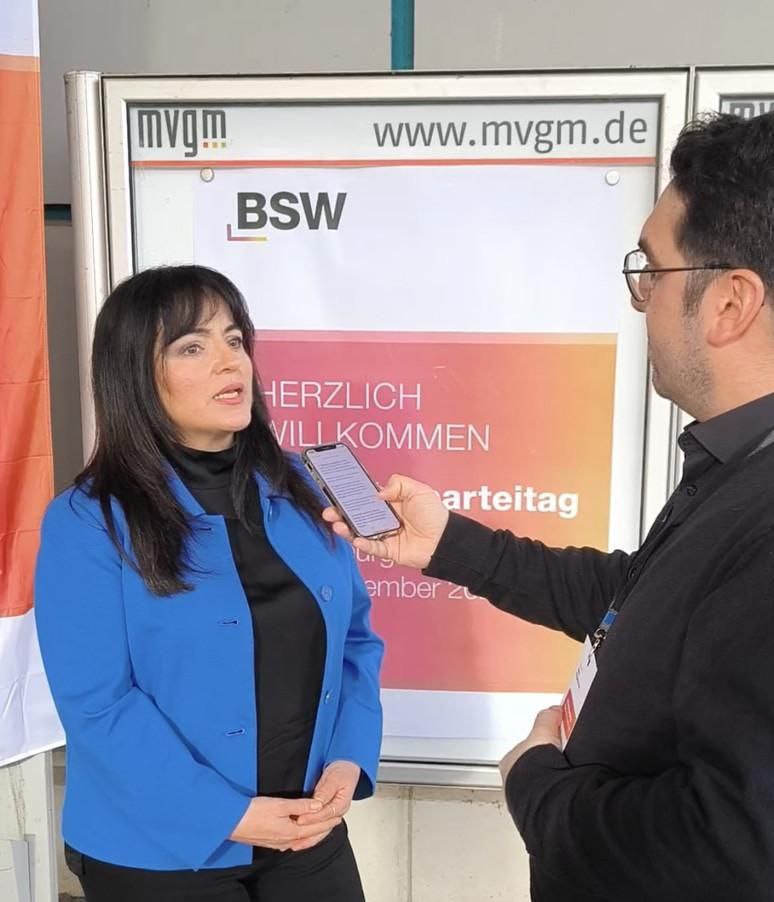
Dağdelen also talked about the people of Turkish origin in Germany: “As BSW, our doors are open to everyone who is pro-peace, supports the social state, and opposes sending our children to war. Our call to the voters of Turkish origin is the same: our struggle is for peace, social justice, and workers’ rights.”
The main reason for a sharp rise in energy prices in Germany is the sanctions on Russia. Since the war began, energy prices have increased by 77.5 percent. We advocate for the lifting of these sanctions. Energy should be sourced wherever it is cheapest. So, it is more rational to buy from Russia than to buy expensive and dirty energy from the US.
We are also opposed to the massive arms budget imposed by the capital and the government. Allocating 5% of GDP to arms, as demanded by NATO, means that 225 billion of Germany’s 500 billion budget will be allocated to military spending every year. This money will be taken away from education, health, culture and infrastructure budgets.”
“A fortune for our society”
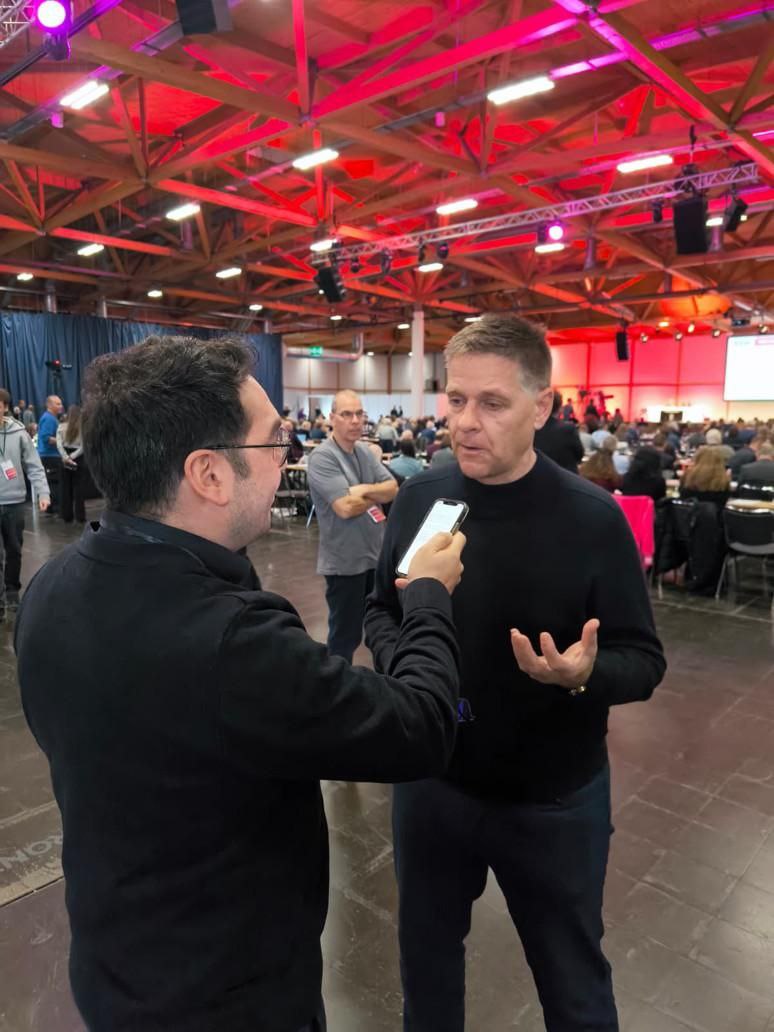
BSW Secretary General Oliver Ruhnert also spoke about the people of Turkish origin in Germany. A Berlin native, Ruhnert said, “The Turkish community in Berlin is an inseparable part of the city. People born in Germany, who are German citizens but of Turkish origin, now form an important part of this country’s cultural fabric. This genuinely makes me happy. I know many people of Turkish origin, and I believe this diversity is a fortune for our society.”
Ruhnert added, “The Turkish community demonstrates a structure that aligns with values we care about: respect for discipline, rights and responsibilities, social welfare, and the possibility of upward mobility. Many Turkish families who have come to Germany have built their lives entirely around these values.”
A key agenda item at the Congress was the review of the draft report prepared by the party. The draft, approved by a majority vote, included notable statements. The report argued that the “Russian threat” is nothing but “perception”. It calls for halting rearmament in Germany, the removal of US intermediate-range missiles from Germany and outlines the goal of a “sovereign, Europe-centered foundation for peace” The report reads: “We are fighting for a sovereign Europe that defines its own security interests, balances those interests, and establishes a stable peace order with all neighbors including Russia based on shared security. Germany should be the driving force of a new Helsinki process grounded in disarmament, confidence-building, and economic cooperation.”
The founder of the BSW, Sahra Wagenknecht, gave a speech reflecting on the party’s foundation and membership system. She noted that the party’s membership has exceeded 11,000 and that 6,000 applications are still pending. Wagenknecht acknowledged that this membership system caused disappointment among many supporters, and thanked everyone who maintained their support despite long waits.