


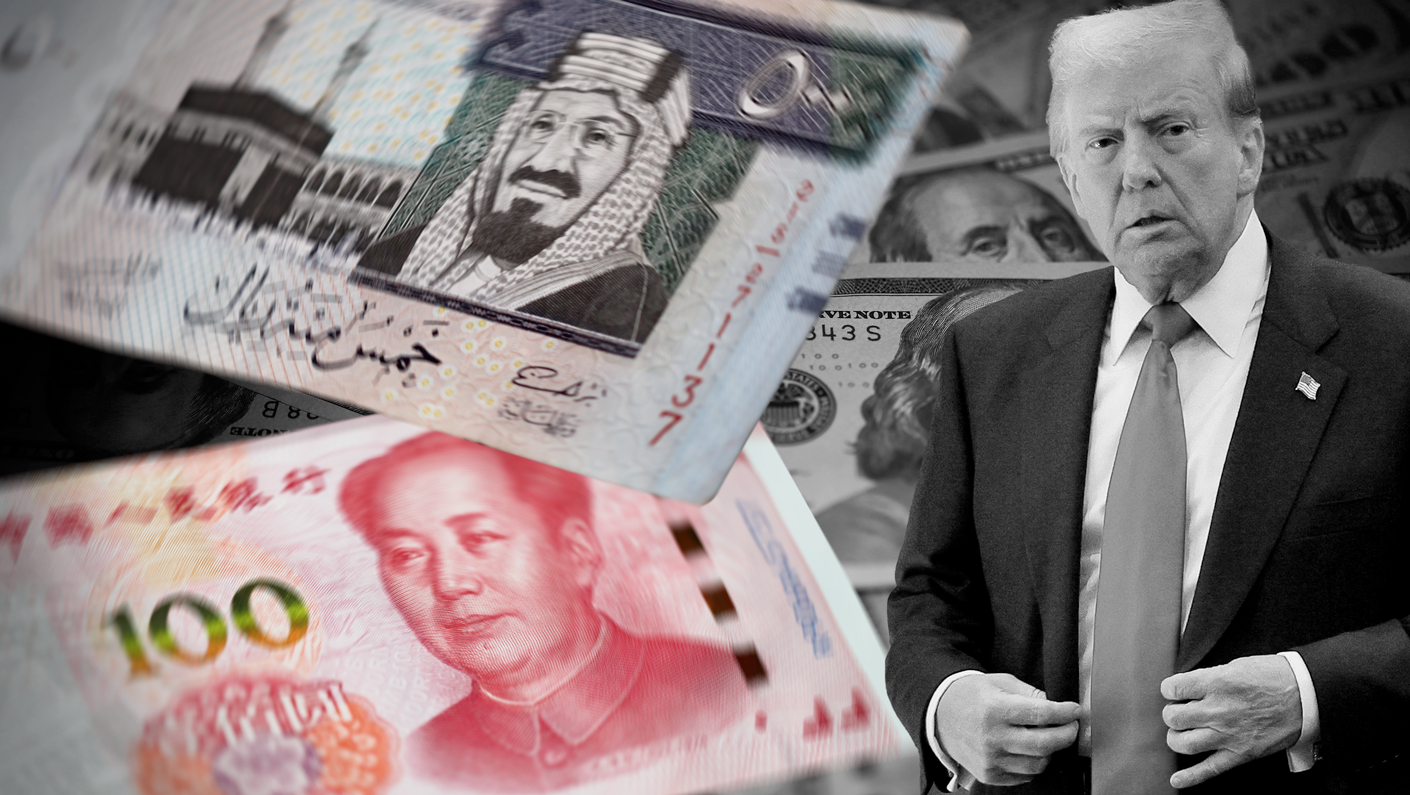
Cooperation between Saudi Arabia and China is also a model for countries such as the UAE, Qatar, and even Türkiye.
Cooperation between Saudi Arabia and China is also a model for countries such as the UAE, Qatar, and even Türkiye.
By Mohammad Reza Moradi, General Director of Mehr News Agency’s Foreign Languages and International News Department
In recent years, one of the most important developments in the global system has been the significant rapprochement between China and Saudi Arabia; a development that has not only shifted the traditional equations of the Middle East, but also has deeper roots in the structure of great-power competition. Relations between Beijing and Riyadh, which began in the 1990s, were initially limited to energy cooperation, but today have turned into a multi-layered and strategic partnership. Xi Jinping’s historic visit to Riyadh in December 2022 and the signing of the comprehensive strategic partnership agreement marked the beginning of a phase that showed the two countries intend to take their cooperation beyond the economic level and enter areas such as technology, security, infrastructure, culture, and regional politics. This transformation has occurred simultaneously with the relative decline of Saudi Arabia’s trust in Washington’s policies and China’s efforts to expand its global influence, and this issue has turned the Chinese-Saudi partnership for the United States into one of the major challenges of the new era of great-power competition.
Within the framework of the Belt and Road Initiative, China needs stable access to energy resources and secure trade routes, and Saudi Arabia, with its oil-based economy and ambitious Vision 2030 program, seeks to attract foreign investment, transfer technology, develop new energies, and create political balance between East and West. This alignment of interests has caused relations between the two countries, both at the strategic level and at the operational level, to grow in a way that has no precedent in the past few decades. The cooperations that are currently underway between China and Saudi Arabia directly and indirectly affect the interests of the United States and, from Washington’s perspective, are considered a kind of multi-layered threat; a threat that is economic, security, geopolitical, and financial. In fact, the United States sees this cooperation not as a simple bilateral relationship, but as a link in the chain of China’s efforts to change the world order.
The level of the growing relations between China and Saudi Arabia
Relations between China and Saudi Arabia have grown significantly over the past three decades and today are considered one of the most complex and multidimensional bilateral partnerships in the world. Saudi Arabia, which is the largest exporter of oil in the world, now supplies about 18 percent of China’s imported oil. This volume of energy dependence has caused the relations between the two countries to continuously deepen. Alongside this, Chinese companies have carried out dozens of major projects in Saudi Arabia, from the construction of low-consumption nuclear reactors to the development of the 5G network, construction in NEOM, investment in petrochemical industries, and the creation of joint industrial parks.
From a political point of view, the two countries cooperate on the basis of the principle of “non-interference”; a principle that is of great importance to Saudi Arabia in the face of Western human rights pressures and also provides political support for China on issues such as Xinjiang and Hong Kong. Unlike the United States, China has never made critical interventions on the issue of the killing of Jamal Khashoggi, the Yemen war, or human rights issues in Saudi Arabia, and this has caused Riyadh to see relations with Beijing as a stable and low-cost pillar.
Another important point is the security cooperation between the two countries, the background of which goes back to the purchase of Chinese-made ballistic missiles in the 1980s. This cooperation has now entered a more advanced stage and includes the production of drones on Saudi soil, joint exercises, intelligence exchange, and the development of military capabilities. Exercises such as “Blue Sword 2025” show that Beijing and Riyadh do not suffice only to the sale of weapons, but are moving towards security convergence. Saudi Arabia, relying on Chinese technology, is trying to localize part of its military capabilities, and this trend reduces Riyadh’s traditional dependence on American weapons.
The economic concerns of the United States about China–Saudi cooperation
One of the most important areas about which the United States is concerned is the impact of China–Saudi cooperation on the global economic and financial order. Since the 1970s, the basis of the power of the dollar has been the “petrodollar system”; a system under which the world’s oil is mostly traded in dollars, and this guarantees global demand for the dollar. But in recent years, China has tried to conduct part of its energy trade in yuan, and when Xi Jinping, during the 2022 trip to Saudi Arabia, proposed the use of the yuan in oil transactions, this issue was regarded in Washington as a direct threat. If Saudi Arabia, as the largest exporter of oil, conducts even part of its oil sales to China in yuan, this action can gradually weaken the structure of the petrodollar and call into question the position of the dollar in global trade.
On the other hand, the presence of Chinese companies in major Saudi projects has created other concerns for the United States. Companies such as Huawei and the oil and gas company Sinopec have taken a significant part of Saudi Arabia’s critical markets; markets that were previously practically in the hands of Western companies. This change deprives American companies of major economic opportunities and has a direct effect on Washington’s economic influence. The development of joint projects in solar, hydrogen energy and transport infrastructures within the framework of Saudi Arabia’s Vision 2030 has transformed China’s place from an ordinary partner into a main player in the future economy of this country. This trend has caused the United States to be concerned that its economic influence in one of its most important allies in the Middle East is declining.
Geopolitical and security threats to the United States
Alongside the economy, cooperation between Saudi Arabia and China has also created serious geopolitical and security threats for the United States. Since the 1940s, the United States has considered Saudi Arabia one of the pillars of its security order in the Middle East, and the Riyadh-Washington alliance was one of the main tools of US influence in the region. But Saudi Arabia’s rapprochement with China has challenged this position. Saudi Arabia’s joining of Belt and Road projects, the creation of joint transport corridors, and Riyadh’s placement in the role of an energy node between Asia, Africa, and Europe allow China to expand its influence from East Asia to the heart of the Middle East and create a network of economic dependencies that directly changes the regional balance of power.
From an arms perspective as well, the China-Saudi cooperation is an important challenge for Washington. Saudi Arabia has for years been the largest buyer of American weapons, but now it supplies a significant part of its military needs from China; including combat drones that the United States was not willing to provide to Saudi Arabia due to export restrictions. The creation of Chinese drone production lines on Saudi soil and the expansion of joint military cooperation show that Saudi Arabia’s traditional dependence on the United States is declining; a change that can limit America’s control over the region’s arms balance.
Global consequences of China–Saudi relations for the United States
The expansion of Saudi Arabia-China relations is not only a bilateral development, but has global consequences and can gradually change the international order. This partnership presents a new model of relations between economic powers and developing countries, in which cooperation is formed based on shared economic interests, technological development, and non-political interference. This model is attractive to many countries, and for this reason Saudi Arabia’s support for China’s initiatives, including the Global Security Initiative, can help strengthen Beijing’s position in the world. If more countries follow Saudi Arabia’s path and move towards using the yuan, the role of the dollar in the global economy may face serious challenges.
On the other hand, the increased role of China in the Middle East makes the strategic competition between Beijing and Washington more complex. The United States may be forced to adopt stricter policies to contain China’s influence, from diplomatic pressure and sanctions to increasing military presence in the region. This multidimensional competition will likely extend to other arenas such as Africa, Asia, and the energy sector as well. Cooperation between Saudi Arabia and China is also a model for countries such as the UAE, Qatar, and even Türkiye, which are trying to create a balance between East and West. If this trend continues, it can help the formation of a multipolar order in which the US power will be less than in the past.
Conclusion
The rapprochement between Saudi Arabia and China is one of the most important geopolitical developments of the contemporary era; a development that has not only brought the relations of the two countries into a new stage, but has also affected the equations of global power. This extensive cooperation, from energy and economy to technology and security, is a serious warning for the United States that its traditional influence in the Middle East is being eroded. The threats arising from this trend are multi-layered: from the possible weakening of the petrodollar to the expansion of China’s technological presence in the region, from the military rapprochement of Riyadh and Beijing to the reduction of Saudi Arabia’s dependence on American weapons. If the current trend continues, China will not only be a powerful economic partner for Saudi Arabia, but will also become an actor that can change the balance of power in the Middle East and even the global financial order.
Of course, in the recent trip of Mohammed bin Salman to Washington, efforts were made by the United States to weaken the relations between Riyadh and Beijing. In this trip, extensive agreements were signed in the fields of defense, artificial intelligence, nuclear energy, and investment in order to reduce Saudi dependence on Chinese technology and capital. Also, the increase of Saudi investment in the United States and the signing of strategic memoranda in the field of rare mineral resources and advanced technology projects were among the goals of the United States to preserve its influence in the region and reduce the possibility of Saudi Arabia’s reliance on Beijing. However, how far these agreements can actually be implemented remains a major question.