


Scenarios ahead.
Scenarios ahead.
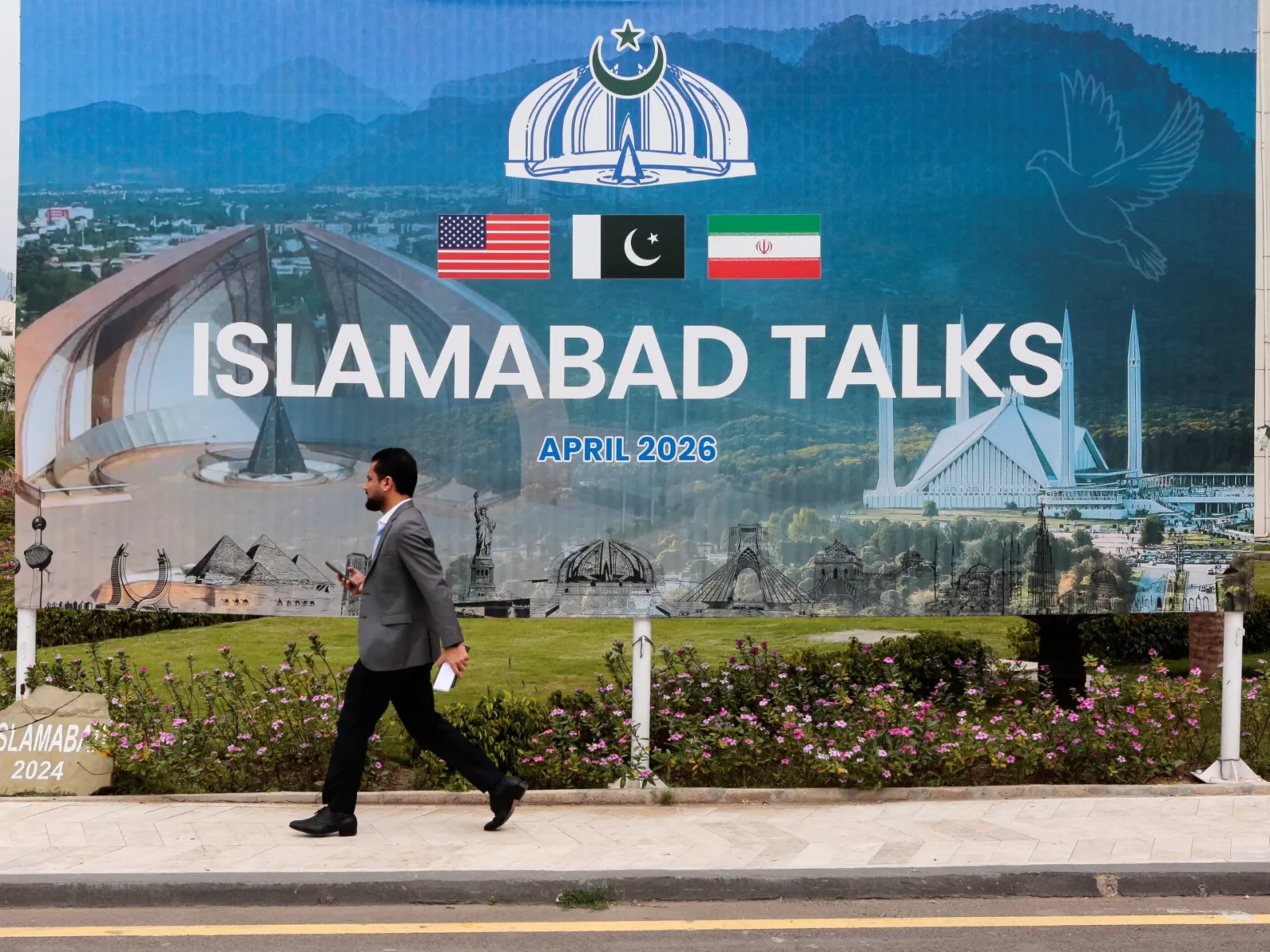
As expected, the talks between Iran and the US failed to produce any results.
Ahead of the negotiations, Iranian Vice President Mohammed Reza Aref had drawn attention to Israel’s influence over the US, stating:
“If we negotiate in Islamabad with representatives of ‘America First,’ an agreement beneficial to both sides and the world is probable. However, if we face representatives of ‘Israel First,’ there will be no deal; we will inevitably continue our defense even more vigorously than before, and the world will face greater costs.”
Reports coming from Islamabad, where the meeting took place, seem to confirm Aref’s prediction: the US side adopted an “Israel First” stance and maintained a hard line on issues of the Strait of Hormuz and uranium enrichment.
Iranian Foreign Minister Araghchi also confirmed Israel’s influence over the American delegation in his remarks after the talks:
“We are disappointed by the conduct of the US. During the meeting, Netanyahu’s phone call with Vance shifted the focus away from US–Iran negotiations toward Israel’s interests…”
Israel appears to have come out as the winner of the “first round” of the talks.
So what happens next?
The first possibility is that negotiations continue despite Israel’s influence, while both sides adhere to the ceasefire in the meantime.
A statement by Iranian Foreign Ministry spokesperson Esmail Baghaei that “From the very beginning, it was only natural not to expect an agreement in a single meeting. No one really expected that anyway” signals that the talks would continue.
Similarly, US Vice President Vance’s words that “We leave here with a very simple proposal, a method of understanding that is our final and best offer. We’ll see if the Iranians accept it”, also indicates that the door to a deal hasn’t been completely closed on either side.
However, even if the talks continue, a concrete outcome is unlikely.
Iran views the Strait of Hormuz and the uranium issue as a kind of lifeline.
On the other side, Israel shows no sign of abandoning its policies of toppling the current Iranian government, which it sees as a threat to its very existence.
And the US does not appear willing to abandon its strategy of targeting China through Iran and containing Russia.
All of this suggests that “diplomacy break” will not last long, and that sooner or later the second scenario will come to the stage, namely, the scenario of war.
In this second scenario, there are many dangerous and irreversible risks, including the potential use of nuclear weapons…
To list the most immediate possibilities that come to mind:
1. Internal unrest and regime change in the Gulf countries,
2. Stemming from the developments in the Gulf countries and the Strait of Hormuz, the collapse of the petrodollar system and dollar empire declared by Nixon in 1971,
3. A global economic crisis and the breakdown of global supply chains, the deepening of social crises in energy-dependent countries, especially in Europe, potentially leading to radical systemic changes,
4. The spread of war across the entire West Asia region, internal instability in Syria and Iraq, and heavy attacks on the US/Israeli targets across the region,
5. A deepening existential crisis in Israel, increased reverse migration, dissolution within the military and bureaucracy, and a regime crisis,
6. Increased Russia and China support for Iran, going hand in hand with a sharper escalation of tensions in US–Russia and US–China relations,
7. The possibility of US/Israel resorting to nuclear weapons against Iran (whether this would happen depends on whether Iran possesses nuclear weapons).
In short, happenings suggest that the world is merely taking a short pause on a path leading toward major upheaval.
We are heading toward a moment of irreversible rupture where the defeat of those seeking to sustain the Epstein order becomes even deeper.