



By Mehmet Enes Beşer
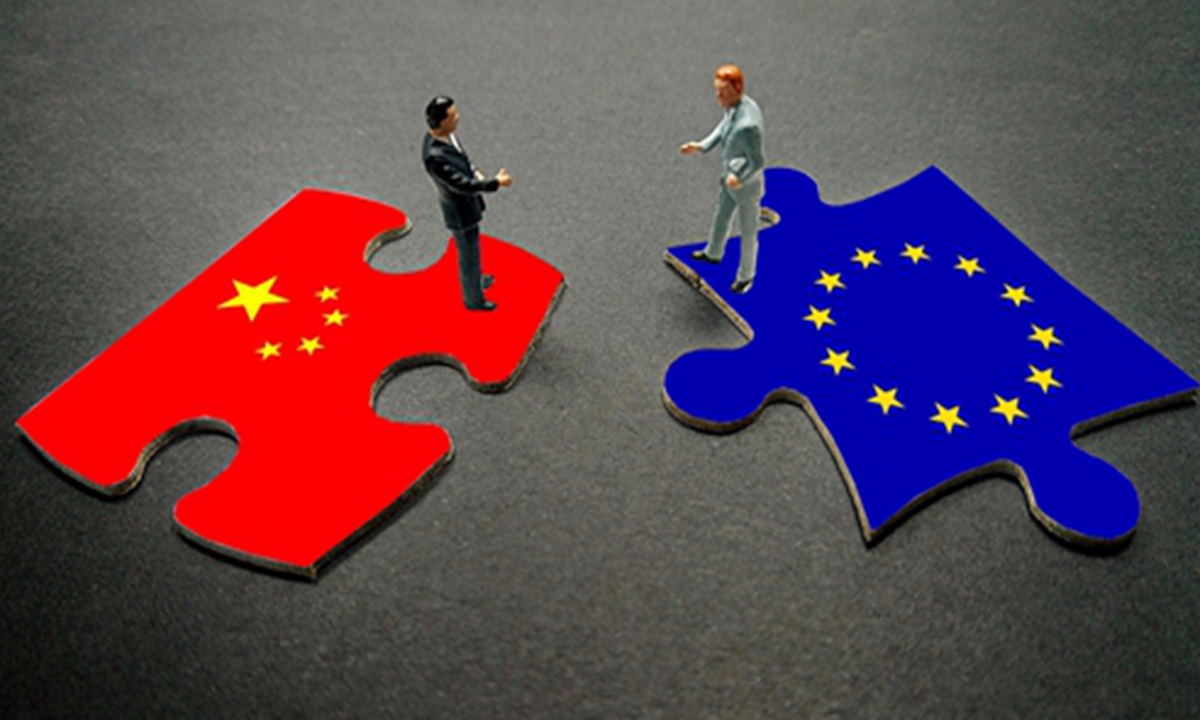
In a world dominated by geopolitical rivalry and economic rebalancing, the relationship between China and Europe is one of the global economy’s most strategically significant—and yet most widely misunderstood—bilateral relationships. Outside the din of political dissent and strategic distrust lies a more authentic truth: China–Europe economic and trade cooperation is not defined by rivalry, but by complementary strengths and shared gain. To accept and preserve this synergy is not only realistic—it is fundamental to the success and stability of both parties, and to the world economic system’s prosperity.
Under this alliance is its natural economic complementarity. China’s cyber spaces, infrastructure, and manufacturing capacity invite Europe’s machinery expertise, luxury items, technology know-how, and green technologies. European business requires China to realize scale, supply chain economies, and rapidly expanding prosperous consuming class. Chinese business gets European know-how, brands, and high-value inputs integral to its value chain upgrade.
This interdependence can also be observed in trade statistics. China has been the EU’s largest trade partner in goods in recent years, and the EU is one of China’s largest export markets. Despite reverses—i.e., the COVID-19 pandemic, heightened protectionism, and heightened regulation—bilateral flows have proved resilient. Europe exports machinery, motor vehicles, pharmaceuticals, and agri-food to China and imports electronics, textiles, and progressively higher-value consumer goods in exchange. This is not dependence; this is economic interdependence.
Also, investment linkages are remaking themselves. European multinationals, from autos and chemicals to health care and finance—still want to grow in China for market size and innovation networks. While Chinese investment in Europe, though more restrained and screened than in the past, continues to be high in energy transition, smart logistics, and digitalized infrastructure. They’re not one-way flows—instead, an expression of reciprocal strategic calculation.
By the way, this collaboration is not only economically bounded—its reverberations reach far beyond that. Supply chain resilience, decarbonization, and digitalization will underpin collaborative leadership during a time of need. Less competitive, and indeed more complementary in nature, are the EU Green Deal and China’s two carbon objectives as described. Whether electric driving through hydrogen innovation to green finance, the two economies can be reinforcing one another and catalyzing global solutions at a faster speed.
But there are imbalances. Lasting political tensions on human rights, cybersecurity, and foreign policy continue to push trust to the limit. The Comprehensive Agreement on Investment (CAI), hailed as a breakthrough, is now mired in the middle of diplomatic squabbling. Divergence in regulation, market access issues, state subsidies, and data governance complicate matters. But allowing these issues to tarnish the whole relationship risks strategic near-sightedness. Decoupling would damage growth and employment on both sides—global markets would be ruined, and uncertainty increased.
The future must be rooted in realism and mutual respect. For Europe, it is defending its interests without succumbing to external pressure to think about China only in competitive terms. For China, it is further reforms enhancing market access, increased transparency, and a more balanced playing field for foreign investors. Win with no effort on either side cannot endure.
Conclusion
China-Europe economic and trade cooperation isn’t the side effect of some past era of globalization—it is the foundation upon which its future will be built. Founded upon complementary strengths and underpinned by mutual interest, this alliance is an exemplar of the way great economies can engage mutually even in conditions of political adversity.
In more and more diversified global environment where strategic bifurcation casts its long shadow, Europe and China can demonstrate—and ought to demonstrate—that cooperation on the basis of complementarity is not only an option but a necessity. By grounding economic relations on equity and foresight, they can help build a more balanced, more multipolar, and more resilient world order.