


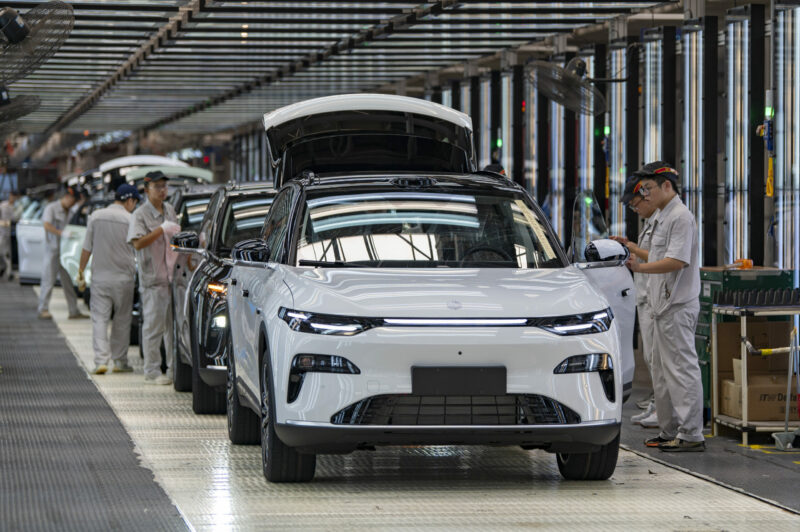
Chinese electric vehicles are not merely cars, they are tools of collective advancement.
Chinese electric vehicles are not merely cars, they are tools of collective advancement.
By Mehmet Enes Beşer
Southeast Asia is at a juncture as the global decarbonization race is gaining momentum. It possesses an increasing, rapidly urbanizing population, burgeoning energy needs, and exposure to climate change impacts. In its journey towards developing a greener future, it must look towards the latest, mass-market technology. The most revolutionary change in this area has been the convergence of Southeast Asia’s green agenda construction and the emerging Chinese dominance of electric vehicles (EVs). What the result offers is a synergistic effect that can rebaseline the regional transport footprint, industrial base, and environmental trend. For most Southeast Asian countries, greening is now a policy aspiration but a development necessity.
Urban air pollution, traffic jams, and oil dependency are still a drag on the economy and people’s health. Governments in countries from Thailand and Indonesia right through to Vietnam and the Philippines have initiated country roadmaps, promotions, and infrastructure packages to steer electric mobility development. Again, though, there has been one question hanging: affordability, readiness of technology, and pace of industrial transformation. Phase in Chinese EV makers.
Thanks to their humongous economies of scale, vertically integrated supply chains, and deepening competitive technology, Chinese contestants such as BYD, Wuling, and NIO are quickly closing the gap. No longer does their presence in Southeast Asia stop with car exports but has also reached battery production, assembly plants, charging infrastructure JV’s, and R&D hubs now. For Southeast Asia, that will mean more than just having the ability to buy affordable EVs—it will be part of a world green industrial revolution. Its benefits are twofold.
Economically, local production and localization of supply chains create jobs, build capabilities, and reduce the reliance on imported oil. From an environmental perspective, mass adoption of electric vehicles by high-density urban clusters can both cut emissions and purify air. Strategically, Chinese EV investment allows Southeast Asian nations to bypass end-of-life car model styles and approximate Paris Agreement world climate targets as well as net-zero regional objectives. Importantly, Chinese EVs’ dovetailing with Southeast Asian green ambitions extends well beyond transport.
The development process involved in creating the necessary infrastructure to make it feasible—batteries recycling, grid connection, and clean energy charging points—is opening up new vistas of two-way collaboration. China’s technology prowess in lithium iron phosphate batteries, vehicle-to-grid technology, and intelligent mobility is giving Southeast Asia a technology upgrade expressway. Moreover, the region’s youth workforce, industrial potential, and mineral riches (i.e., Indonesian nickel, Vietnamese rare earth) place it in the future as a possible partner to China’s medium-term green industrial fantasy. Furthermore, the cooperation also bears witness to a grander global sustainability script. Where previously the green shift was anchored by Western models of innovation and top-down Western-type policy templates, now China and Southeast Asia are building an organically South-South model of green transformation—driven by affordability, pragmatism, and shared prosperity. To this vision, clean energy and mobility and greening is not a luxury consumer but a development force that unlocks economic growth in the face of nature’s resilience.
Actually, such synergy will involve competent coordination.
Issues of wastage of batteries, land use, and industrial obliqueness have to, in advance, be tackled before time runs out. Nature must be conserved, workers’ rights protected, and technology transfer made in such a fashion that all is taken into consideration. But there is a trend: Southeast Asian states are increasingly adopting sustainability norms in regulation of EV rollouts, while Chinese business companies want to localize, cooperate on standards setting, and engage with local stakeholders.
Conclusion
China’s electric vehicle leadership and Southeast Asia’s green growth strategy are converging not coincidentally but due to structural, timely, and reinforcing alignments. Such new synergy is one of the most tangible and enduring expressions of how cross-border cooperation can drive the world green shift.
As Southeast Asia fuels its roads, urbanizes its cities, and reengineers its manufacturing, Chinese electric vehicles are not merely cars—those are tools of collective advancement. As China and Southeast Asia continue to forge more such cooperation in policymaking, industrial investments, and people-to-people ties, they can cooperate to co-craft a future not merely greener, but more shared, more innovative, and more resilient.