


The speech of B.R. Deepak at the forum ‘Epstein and the Bottomless Depravity of the Elites – Urgent Need for a Cultural Renaissance!’
The speech of B.R. Deepak at the forum ‘Epstein and the Bottomless Depravity of the Elites – Urgent Need for a Cultural Renaissance!’
By B.R. Deepak, former Director of Center of Chinese and Southeast Asian Studies of Nehru University, New Delhi
The Executive Intelligence Review (EIR) organized an online forum on March 2, 2026, titled “Epstein and the Bottomless Depravity of the Elites – Urgent Need for a Cultural Renaissance!” B.R. Deepak, former Director of Center of Chinese and Southeast Asian Studies of Nehru University, New Delhi held a speech here. Below you can find the transcription of Mr. Deepak’s speech.
It is my privilege to be one of the participants in this August gathering of distinguished guests, colleagues, and friends. We meet today at a moment of deep uncertainty in world affairs. The international environment is marked by rising tensions, geopolitical rivalries and the erosion of trust between nations, from the Russia-Ukraine war to crisis in regions such as Latin America, even in the Indo-Pacific, and now the US-Israeli war, the global order appears increasingly fragile. The expiration of major arm control arrangements like the New START treaty raises concern about strategic stability. At the same time, political scandals, economic protectionism, and ideological polarization have contributed to a broader sense of moral and institutional decline in global governance.
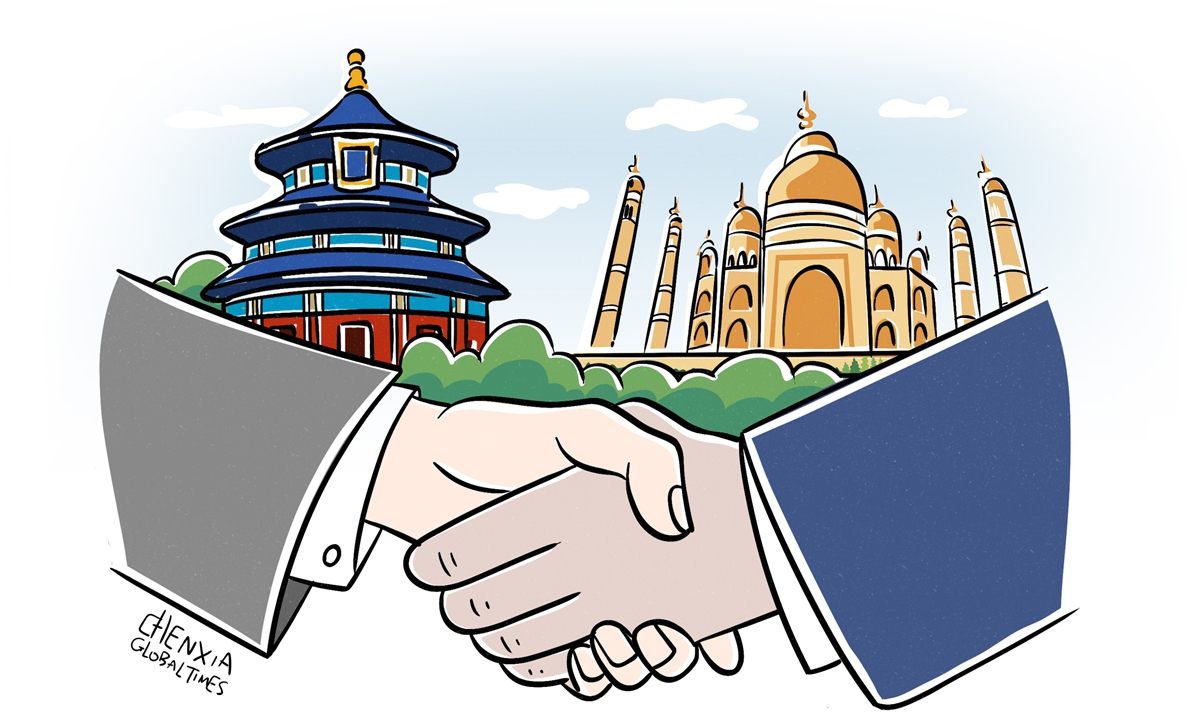
In such a turbulent international context, I believe the joint declaration issued by Schiller Institute on January 12th, calling for the re-establishment of international law and the creation of a new global security and development architecture, becomes particularly significant. Since many of the panelists have been talking about cultural dialogue, cultural renaissance, I think I wish to focus on one particularly meaningful example of such a dialogue: the dialogue of civilizations between India and China in the last two millennia.
Unlike the pessimistic vision proposed by Samuel P. Huntington in his well-known thesis of the Clash of the Civilizations, history shows that civilizations do not inevitably collide, instead they often interact through dialogue, exchange and mutual learning. One of the most remarkable features of this interconnectedness between India and China, was what scholars in China and India describe as a circulatory movement of ideas, people, technologies and commodities across regions. The most profound example of this exchange was the transmission of Buddhism from India to China beginning around the first century, as Buddhist ideas moved across cultures, they absorbed and interacted with local philosophical traditions, particularly Confucianism and Taoism.
The result was the emergence of a uniquely Chinese form of Buddhism, characterized by new interpretations, artistic expressions and even newly compiled sutras. In this way, Buddhist philosophy became both a bridge and a catalyst for intellectual synthesis between two civilizations. Alongside religion, many other elements of knowledge also travel through these networks.
Ancient Indian and Central Asian contributions in astronomy, literature, music and linguistic fields entered China and enriched regional knowledge systems. These intellectual exchanges expanded the horizon of both civilizations, and helped shape the development of Asian scholarship for centuries. Equally important were the people who facilitated this dialogue. It was primarily people-centric dialogue; thousands of scholars, monks, translators and travelers journeyed between India, Central Asia and China. Their dedication created one of the most remarkable translation enterprises in human history.
In fact, if we say that the entire repository of Buddhist literature in East Asia was created by these people, it won’t be wrong. In fact, many ancient Indian Buddhist texts that were lost in India, or the land of origin, survived today only in Chinese and Tibetan translations, and various scholars and monks were instrumental in this interconnectedness or the bridge-building, for example, Faxian, Paramarth, Kumarajin, Xuanzang and I Ching. These individuals traveled across deserts, mountains and dangerous routes in search of knowledge. Their journeys were not merely religious pilgrimages, they were acts of cultural diplomacy. They collected manuscripts, studied languages, documented societies and translated texts that would shape intellectual life across Asia. In fact, Xuanzang’s celebrated work, “Great Tang Records of the Western Region”, provides invaluable information about geography, society and religious institutions of ancient India. Some of the archaeological discoveries in India have been based on what Xuanzang wrote during the 7th century AD.
There were civilizational exchanges between India and China. They are the manifestation of this interconnectedness. It was not limited only to ideas and religion, it also involved technologies and economic interaction. Trade routes carried commodities and practical knowledge between the two regions. A fascinating example of this development is the sugar-making technology traveling first from India to China, and then of course coming back in a circulatory movement to India in the form of granulated white sugar.
Other technologies and commodities followed similar paths. China introduced innovations such as paper, silk, porcelain, and tea to broader Asian markets and then the world at large. The openness that characterized these exchanges was also evident during the height of Tang Dynasty in China. The Tang period was remarkably cosmopolitan in character. Archaeological discoveries in places such as Quanzhou, Tali, Lop Nur, further testify to the multicultural networks that flourished across the region. Perhaps one of the most vivid artistic reflections of these exchanges can be seen at the Mogao Caves in Dunhuang. These cave temples located along the Silk Road networks contain murals and sculptures depicting diverse people, religion, and artistic styles. They stand as enduring monuments to centuries of cultural interaction and diplomacy. It is important to recognize that cultural exchange has never been limited to Asia alone.
Western civilizations have also made profound contributions to global development through advances in science, philosophy, technology, and the arts. As one of the most celebrated Indologists in China, Professor Qi Xiaolin has emphasized that interaction between cultures is always complex. Exchange can produce confluence, assimilation, resistance, and transformation. Yet, it is precisely through this dynamic process that civilizations evolve and flourish. Professor Qi Xiaolin has also talked about the benefits or the advantages of this cultural diplomacy. In fact, he flags out three.
First, for more than 2,000 years, India and China have learned from each other and enriched each other’s cultures. Second, the cultural heritage of humanity is not the product of any single nation. It is the collective creation of all people. Recognizing this fact can strengthen mutual understanding and friendship. Third, the civilizations of China and India belong to the broader Oriental cultural sphere, whose influence may play an increasingly significant role in the future of global civilization.
In conclusion, the history of interaction between India and China offers an important lesson for our own time. Civilizations do not prosper through isolation, exclusivism, or protectionism. They grow through dialogue, exchange, and mutual learning. At a time when geopolitical tensions threaten international stability, the example of past civilizational dialogue reminds us that cooperation across cultures is not only possible, it is essential.
If we draw inspiration from these historical experiences, we may yet build a global order based on respect, inclusiveness, and shared human values. Such a vision is not merely an ideal of the past; it is a practical guide for the future of humanity. Thank you very much.