


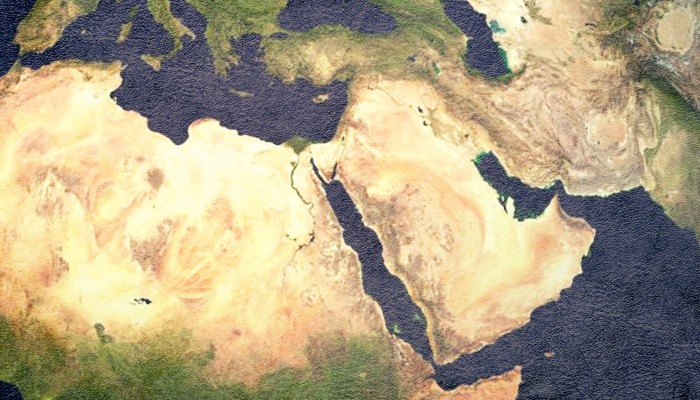
The Nile Delta, Iraq, Lebanon, Palestine, Syria, Anatolia and Iran as a single entity
The Nile Delta, Iraq, Lebanon, Palestine, Syria, Anatolia and Iran as a single entity
By Mehmet Yuva
“Iran attacking neighboring Gulf Arab states is wrong!”, “Iran has proxy forces in Iraq, Syria, Lebanon, Palestine, Yemen, and Afghanistan!” These claims are absurd. Because if a state is capable of ensuring the sovereignty, security, and subsistence of the people under its authority, no parallel proxy force can take root there. If, however, a state cannot fulfill these basic functions on its own, then, even if it appears to be a “state”, it either becomes a “proxy” of foreign powers or there emerges parallel statelets and more than one armed force. The Gulf monarchies ruled by family dynasties fall into this category as well: they are “proxy” entities of the US and Israel.
Let’s remind one point: The Nile Delta, Iraq, Lebanon, Palestine, Syria, Anatolia, and Iran is a single unit. From antiquity up until 1948, when Zionist Israel was implanted like a wedge dividing this geography, they constituted an integrated whole shaped by a shared history, language, culture, and civilization.
If Damascus collapses, both Türkiye and Iran would collapse. This was also something Mustafa Kemal Atatürk had already identified. To secure Anatolia, he built the Balkan Pact and the Saadabad Pact. Also, he sought to incorporate the Sanjak of Alexandretta (Hatay) and the region extending towards Lebanon where Alawites densely live into Türkiye.
This is not about imperialist expansion. Rather, within the confines of objective conditions of the time, to safeguard state sovereignty and national security, and to prevent encirclement by hostile or potentially threatening forces.
Is there a state in Lebanon capable of providing security?
The capitalist class that built the US in North America didn’t even want to see Europe it came from. With the Monroe Doctrine of 1823, it declared that any external power-seeking influence in the region would be treated as a threat to its sovereignty, security and very existence.
Given these realities, and considering that if Damascus manages to stand firm against Israel and the US, Iran’s capacity to resist would also be strengthened, how credible or consistent is the claim that “Iran uses Hezbollah as a proxy force in Lebanon”? Is there a functioning state in Lebanon that ensures national sovereignty, security, and the basic livelihood of its people? Is there a government capable of effectively utilizing the country’s oil and natural gas resources? Is there a political authority or military force able to deter Israeli attacks?
Lebanon has experienced decades of civil war, suffering immense destruction and grief. Within the country, there are factions aligned with the US, France, and Israel. There are those who collaborated with Israel during its occupation, who acted as informants, and who took part in massacres alongside Netanyahu’s leader Ariel Sharon, known as the “Butcher of Beirut”. There are also the Phalangist militias of the Lebanese Kataeb Party, who massacred thousands of civilians and animals in the Sabra and Shatila refugee camps. There are pro-US, pro-French and pro-Israeli Lebanese Forces Party and its allies, as well as armed militias. In a country like Lebanon, structured since 1926 as a system shaped by sectarian and ethnic divisions left by the French, What on earth is the point of wanting the Shia, who make up roughly half the population, not to have an armed organization?
Following the Israel–Lebanon agreement brokered by the US on November 27, 2024, Hezbollah halted its attacks on Israel and handed over its area of control to the Lebanese army. However, beginning from January 26, 2025, Israel violated Lebanese airspace hundreds of times, killed dozens of civilians, destroyed homes with missile strikes, and forced tens of thousands to flee southern Lebanon. The Lebanese state and army proved incapable of responding. They don’t have political will to fight Israel. Indeed, the sociological composition and command structure of the Lebanese army reflect the country’s sectarian and factional political order, limiting its ability to act as a unified national force.
Hezbollah’s fierce resistance
There are sobering lessons from Lebanon’s long civil war, the post-Assad period in Syria, the massacres and inhumane treatment suffered by Alevis who had surrendered their weapons. Had the Druze not had Israel as their protector, the Kurds did not have the US, Christians not had the Vatican and France and Western powers, or Sunni leader Ahmad Shara not had the support of the US and Türkiye, and had foreign fighters lacked patrons, they were going to face massacres just like the unarmed and defenseless Alevis did.
Those who fail to grasp this objective reality underestimated Hezbollah. Following the martyrdom of Hassan Nasrallah and hundreds of members and being cut off from support from Syria and Iran after Assad, their expectation was to quickly eliminate Hezbollah and occupy all of southern Lebanon, one of Hezbollah’s strongholds. They assumed Hezbollah was left high and dry. But now, they are confronted with its fierce resistance.
As a last resort, the US has tried to involve “Sunni” leader Ahmad Shara and foreign fighters in the Lebanese front. The US is seeking support from Ahmad Shara to intervene in the Nebi Shit (Prophet Sheth, son of Adam) region, located on the Syrian border in Lebanon, where it believes there are tunnels and missile manufacturing workshops. Shara is massing troops in this region and in areas close to the Bekaa Valley where Hezbollah is strong. Hezbollah is responding with missile strikes.
Meanwhile, the Israeli army attempts an air insertion operation. Its aim is to locate missile launchers, production facilities, and tunnels in the mountains. However, they are encountering strong resistance and ultimately forced to withdraw from the area.
Objections within the Syrian Army
Field and Damascus sources report that there are objections within the armed forces trusted by Ahmad Shara regarding this plan. Information indicates that Türkiye and Saudi Arabia want Shara to avoid actions that would benefit Israel, ignite Shiite-Sunni conflicts, or destabilize Lebanon. Allegedly, the recent meetings between Shara and the presidents of France and Lebanon were also intended to convey this message.
Lebanese Army Chief of Staff Rodolph Haykal warned that if the Lebanese army were to confront Hezbollah, there was a risk of a “sectarian split along religious lines” within the military. Following this statement, Tom Barrack lashed out the army command.
Keyword: Bahrain
Türkiye’s demand that Damascus act prudently, avoiding sectarian impulses and refraining from military plans that would benefit Israel, is understandable. However, why is the Saudi royal family, which previously issued fatwas for crushing Hezbollah, taking a different stance this time? The keyword is Bahrain.
Bahrain hosts the US Fifth Fleet. Its population is overwhelmingly Shiite. It is ruled by a Sunni king protected by the Saudi military. Over the years, dozens of Shiite uprisings occurred there. All violently suppressed by the Saudi army.
Today, Bahrain is the Gulf country most hit by Iranian missile attacks. Yet Iran has not called for the Shiite proxy forces in Bahrain to revolt. It may be waiting to see the outcome in Lebanon first. So, Iran has not yet played its trump card that if Lebanon (Hezbollah) falls, Bahrain will fall too.
Should Iran fall, the consequences would not be limited to Lebanon; the entire region and distant territories would come under the totalitarian hegemony of the US and Israel. Considering the full implications of this scenario is something few would dare to contemplate.
If Iran were to fall, you would not even want to imagine the absolute monopolistic hegemony of the US and Israel over the fate of not only Lebanon but the entire region and distant lands. As I said: Nile Delta, Iraq, Lebanon, Palestine, Syria, Anatolia, and Iran is a single entity.