


The region must act with a sense of urgency—not merely to insure today, but to build food security tomorrow.
The region must act with a sense of urgency—not merely to insure today, but to build food security tomorrow.
By Mehmet Enes Beşer
Well before the recent memory global rice price spike, food insecurity had already become more entrenched in its grip on Southeast Asia. Already in the region were millions of individuals experiencing limited access to healthy, affordable food based on a mix of structural risk factors, socio-economic disparities, and more severe weather patterns. Climate change today is accelerating the crisis, amplifying deep-seated vulnerabilities in food systems and agricultural distribution. The convergence of climate stress and food security is driving much of Southeast Asia’s societies to an unsustainable or cyclical tipping point.
In Indonesia, mainland Southeast Asia, Myanmar, and the Philippines, not only is food insecurity being manifested as undernourishment but also malnutrition, rising rural poverty, and social unrest. Those are the types of symptoms becoming increasingly tangible as a result of supply chain ruptures and record setting food prices disproportionately hurting the poor. Trends recently point to even in relatively food secure economies like Thailand and Malaysia, segments of the population beginning to feel the bite. The COVID-19 pandemic exacerbated trends, and the volatility of international commodity prices since the war in Ukraine added to the uncertainty.
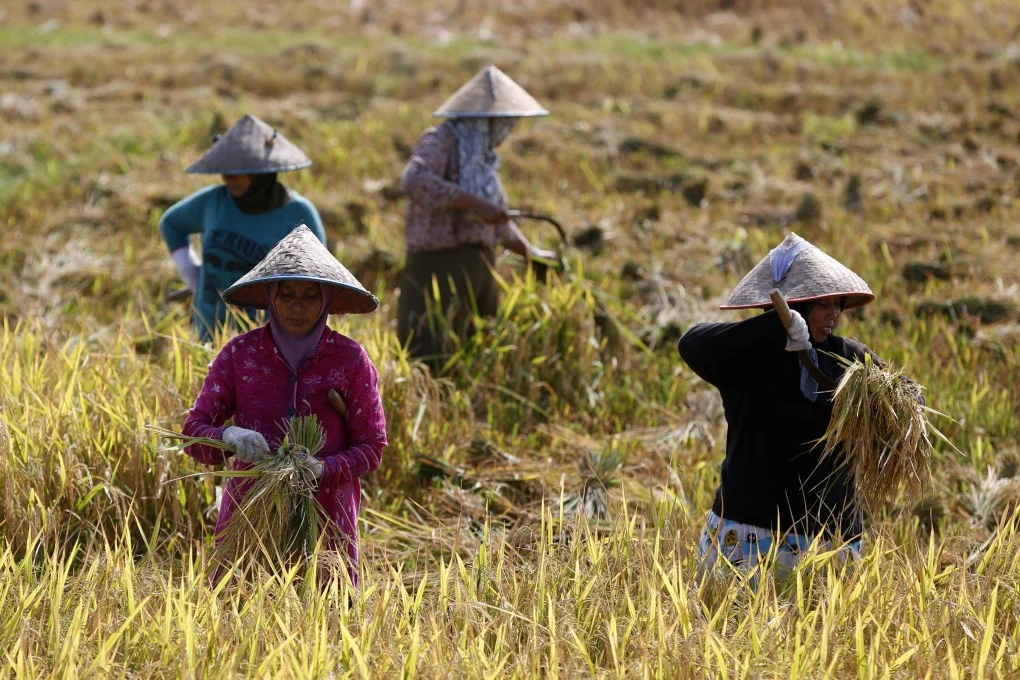
Underlying the vulnerability of the region is the dependence on rice as the food staple. Rice contributes more than 50% of the calories in each Southeast Asian country, although rice cropping is very water- and input-sensitive and highly responsive to rainfall pattern variations, salinization, and temperature. The Mekong Delta, colloquially referred to as the rice bowl of the region, is already suffering from drastic perturbations due to drought, flood, and upstream damming altering sediment flux. These disruptions of the environment are no longer sporadic—they’re becoming perpetual.
Climate predictions are that severe weather patterns will rise, further reducing Southeast Asia’s ability to grow food. Rising sea levels have the potential to inundate productive coastal plains to plant crops, and shifts in monsoon cycles are ruining planting schedules. Small farmers—those who do most of regional agriculture—are least likely to lose out, with few having insurance, irrigation, and climate-resistant crop varieties. City consumers, however, are suffering from an invisibility crisis of affordability, especially among informal workers and working poor.
Despite these challenges, Southeast Asian national responses remain reactive and fragmented. Some have been upgraded: Vietnam, for example, has invested in climate-resilient rice and smart irrigation. Intra-regional collaboration is weak. ASEAN has planned on food security and climate resilience but has a big implementation gap. There is no shared approach to the diffusion of climate-resilient agricultural technologies, food stocks management, or cross-border crop failure response.
There is also a structural problem at scale: food security has long been conceived as an issue of production level and not of access, price, and nutrition. This has shaped policy such that input subsidies and export-based approaches have usually overwhelmed system change. Governments respond to food inflation by resorting to short-run solutions such as price controls or export bans, which provide temporary relief and contribute to fueling regional tensions.
We require now a shift from reactive food policy to proactive food systems governance. That means investment in agroecology, crop diversification, and regenerative agriculture with the capacity to restore soil capital and reduce dependence on chemical inputs. That means also land use and water management reform—especially over transboundary basins like Mekong and Irrawaddy—so that agriculture can be made climate-compatible without sacrificing livelihoods.
At the same time, the food systems of the regions must be integrated and inclusive. Food must be freely translatable across ASEAN member countries during shortages. Early warning systems, exchange of information on crop yields, and collaborative emergency stocks can be developed further. More importantly, climate finance facilities must be mobilized for agriculture adaptation and mitigation. Private enterprises can be part of the process—through sustainable procurement, reducing waste, and supporting climate-smart value chains.
Conclusion
Southeast Asian food insecurity is now not a regional crisis but an entrenched, climatically driven emergency that threatens health, stability, and development. Increasing rice prices are merely a symptom of exposures accumulated over several decades. Climate change is becoming a force multiplier, multiplying risk and widening inequity.
The region must act with a sense of urgency—not merely to insure today, but to build food security tomorrow. That will involve rethinking agriculture that not only produces, but is just, sustainable, and resilient in the context of climate change. To do less would condemn millions more to the specter of hunger in a region that has always had abundance.