


The US and Israel are Attacking Iran’s Centuries-Old Civilization, History, and Cultural Heritage
The US and Israel are Attacking Iran’s Centuries-Old Civilization, History, and Cultural Heritage
By Dr. Emre Senbabaoglu, International Law Scholar.
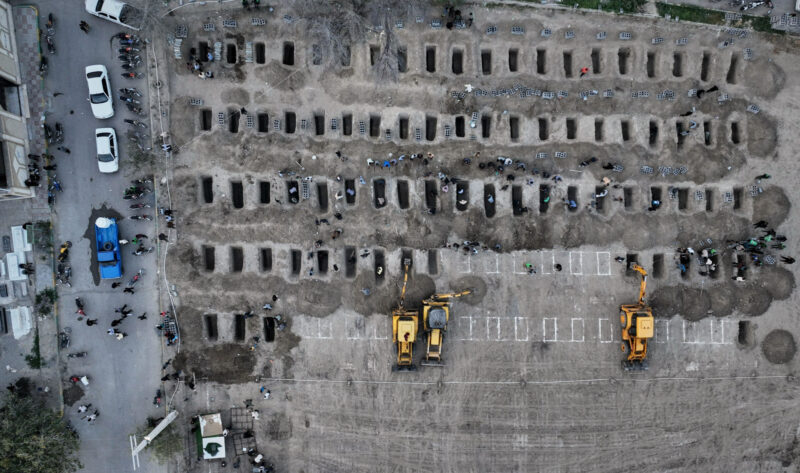
In the war that began following the US and Israeli airstrikes against Iran on February 28, 2026, one of the most tragic incidents of the war occurred. A US Tomahawk missile struck the Shajareh Tayyebeh Elementary School in the city of Minab, Iran, and according to the latest reports, 175 people lost their lives, the majority of whom were girls aged 7 to 12. Although US President Donald Trump held Iran responsible for the attack on the school, the Tomahawk missile that struck the school is a weapon used exclusively by the US and a limited number of its allies and not part of Iran’s arsenal.
A preliminary inquiry report by the US military obtained by The New York Times holds the US responsible for the missile strike on the school in Minab but claims the attack occurred as a result of a targeting mistake by the US military. To lend credibility to the claim of a targeting mistake, the preliminary investigation notes that the school was located in the same block as buildings used by the Islamic Revolutionary Guard Corps Navy—a primary target of strikes—and that the school building had previously been part of that military base.
The US Justification for the School Attack and Debate over Targeting
In short, the US official justification states that the attacks were directed at an Iranian military base adjacent to the school and that the school building was formerly part of that base. It also notes that outdated intelligence provided by the Defense Intelligence Agency (DIA) had identified the area, which included the school, as a military complex. In other words, the US asserts that, based on the intelligence it possessed, it targeted a military complex in Minab and was unaware that a civilian school was located there.
However, satellite imagery shows that while the school building was once part of military facilities belonging to the Iranian Revolutionary Guard Corps (IRGC), it has been separated from the military complex by fences since 2016. Satellite images from 2018 show colorful murals on the walls of the school building and small sports courts, indicating that it was an educational facility. A Reuters investigation revealed that, prior to the bombing, the school’s website had published drawings created by children and photos of school activities.
Therefore, there is no evidence that the school was a military building or was being used for military purposes during the US attack. A simple investigation by the US Defense Intelligence Agency into the targeted area in Minab could have identified the presence of a school there. It is known that the US closely monitors Iran’s military activities and nuclear energy activities. It is also known that on February 28, the US pinpointed and killed Iran’s Supreme Leader Ali Khamenei during the conflict. In this context, the US claim that it was unaware of a school near Iranian facilities is not credible.
The School Attack in Minab Violates International Humanitarian Law
We cannot view the tragic incident in Minab, which occurred during the illegal war of aggression launched against Iran, as a simple targeting mistake. States cannot target civilian objects or kill civilians by claiming, “I received erroneous intelligence” or “the intelligence was outdated.” With this attack, the US has gravely violated international humanitarian law, which governs the rules that must be followed during armed conflict. This branch of international law establishes that in international conflicts, the parties to a conflict must distinguish between “civilian population” and “combatants”, as well as between “civilian objects” and “military objectives”, and must direct their operations only against military objectives (Article 48, Additional Protocol I to the Geneva Conventions of 12 August 1949, and relating to the Protection of Victims of International Armed Conflicts).
This principle of distinction is at the very heart of international humanitarian law and is one of the most important rules that must be observed in armed conflicts. Furthermore, Articles 51(2), 52(1), and 52(2) of the 1977 Additional Protocol I state, respectively, that:
- “The civilian population as such, as well as individual civilians, shall not be the object of attack”,
- “Civilian objects shall not be the object of attack or of reprisals” and
- “Attacks shall be limited strictly to military objectives.”
The key point here, as specified in Article 52(2), is that “military objectives are limited to those objects which by their nature, location, purpose or use make an effective contribution to military action and whose total or partial destruction, capture or neutralization, in the circumstances ruling at the time, offers a definite military advantage”. There is no evidence that the school in Minab, which is considered a civilian object, was a place that contributed to Iran’s military operations or had become a target providing Iran with a military advantage.
If the US carried out an attack on the target in question despite knowing that a school was present there, it would be deemed to have violated both the principle of distinction and the prohibition against attacking civilians and civilian objects. The US attack also qualifies as a “war crime” under Article 8(2)(b) of the Rome Statute of the International Criminal Court. The relevant provision of the article states that the following acts constitute war crimes:
- “Intentionally directing attacks against the civilian population as such or against individual civilians not taking direct part in hostilities”;
- “Intentionally directing attacks against civilian objects, that is, objects which are not military objectives”; and
- “Intentionally directing attacks against buildings dedicated to religion, education, art, science or charitable purposes, historic monuments, hospitals and places where the sick and wounded are collected, provided they are not military objectives”.
Even if we assume that the US attacks targeted military facilities belonging to the Iranian Revolutionary Guard Corps in Minab, these attacks, when taken as a whole, constitute disproportionate attacks under international humanitarian law. Article 51(5)(b) of the 1977 Additional Protocol I codifies the principle of proportionality, providing that “an attack which may be expected to cause incidental loss of civilian life, injury to civilians, damage to civilian objects, or a combination thereof, which would be excessive in relation to the concrete and direct military advantage anticipated” is prohibited. In other words, the civilian harm resulting from the US attack on a military target in Iran is excessive in relation to the military advantage anticipated by the US. By claiming that it was attacking an Iranian military base, the US caused the deaths of 175 civilians and seriously violated the principle of proportionality.
Finally, Article 57 of Additional Protocol I relates to the precautions taken during an attack, stating that “In the conduct of military operations, constant care shall be taken to spare the civilian population, civilians and civilian objects”. Prior to its attacks in Minab, the US was under an obligation to take all feasible precautions “to avoid, and in any event to minimize, incidental loss of civilian life, injury to civilians and damage to civilian objects”. In this context, it is clear that the US failed to verify the target before carrying out the attack in Minab, thereby neglecting its obligation to protect civilian lives and minimize the risk of damage to civilian objects.
In conclusion, the US violated the principle of distinction, the prohibition on attacking civilians and civilian objects, the principle of proportionality, and its obligation to take all feasible measures to protect civilians and civilian objects under international humanitarian law by attacking the Shajareh Tayyebeh Elementary School in the city of Minab, Iran. By doing so, it also committed war crimes. Since these rules of international humanitarian law are also part of customary international law, they apply to the US, even though it is not a party to the 1977 Additional Protocol I.
The US and Israel are Attacking Iran’s Centuries-Old Civilization, History, and Cultural Heritage
We must also note that violations of international humanitarian law by the US are not limited to the killing of elementary school children in Minab. In their military attacks against Iran, the US and Israel are targeting civilian areas —including cities, schools, hospitals, historical sites, and cultural assets— in addition to military targets that can be legally and legitimately targeted. Many historical and cultural sites, including those on the UNESCO World Heritage List, have suffered damage in the attacks by the US and Israel. An attack on Arg Square on March 2, 2026, damaged the nearby Golestan Palace, prompting UNESCO to issue a statement expressing its concern. In its investigations, UNESCO reported damage to the Qajar-era Golestan Palace in Tehran, the 17th-century Chehel Sotoun Palace in Isfahan, and the Grand Mosque of Isfahan, one of the country’s oldest major places of worship. With these attacks, the US and Israel are also targeting Iran’s 2,500-year-old civilization, history, and cultural heritage.
Furthermore, in the US and Israeli attacks on Iran’s civilian infrastructure, a sports hall in the city of Lamerd was targeted, resulting in the deaths of 20 female volleyball players. Tehran’s 12,000-seat Azadi Sports Stadium was also targeted by US-Israeli attacks, and the indoor facilities were completely destroyed. When Russia launched a military operation against Ukraine in 2022, FIFA and UEFA expelled Russian teams, and the International Olympic Committee imposed restrictions on Russian and Belarusian athletes. However, these organizations showed no comparable reaction to these attacks. The discrepancy in the reactions of these Western-dominated institutions toward non-Western countries undermines claims that sports are independent of politics and brings the issue of normative consistency in international sports governance into question once again. These double standards point to a serious crisis of legitimacy regarding the neutrality of international sports organizations.
Imperialist Strategy: Collective Punishment
The targeting of historical and cultural structures, as well as civilian structures such as stadiums and sports halls—which are not used for military purposes and do not qualify as military targets—in attacks against Iran demonstrates that the attack on the school in Minab was not an isolated incident. These attacks indicate that the United States and Israel intend to collectively punish Iran. In the past, the US pursued a strategy during the Vietnam War that relied on the collective punishment of the Vietnamese people by targeting Vietnamese civilians and civilian infrastructure. These strategies, which have been adopted by many Western countries, have also been applied in the US-led wars against Afghanistan, Iraq, and Syria.
The strategy of collective punishment by the US can be summarized in three sequential steps, which may occur sequentially or simultaneously. First, the US demonizes the governments of the countries it targets through the concept of “regime”. Next, it simultaneously weakens these nations economically through sanctions. Finally, in the wars it wages against states resisting US imperialism, it deliberately targets civilians with the aim of inciting them to rise against their own governments.
When examining the US’s war history, the massacre in Minab and the targeting of civilians during the war against Iran should not be regarded as historical anomalies. On the contrary, the strategy of collective punishment emerges as an integral part of the wars aimed at regime change by the US. The US’s long-standing disregard for the most fundamental principles of the laws of war and its commission of war crimes constitute a serious legal and moral problem. Nevertheless, this approach appears to represent a politically consistent strategy.
The violation of international humanitarian law in this manner during the war against Iran reinforces criticisms that the international order is not founded on justice and accountability, but rather on power and impunity. In this regard, US President Donald Trump’s statement in an interview in January 2026 that they do not need to comply with international law highlights that we are still living in the age of imperialism and exposes the unjust structure of the international order.
Sources:
Henckaerts, J.-M., & Doswald-Beck, L. (2005). Customary international humanitarian law: Volume I: Rules. Cambridge: Cambridge University Press.
Protocol Additional to the Geneva Conventions of 12 August 1949, and relating to the Protection of Victims of International Armed Conflicts (Protocol I), 8 June 1977. Retrieved from https://ihl-databases.icrc.org/
The New York Times. (2026, March 11). U.S. at fault in strike on school in Iran, preliminary inquiry says. The New York Times. https://www.nytimes.com/2026/03/11/world/middleeast/us-iran-school-strike.html
The Guardian. (2026, March 11). US responsible for deadly missile strike on Iran school, preliminary inquiry says. The Guardian. https://www.theguardian.com/world/2026/mar/11/us-iran-school-strike
Reuters. (2026, March 12). Bombed Iranian girls school had vivid website and yearslong online presence. Reuters. https://www.reuters.com/world/middle-east/bombed-iranian-girls-school-website-2026-03-12/