


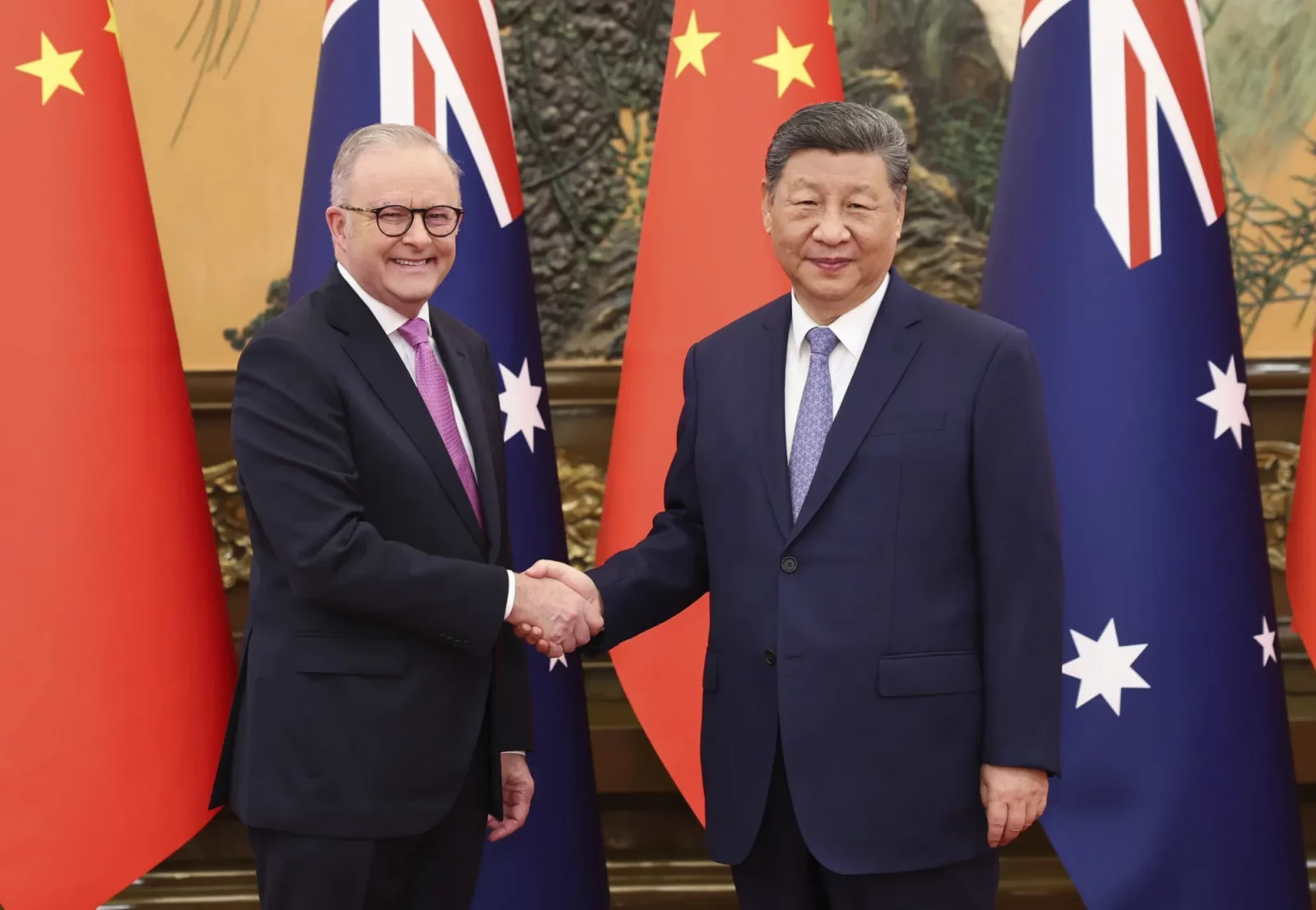
The China-Australia relationship is standing at a crossroads.
The China-Australia relationship is standing at a crossroads.
By Mehmet Enes Beşer
In a world in which geopolitics between states too-often play out in the headlines rather than in hard reality, the China-Australia relationship has become a case study in how frenzied reporting on national security can drown out sensible diplomacy. There exists a healthy and business-minded partnership between the two, but of late, it has been characterized by a sense of distrust, the imposition of sanctions, and quite aggressive and insulting dialogue. However, beneath all the hubbub, the underlying and simple truth is that all of the basic needs of the two countries, namely the promotion of economic activity, a high degree of security in the Asia-Pacific, and action on the issues of the environment, have a very real connection to each other.
Taking the middle ground of the present tension is the securitization of trade, technology, and even academic exchanges. The Chinese actions—banning Huawei from their 5G network, calling for an investigation into the source of COVID-19, and scrutinizing Chinese investments—are framed within Australia’s context to protect themselves from China’s interference. This Chinese reaction to Australia includes tariffs on their products and bans on exports ranging from wine to barley imports, which are viewed as market-oriented but are perceived as retaliatory activities by most observers. Nationalism and the press on both fronts contribute to the heightened tensions between the two nations.
It is both strategically short-sighted and analytically mistaken, however, to define the bilateral relationship in the mainstream using the lens of national security. China-Australia economic interdependence is not a vulnerability—it is a source of stability. China remains Australia’s largest trading partner, accepting roughly a third of its exports. Education, minerals, agriculture, and tourism are the foundation of the relationship, and its interruption negatively impacts both economies. Australian higher education institutions, for instance, have faced pressure with lower Chinese enrollment, while Chinese enterprises have quietly sought more stable alternatives elsewhere.
This rebalancing of the relationship does not imply neglect of issues of substance. Foreign interference issues, technological sovereignty, and cybersecurity are issues but require proportionate and transparent response rather than broad speculation and blanket suspicion. Most needed is a two-track approach: maintaining firm guardrails where necessary, while actively pursuing areas of common interest. Trade should not be held hostage to diplomatic missteps. Nor should climate cooperation—an area where both countries have enormous, shared challenges—be sacrificed on the altar of geopolitical signaling.
More recent signals are that a thaw is not just possible but under way. High-level ministerial contacts have been re-established, and some of the trade restrictions have been removed quietly. Canberra’s new government has signaled a less provocative tone, emphasizing “stabilization” over confrontation. Meanwhile, China economically and diplomatically floundering elsewhere appears keen to revive relations with major partners, including Canberra. These are encouraging trends—but need to be secured through institutional renewal, rather than superficial rhetorical resets.
People-to-people links must be revitalized too. Damage inflicted upon Chinese-Australian communities by suspicion-ridden rhetoric and policy must not be dismissed. Scholar and cultural exchanges—once a mainstay of bilateral fondness—have been drained by the heavy weight of visa questioning and politicized reporting. Revitalizing such links would give diplomacy a human face and insulate the relationship from politics’ whimsicality.
More importantly, both sides should refrain from the trap of appearing to treat every disagreement in a win-lose context. Australia is a state functioning in a sovereign capacity with its own agenda, similar to the ambitions of China, a rising power globally, seeking greater recognition internationally. Their agendas need not be in direct conflict. The art is in how they can find a way to handle the tension between the two.
Conclusion
The China-Australia relationship is standing at a crossroads. They can either pick the route of suspicion, retaliation, and regional grandstanding, in which they can experience temporary domestic political benefits but pay a heavy long-term price for their overall strategy. They can also choose the more pragmatic approach, where their security anxieties are addressed transparently, where they can work together in select sectors, and where they can truly demonstrate respect for each other.
The security challenges must also be dealt with, but in a genuine and not merely demonstration-oriented way, and also in a less politicized and more action-oriented fashion. This way, China and Australia might find a way to escape the dead-end situation and rebuild their relations not on the basis of distrust but on the basis of common potential, particularly within a region that requires stability and a vision for the future.