


Interview with Dr. Daryoush Sefarnejad, an academic and expert on international affairs
Interview with Dr. Daryoush Sefarnejad, an academic and expert on international affairs
By Azar Mahdavan, from Tehran / Iran
“You will end up helpless.” This is a phrase often quoted from Ayatollah Ali Khamenei, Iran’s former leader, in reference to the United States and Israel. Now, more than ten days after the start of military confrontations involving Iran, the United States and Israel, political developments inside Iran have also drawn the attention of observers and analysts. The United States and Israel, which entered this confrontation with the stated aim of weakening Iran’s political structure, have so far failed to achieve their declared objectives.
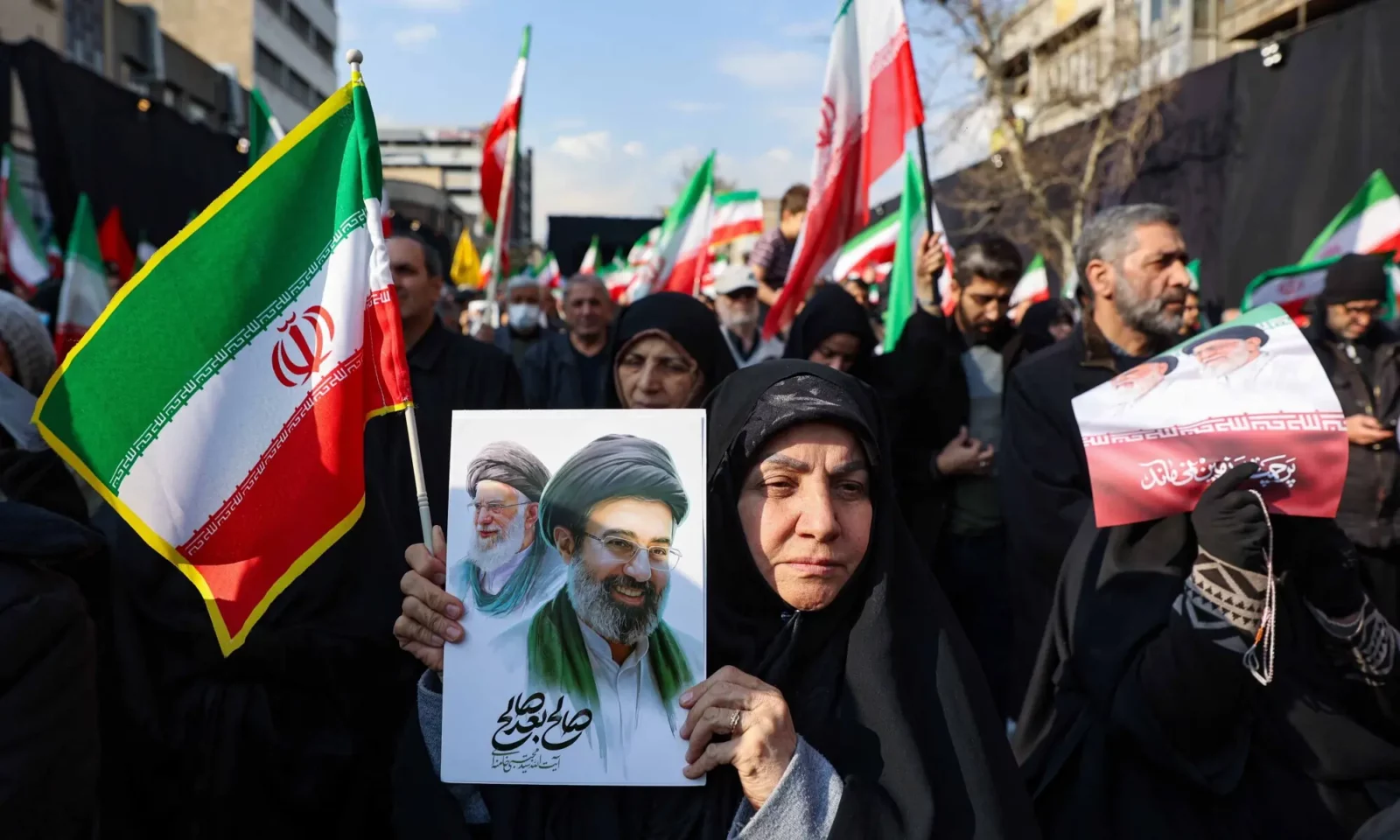
Meanwhile, following the martyrdom of Iran’s leader during the recent developments, the question of succession quickly moved to the forefront of the country’s formal political institutions. The Assembly of Experts selected Ayatollah Mojtaba Khamenei, the son of the former leader, as the third leader of the Islamic Republic of Iran. The decision, made under wartime conditions, has attracted considerable attention both inside Iran and internationally.
In the following interview with Dr. Daryoush Sefarnejad, an academic and expert on international affairs, the message behind the selection of a new leader during wartime, the responses to claims about the nature of the succession process, and the potential impact of this development on the course of the war and Iran’s foreign policy are discussed.
The United States and Israel, seeking the collapse of Iran’s political system, first assassinated the leader of the Islamic Revolution. However, on the tenth day of the war, Iran has already selected its third leader. What message does the appointment of a new leader under such wartime conditions send to the world?
The rapid selection of a new leader during wartime sends a very clear political and strategic message to the international community. One of the main objectives of the United States and Israel in escalating military pressure against Iran was to create disruption and instability within the country’s political structure, especially at the highest level of leadership. In many countries, the sudden loss of a top leader during wartime could create confusion, power struggles, or institutional paralysis. However, the swift decision made by the Assembly of Experts demonstrates that the Islamic Republic possesses an institutional mechanism capable of ensuring continuity even under extraordinary circumstances.
This development shows that the political system in Iran is structured in a way that does not depend solely on a single individual. Instead, there are constitutional institutions designed to manage succession and preserve stability. From the perspective of international observers, the speed of this decision can be interpreted as a signal that Iran’s political system intends to project stability, resilience, and continuity despite external pressure and military confrontation.
What is your analysis of the claims suggesting that the selection of the new leader reflects a hereditary succession? Why did the Assembly of Experts choose the son of the martyred leader of the revolution in such sensitive circumstances?
The argument that this selection represents hereditary succession is largely a political narrative that has been promoted by critics of the Islamic Republic. According to Iran’s constitution, the responsibility for selecting the leader lies with the Assembly of Experts, whose members evaluate potential candidates based on specific religious, political, and managerial qualifications. Therefore, from a legal and institutional perspective, the process itself cannot be described as hereditary.
At the same time, it is important to understand the context in which this decision was made. The country is facing a serious military confrontation and significant geopolitical pressure. In such circumstances, decision‑makers often prioritize continuity, familiarity with key institutions, and experience in strategic affairs.
Ayatollah Mojtaba Khamenei has long been considered a figure closely connected with Iran’s political and security establishment, and this background may have played a role in the Assembly’s assessment.
Therefore, the choice should be understood less as a matter of family lineage and more as a decision shaped by political calculations related to stability, institutional continuity, and the management of a wartime environment.
With the selection of a new leader, how might Iran’s policy in the current war be affected? Do you expect any changes in the course of the conflict?
In the immediate term, it is unlikely that Iran’s overall strategic approach to the conflict will change significantly. Wartime policies are generally determined through a broader network of national security institutions, including military leadership and strategic decision‑making bodies. Because of this institutional framework, the transition in leadership does not necessarily produce an abrupt shift in military or strategic policy.
The primary priority for the new leadership will most likely be preserving internal cohesion, maintaining the operational effectiveness of the country’s defense structure, and ensuring that the transition of authority does not create uncertainty. Continuity in strategic direction is therefore the most probable outcome in the short term.
However, over the longer term, leadership transitions can sometimes introduce gradual changes in tone, diplomatic engagement, or strategic emphasis. Much will depend on how the regional situation evolves and how external actors respond to the current conflict.
Under the new leader, should we expect any changes in Iran’s foreign policy?
Iran’s foreign policy has generally been shaped by long‑term strategic principles rather than the preferences of a single leader. These principles include resisting external pressure, maintaining influence in the region, and developing strategic partnerships with countries that challenge the existing international order. Because these priorities are deeply embedded in Iran’s political and security institutions, they are unlikely to change suddenly as a result of leadership transition.
That said, every leader brings a different political style and approach to diplomacy. While the overall framework of Iran’s foreign policy may remain consistent, there could be adjustments in the way policies are communicated, the diplomatic channels that are prioritized, or the balance between confrontation and negotiation in dealing with international actors. Over time, such differences in style can shape the tone and direction of foreign policy, even if the core strategic objectives remain largely unchanged.