


This story began with the Arab Spring to destabilize major regional powers like Syria, Yemen, and Egypt, followed by ISIS seizing large areas of Syria and Iraq.
This story began with the Arab Spring to destabilize major regional powers like Syria, Yemen, and Egypt, followed by ISIS seizing large areas of Syria and Iraq.
From Cairo / Egypt
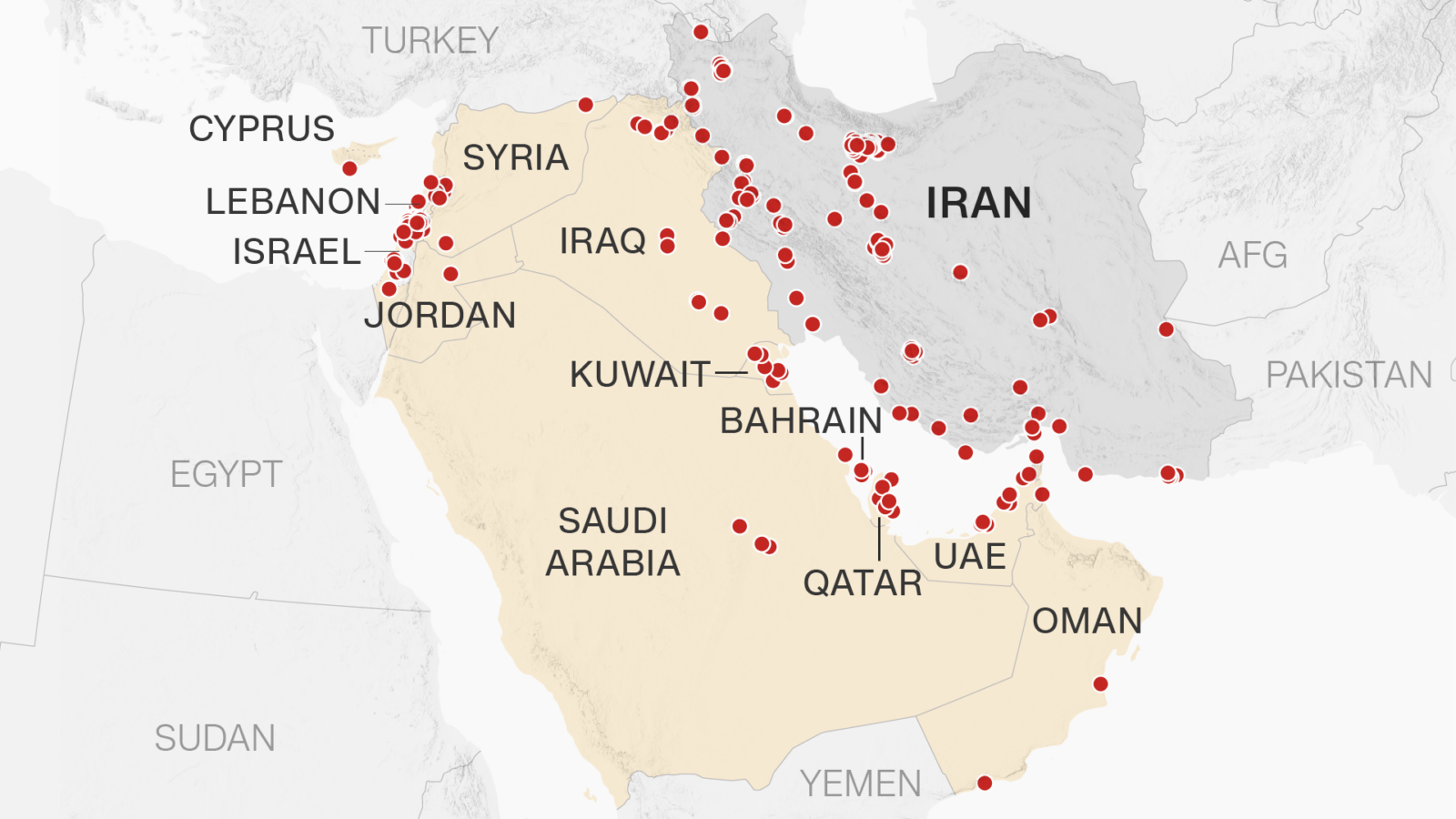
With the successive strikes hitting the Gulf states since the outbreak of the American-Israeli aggression against Iran, many are wondering whether the transformation of these countries into a battlefield—in a war to which they are not a party—might force them to align with the aggressors against Tehran.
The Reshaping of the Middle East
Before the outbreak of war, it was expected and logical that U.S. military bases in those countries would be legitimate targets for an Iranian response. However, in recent days, we have witnessed civilian facilities such as airports, ports, and oil installations being subjected to shelling. These operations appeared strange and inconsistent with Iranian pledges that its response would only extend to American interests and bases in the region.
This situation has led to a split in the analysis and interpretation of events. One group believes that the assassination of Supreme Leader Ali Khamenei on the first day of the war caused Tehran to lose centralized decision-making. They argue that military performance has become decentralized, subject to the whims and logic of different wings within the regime and the military seeking “blind revenge” against these countries—either as punishment for hosting U.S. bases or to raise the cost of war for adversaries regardless of political calculations, thereby forcing a cessation of hostilities to prevent spikes in oil and gas prices that would inevitably impact the global economy.
However, another group believes that Iran has no hand in some of the shelling operations targeting the Gulf states. Instead, they argue these are carried out by Israel or its allies as a ruse to implicate these countries and push them into actual involvement in the war against Iran—a move the Gulf states had distanced themselves from before the war by emphasizing their neutrality. According to this view, Tel Aviv is betting that continued pressure on the Gulf could force a change in their calculations and lead them to join the war, facilitating the expansion of the conflict’s geographic scope and creating the chaos the Hebrew state needs to redraw the maps of the region.
Regardless of which view is correct, the position of the Gulf states has become extremely difficult. Openly joining Israel and the United States risks further escalation on their territories. Conversely, remaining as bystanders will not prevent the repercussions of the war and its threat to oil exports, shipping lanes, and energy infrastructure, which represent the backbone of their economies.
If the strikes continue at the current pace, it is certain that the Gulf states will not withstand a long-term conflict. It is also certain that other countries will intervene under the pretext of protecting global interests, a trend already emerging in European movements supportive of the American-Israeli aggression, threatening a suffocating international crisis.
The Dynamics of an Uncontrollable War
Everyone knows the common phrase: “It is easy to start a war, but not in your power to end it.” This logic applies precisely to the current conflict. We are facing a country of vast area, dense population, and difficult geography, with diverse ethnic and sectarian components and no clear leader, fighting an existential war. It has paramilitary allies in Lebanon, Iraq, and Yemen, and is surrounded by countries of immense strategic importance to the global economy that are nonetheless security-fragile and contain Shia components sympathetic to Iran’s plight. This component represents social weight in Bahrain, holds the majority in the Eastern Province of Saudi Arabia (the heart of the Kingdom’s oil industry), and represents a significant percentage in Kuwait.
Thus, this war strips the cover off the massive contradictions inherent in the eastern wing of the Arab world, which could explode at any time if a miscalculation occurs. This explosion serves no one except those who have clearly declared their desire to redraw the maps of the Middle East.
Therefore, contrary to my usual habit, I find myself for the first time leaning toward the opinion that the picture is not always as it seems. There are those pushing to ignite not only Iran but the Gulf region as well—either to blackmail it, control its resources, or even redraw its maps and destabilize its ruling systems.
Hidden Actors and Tactical Chaos
Weeks before the war, Central Command (CENTCOM) announced the transfer of 7,000 ISIS elements from Syrian prisons to Iraq, which seemed incomprehensible at the time. However, when Saudi Arabia announces an attack on an Aramco facility in Ras Tanura by an “unknown projectile,” and later by drones coming from Iraq, one should not rush to believe that Iraqi Shia militias are behind these attacks. One must consider the role of ISIS elements, who have previously played significant roles in destabilizing security for unknown reasons, as seen in Sinai years ago and in Syria even after the fall of the Assad regime.
Even those who doubt the sincerity of Iranian officials’ statements regarding not targeting oil fields or civilian sites should pause. They must realize that Iran’s core interests fundamentally contradict the mistake of losing the Gulf states or provoking them. In my personal estimation, there is an American-Israeli desire to incite various regional parties—states and groups—against Iran to create a state of chaos through which the Iranian regime can be brought to its knees and Iranian geography can be violated.
There are serious reports of American-Israeli support for a Kurdish ground operation in the west of the country to facilitate a front of chaos inside Iran. Naturally, the undeclared alliance between the Kurds and Israel is well known, as is the role Kurdish parties have played in regional countries experiencing security collapses. We can recall the Iraqi Kurds’ attempt to declare secession years ago to monopolize oil revenues, and the role of the SDF (SDF) during the Syrian war in seizing Syrian oil.
The Penultimate Chapter
The continuation and expansion of the war—whether by the Gulf states joining the American-Israeli alliance or by Iran’s allies joining the fray—represents a perfect recipe for a long war that will benefit no one except those redrawing the region’s maps. This goal is clear because the war, unusually, began by breaking traditional taboos, starting with the assassination of the Iranian Leader on the first day. This is unconventional, as wars usually break out to reach a political deal; who makes that deal if there is a permanent leadership vacuum? This step aimed to create a vacuum crisis to facilitate the chaos for the steps that follow, which remain open to all possibilities.
I strongly disagree with the notion that the American-Israeli goal of the war is merely to eliminate the Iranian nuclear and missile threat. That goal was easily achievable through surgical strikes targeting production facilities and storage sites.
We are today in a new chapter, perhaps the penultimate one, in the “New Middle East” narrative. This story began with the Arab Spring to destabilize major regional powers like Syria, Yemen, and Egypt, followed by ISIS seizing large areas of Syria and Iraq. This was succeeded by the exploitation of the October 7 operation carried out by Hamas in 2023 to break Iran’s regional allies.
Today, we are in a scene that prepares the ground for chaos in the Gulf region, which can be exploited to draft a new era under Israeli leadership. Therefore, regardless of differences with Iran, its collapse or the imposition of a puppet regime would signal the end of one of the most important icons of resistance against Israeli hegemony in the Middle East.