


Interview to Sputnik Türkiye
Interview to Sputnik Türkiye
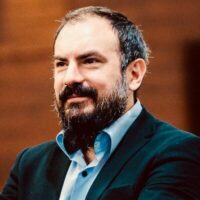
UWI author, historian and political scientist Associate Professor Mehmet Perinçek shared his views on the latest developments in the war in Iran in an interview with Sputnik Türkiye.
We present to our readers the interview conducted by Fethi Yılmaz from Sputnik Türkiye, translated into English.
——————————————————————————–
Political scientist and historian Associate Professor Dr. Mehmet Perinçek assessed the US-Israel-Iran conflict.
Perinçek said that the mounting military and political costs are beginning to trap the US, pointing to a growing sense of “anxiety” and signs of a “retreat” in Washington. Perinçek also made noteworthy comments on the American bases in the Gulf, oil prices and Türkiye’s defence policy.
According to Perinçek, the US began shifting its stance just days into the conflict:
“Serious concerns are surfacing, not just in the Western press but at the very top of the American state. One US Congressman said that Rubio told him, ‘We weren’t the ones who struck Khamenei; we aren’t looking for regime change in Iran.’ This means that Trump’s goal of toppling the regime was abandoned by the second day of the war.”
Iran is damaging American and Israeli targets everywhere
Perinçek suggests that the US may be looking for an “exit strategy”:
“Beyond backing down, we see that Washington is trying to shift the blame for failures onto Israel and absolve himself, and wash its hands of the situation. Within forty-eight hours of the high-level assassinations, we’ve started hearing varying voices in the US. Three aircraft have gone down. Aramco facilities in Saudi Arabia are being hit. The Saudis are complaining, saying ‘The US has abandoned us; the defense systems aren’t working.’ It’s not just Saudi Arabia, the US base in Erbil and CIA hubs in Qatar and the UAE are also being hit. A process has begun in which Iran is damaging American and Israeli targets everywhere.
Despite expectations of the US and Israel, Perinçek argues that internal collapse and fracture haven’t taken place in Iran:
“Not a single person took to the streets for regime change. On the contrary, millions were in avenues to honor their martyrs and stand by the state. The attempt to spark internal collapse has failed, and the policy of crushing Iran militarily has hit a wall.”
Third day of the war, signals of crisis
Perinçek emphasizes that the domestic political cost of the war will eventually put Trump in a tight spot:
“Trump came to power by promising not to squander resources abroad. Now, F-15s and F-16s are being downed, and the cost of interceptor missiles is bleeding the US economy. By the third day of the war, we are already seeing signals of a crisis, which would deepen. If the US stumbles, its allies will desert it, neutrals will turn hostile, and its adversaries will grow bolder.”
Regarding the “retaliation” statements from Gulf nations, Perinçek noted:
“It is Iran that is responding; the aggressors are the US and Israel. Those making these statements have no right to ‘retaliation’. Iran’s strikes are not targeting the sovereignty of those nations, but the American forces stationed within them. In fact, Iran is laying the groundwork for moves that will eventually liberate those countries from US bases. Iran won’t just punch shadows!”
Security architecture in the Gulf questioned
Perinçek argued that the security architecture of the Gulf is beginning to be questioned:
“We’ve seen Saudi officials crying on television, saying ‘the American system cannot protect us.’ Washington’s attack on Iran is a message not just to Tehran, but also to the Gulf: ‘This is what happens if you drift out of my orbit and cooperate with China and Russia.’ Oil prices don’t just concern Washington as a consumer; they are a tool to stifle Russia. In the 80s and 90s, the US squeezed the Soviets through Gulf oil prices, but they’ve failed to do that in this war. Rising prices actually weaken one of Washington’s leverages against Moscow. Iran is not playing all its cards at once; it will keep the Hormuz issue as a trump card.
Türkiye’s defense policies: Incirlik and Kürecik bases, S-400 and F-35/Patriot
As for Türkiye’s defense choices and the F-35/Patriot debate, Perinçek offered a two-fold assessment:
“First, there is the question of whether American technology is even adequate. Recent events show it isn’t. Second, you have to ask: who are you building your defense industry against? The threats Türkiye is facing are in the Eastern Mediterranean, the Aegean, and Thrace. And the likely adversary in this region is the Atlantic world. You cannot rely on Atlantic technology in a conflict against the Atlantic world. They hold the buttons, the spare parts, and the ultimate control. Türkiye must first meet its defense needs through its own resources and where it cannot, it must turn to alternatives independent of NATO and the US. The S-400 issue was just about ‘trade’ for the US; it wants to keep Türkiye dependent and defenseless.
Moreover, the issue of Incirlik and Kürecik bases remains critical for Türkiye. If Türkiye does not take control of these bases in a short period, it will be doing a big disservice to its own national interests.”