


Between Diplomacy and Dependency
Between Diplomacy and Dependency
By Mehmet Enes Beşer
In the face of mounting global pressure towards a binding plastic pollution treaty, ASEAN finds itself at a weak juncture—a testament to its economic ambitions as much as its environmental vulnerabilities. The region, having long been a strategic hub in global production and supply chain maneuvering, now increasingly sees itself becoming perceived as a pressure point in the plastic production, trade, and waste nexus. While ASEAN countries are seated at the negotiating table, their combined position is in danger of being reduced to diplomatic rhetoric—loud in principle, soft in effect. At a time when the world is competing to rein in plastic’s environmental cost, ASEAN has to choose if it will be an agent of ambition or a passive recipient of other powers’ plastic inheritances.
The region’s vulnerability to the plastic economy is multi-faceted. On the other, ASEAN’s industrialization has made Thailand, Indonesia, and Vietnam such preferable investment destination sites for the petrochemical industry. Proximity to China’s supply chains, liberalized foreign investments, and developed export infrastructure have led to plastic resin production and polymer refining complexes. These efforts tend to be presented in economic development and job terms, and they appeal to governments in search of post-pandemic industrial growth.
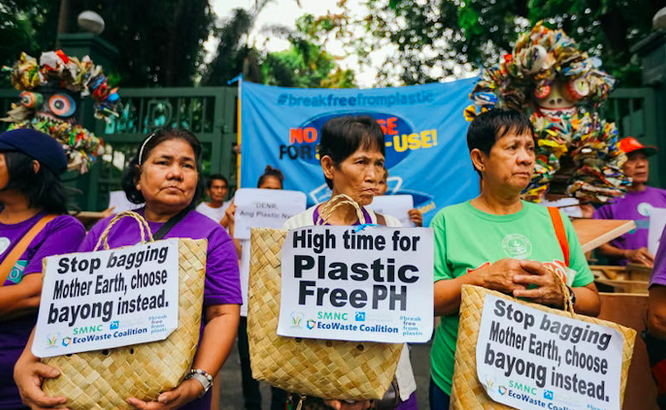
The region has, on the other hand, also emerged as a dumping site for plastic waste globally. Following China’s prohibition on plastic imports in 2018 under its “National Sword” policy, a wave of exports of wastes—largely from developed economies—was redirected to Southeast Asia. Malaysia, Indonesia, and the Philippines, among others, experienced sudden spikes in imports of waste, some of which was illegally or falsely declared. The capacity of local governments to process or manage this quantity has been lacking, resulting in environmental contamination, illegal incineration, and growing public opposition.
This dual role of paradox, i.e., a hub of plastics production and a destination of its waste, has complicated ASEAN’s position in the ongoing negotiating process for an international plastics treaty under the auspices of the United Nations Environment Programme (UNEP). Although as a region, ASEAN has issued statements supporting the reduction of plastic waste and the development of a circular economy, heterogeneity within the region is stark. Other countries, including the Philippines and Indonesia, have taken firm national action against marine plastic pollution, while Thailand and Malaysia hedged their bets—balancing environmental rhetoric against de facto support of upstream plastic production and downstream investment in recycling plants, often subsidized by foreign petrochemical behemoths.
This heterogeneity tightens ASEAN’s bargaining power in global forums. In the absence of a unified negotiating stance, the bloc may be pushed to the sidelines in treaty negotiations dominated by more ambitious players—whether the pro-regulation bloc led by Rwanda and Norway, or petrochemical manufacturers like the United States and Saudi Arabia that would prefer to clip the binding power of the treaty. ASEAN’s caution, in this instance, can be interpreted as compliance: a willingness to maintain the economic status quo even if it requires long-term ecological and public health risks.
The political economy of plastic complicates matters. For the majority of ASEAN countries, plastic is not just an environmental issue but also a driver of development. Single-use plastics remain widespread due to their low cost, and the informal recycling sector—tends to be dangerous and exploitative—provides livelihoods to thousands. Attempts at blanket bans or onerous caps instead of these socio-economic conditions are likely to collapse or trigger pushback. Treaty enforcement, therefore, cannot be a template copying of Western standards; it must be localized, inclusive, and backed by robust financial and technical aid mechanisms.
ASEAN does possess bargaining leverage—if it is willing to use it. The world’s most plastic-polluted rivers and coastlines are in the region. It is also a significant consumer and transit hub for plastic products, giving it both ethical and logistical control in framing any treaty’s success. As one entity, ASEAN can demand that the treaty address the full plastic life cycle, not just waste management. It can demand technology transfer, equitable funding, and checks on transboundary waste streams. And above all, it may promote a development-sensitive regime of treaties based on environmental justice and founded on the principle of shared but differentiated responsibility.
To do that, however, ASEAN itself must resolve its contradictions. It cannot be both a champion of sustainability and an open door for petrochemical expansion simultaneously. It must weigh the appeal of short-term foreign investment against long-term environmental security needs. It requires political will, regional consensus, and pressure from civil society—none guaranteed, but all more than in adequate order.
In the coming years, the plastics treaty will be a trial of international environmental leadership—and of ASEAN’s role in it. Will the bloc use its voice to speak out and act boldly, or allow others to dictate its environmental future? As the negotiations go on, the region has to decide: whether to be a disinterested bystander to a process that wants to make it a dump ground, or whether to redefine itself as an active participant of a greener, more equitable global economy.
ASEAN cannot be a paper tiger in the time of the plastic dragon. The time to hesitate is over. What is at stake here is not a treaty, but the health of its people, the integrity of their ecosystems, and the sustainability of their model of development in the face of planetary crisis.