

A look from Paris on the recent transatlantic tensions.
A look from Paris on the recent transatlantic tensions.
By Odile Mojon-Cheminade
The spectacular US aggression against Venezuela in early January, preceded by acts of piracy on the high seas, has opened a new chapter, dangerously bringing the world closer to the abyss. The kidnapping and subsequent detention of a sitting foreign president, carried out under pretenses, demonstrates that everything must yield to American power, starting with international law: “might makes right.” Didn’t Donald Trump boast that “My own morals, my own reason, is the only thing that can stop me”?
Caught between a rock and a hard place, openly scorned by Trump, Europe has shown, by absorbing the blow with purely formal protests—or even, for several countries, by approving it—that it remains under the thumb of its American patron. As for Emmanuel Macron, still incapable of rising to the level of the most basic legal principles, he initially rejoiced at the “fall of Nicolás Maduro’s dictatorship” before, faced with criticism, condemning the “method used” … What could one expect? For several decades, Europe has abandoned its own strategic culture to adopt the terms of Anglo-American geopolitical and imperial thought. In concrete terms, once the US claim to “ownership” of South America is accepted under the pretext that it is in its sphere of influence, it follows that European countries could only trade or exchange goods with the countries of this continent under conditions dictated by the United States.
As for Donald Trump’s desire to acquire Greenland, claimed as a de facto part of the American “sphere of influence,” his bombastic pronouncements were initially met with disbelief worldwide, then with concern. However, behind its apparent absurdity (which is how it was treated in 2019 when Trump first mentioned it), there is certainly the approach of a head of state who uses excess and unpredictability as weapons to disconcert and exhaust his adversaries, gaining precious time. But there is also the doctrine of “strategic ambiguity,” which lies at the heart of the 2018 US National Security Strategy, updated in December 2025.
The tree that hides the forest
This is why Europeans do not seem to have fully grasped the forces at play within the United States. Certainly, European adherence to the American narrative has been seriously undermined by the Greenland issue—and rightly so, given the threats it poses to the international order and to the European balance of power—but by focusing on Trump, they fail to see how an overblown state structure, largely left to its own devices and riddled with corporate influence, constitutes the true power in the United States. The tree hides the forest.
In practice, the United States already maintains a strictly limited military presence in Greenland at Pituffik Space Base, a military installation of strategic importance to North American security, governed by an international agreement with Denmark and, since 2009, with the autonomous territory of Greenland. However, they have no special sovereign status, no territory of their own, and no political authority over the island.
Donald Trump’s euphoric declaration at the Davos Forum on January 21, in which he rejoiced at having concluded a “framework agreement” with NATO Secretary General Mark Rutte, granting him full and permanent access to Greenland and considering the establishment of a military base under US law, has so far remained merely a declaration, as no details of the agreement have been released. Visibly satisfied with the outcome of his discussions and seemingly believing his blackmail had paid off, Trump did not follow through on his threats to impose tariffs on European countries that opposed his ambitions in Greenland.
Curiously, Trump’s declaration provoked little official reaction as to its potential implications. Even more surprising is that no one seems to have noticed the major conflict of interest involved by a discussion between the President of the United States and the Secretary General of NATO about the affairs of other countries, whose leaders were absent, ie Mette Frederiksen, Prime minister of Denmarl and Jens-Frederick Nielsen, Prime minister of Greenland.
NATO and Greenland: when Europe remains silent
Italian General Fabio Mini, former NATO commander in Kosovo, is one of the few to have spoken out about this scandal, accusing NATO Secretary General Mark Rutte of acting on his own initiative and believing he had a mandate to negotiate on Greenland.
When asked who gave Mark Rutte the authority to meet with Donald Trump, discuss, and comment on the agreement under discussion, Fabio Mini listed three hypotheses: 1) The United States approached him, dictating what he should say. 2) France and Great Britain asked him to meet with Trump, reserving the right to speak with Denmark, which they considered “our” affair. 3) The Danes themselves suggested that Mark Rutte meet with Trump, asking him to explore what could be done to protect Denmark and NATO.
Whatever really happened, the episode illustrates a European policy reduced to petty calculations while the house is burning down.
Let’s go back to the fall of 2025. Several European leaders, acting as dutiful students in an American strategy aimed at foisting the war in Ukraine upon them, had delivered particularly bellicose speeches to prepare their populations for a war on European soil by 2030. Mark Rutte’s speech at the Munich Security Conference in Berlin in December 2025 was particularly inflammatory: “We must prepare ourselves for a war on a scale comparable to that experienced by our grandparents or great-grandparents.” A little earlier, in France, the Chief of Staff of the Armed Forces, Fabien Mandon, had, exceeding his authority, given a speech to elected officials in which he warned that France must be prepared to “accept the loss of its children”.
All of this was before Venezuela and before Greenland. At that time, the Europeans faithfully followed the script written for them by Washington. Today, with the situation having changed dramatically, all they have managed to do is send a few soldiers to Greenland and threaten to use the European “trade bazooka,” supposedly designed to counter any form of economic coercion.
So, admittedly, Emmanuel Macron, during the official visit of the Danish and Greenlandic prime ministers to France, sought to regain the initiative by declaring, during a press conference alongside his guests on January 28 at the Elysée, that the situation “is a call for strategic awakening for all of Europe” thus giving himself an opportunity to once again argue in favor of a supposed European sovereignty that has no basis in reality. Moreover, the desire to see NATO become more involved in the Arctic appears as an admission of powerlessness and subordination. How can Macron, who proclaims that “France will continue to defend these principles [namely its commitment to the sovereignty and territorial integrity of Denmark and Greenland], following the Charter of the United Nations,” can he be credible when, at the very moment he utters these words, his Minister of the Economy authorizes the transfer to the Americans of a strategic company, LMB Aerospace, a strategic supplier for fighter jets, tanks and other military equipment?
The “real-fake” ceasefire
With Trump’s Board of Peace, will Europe, with this third major development, prove capable of undertaking a complete overhaul of the assumptions that are leading it toward disaster? In a way, Trump’s actions in Greenland and Venezuela, however outrageous, had the brutal merit of clarity. The same cannot be said of Gaza, where Donald Trump presented himself as the architect of a ceasefire, whose sole has been in offering Gazans a relative respite, even though it turns out to be the very opposite of what he claims to be.
Let us not be mistaken, Donald Trump’s Board of Peace, first mentioned in the 20-points plan accompanying the October 10 ceasefire in Gaza – endorsed on November 17 by the United Nations resolution 2803 – gives a foretaste of what will be, if nothing opposes it, the pax americana modeled on the British Empire.
Initially conceived as an organization to support the administration, reconstruction, and economic recovery of the Gaza Strip, several names of prominent figures were put forward as potential candidates to serve on its Board. Besides the infamous Tony Blair, these included the Americans Marc Rowan, Aryeh Lightstone and the Egyptian Naguib Sawiris, all three men having in common to be billionaires. Less well-known than Tony Blair, Aryeh Lightstone’s case deserves closer examination. CEO of the Institute for the Abraham Accords, former advisor to David Friedman, and US ambassador to Israel during the first Trump administration, he played a key role in the creation and development of the Gaza Humanitarian Foundation (GHF), the aid distribution mechanism supported by the United States and Israel, whose operations in Gaza resulted in the deaths of over 2,000 people and injuries to thousands more.
From this initial iteration of the Board of Peace, the fate of the Palestinians, deliberately reduced to Hamas, was relegated to secondary considerations. Their participation was only mentioned in the chapter on “technocratic governance,” and then at a lower level, to make them the on-the-ground operators of a plan whose ultimate goal was to render them invisible, marginalize them in their own territory, and ultimately eliminate them.
This did not prevent the American president from congratulating himself on the success of “his” ceasefire, even as Israeli violations of it multiplied, resulting in the deaths of nearly 500 Palestinians, including around 100 children. As for humanitarian aid, access to which is critical for a population exposed to torrential rains and freezing temperatures and surviving in conditions similar to those of concentration camps, it not only fails to meet the urgent needs, but its glaring inadequacy demonstrates that Israel is pursuing its plan of ethnic cleansing by other means.
Even the yellow line, meant to demarcate the area occupied by the Israeli army in the Gaza Strip and included among the 20 points of the plan, is being systematically shifted by Israel in its favor, thereby reducing the Palestinian territory. As for the ceasefire, it has also served as a temporary pause for Israel, allowing the Netanyahu regime to intensify settlement construction in the West Bank and to carry out bombings with impunity in Lebanon and Syria, two sovereign countries.
Board of Peace or privatization of war?
The Board of Peace was officially established on January 22nd. Its statutes no longer even mention Gaza, but instead exploit the urgent need for peace to advance a completely different, far more ambitious objective. The preamble to the charter states that “lasting peace requires pragmatic judgment, sensible solutions, and the courage to move away from approaches and institutions that have too often failed,” the latter explicitly referring to the UN. Given that only heads of state who have formally received an invitation from Donald Trump and pay a fee of one billion dollars will be eligible for membership in this Board, it appears that the purpose of this body will be to create, around Donald Trump, who remains entrenched as president for life, a private club whose mere presence endorses his policies and is intended to supplant the UN—a fact Trump has made no secret of.
Benjamin Netanyahu, Javier Milei, Viktor Orban, and King Mohammed VI of Morocco, among others, have already accepted the invitation. France, a permanent member of the UN Security Council, “does not intend to respond favorably” at this stage to the invitation to join a “Board of Peace” which “raises major questions.”
Invited to join the Board, Russia has not yet given a definitive answer. On the Chinese side, Foreign Ministry spokesman Guo Jiakun was unequivocal on January 21, declaring that any idea of such a council replacing the United Nations was rejected outright. “Regardless of how the international landscape evolves, China will remain firmly committed to safeguarding the international system with the United Nations at its core, to the international order based on international law, and to the basic norms governing international relations based on the purposes and principles of the UN Charter.”
The most articulate response to this Board of Peace also came from China, with the publication by the Global Times on January 21 of a scathing commentary written by Li Zixin, an academic at the China Institute of International Studies. Li Zixin dissects how “This act of ‘privatizing’ international affairs and ‘commodifying’ regional peace not only ignores the will of the Palestinian people, but also poses a considerable challenge to the existing system of international governance and norms of conduct.” The privatization dimension is already present in the shocking idea of selling permanent board seats for a billion dollars, which “reduces the solemn cause of international peace to a game of chance,” according to Li, since no real peace can result from treating the future of Gaza as “a commodity to be bought.”
In reality, if this Board becomes operational, it will endorse the principle that “might makes right” by enshrining the fact that a population can be stripped of its fundamental rights and its territory stolen, as illustrated by the case of Palestine. It will take us back to what the British East India Company (created in 1600 by a royal charter from Queen Elizabeth I of England) was, granting it a monopoly on trade in the Indian Ocean and, more broadly, on the trade routes between India and England. Although entirely private, the Company had the right to mint coins and raise armies, thereby conducting, for the greater enrichment of the British Empire, a policy of plunder as cruel as it was ruthless, which is now estimated to have caused some 85 million deaths.
Europe as a whole welcomed Trump’s Board of Peace with caution, skepticism and a clear reluctance to participate, for fear that it would circumvent established international institutions and weaken European foreign policy. Unlike the Chinese, it has proven incapable of issuing any statement of principle questioning the legal and intentional foundations of this Council.
It is nevertheless evident, as Li Zixin notes, that the Board would deal a further blow to the system of international governance by allowing “great powers to arbitrarily establish their own systems outside the international order. (…) This ‘governance by club’ model reduces international law to a private contract between great powers, plunging the world back into the law of the jungle.”
Forced to tell the truth
Faced with three recent American initiatives that have shaken the world order, European countries are reduced to speaking with forked tongues: on the one hand, efforts to project a facade of unity, and on the other, the fundamental interests of each nation reasserting themselves. Europe is not only a prisoner of an oligarchic vision that readily accommodates the domination of financial fascism, whose very logic is to drag the world into war; it is also a prisoner of its subservience to the Anglo-American world. Yet it is from within this system, and carried by the most unlikely of messengers, that a voice has dared to declare that “the emperor has no clothes.” In a speech hailed as historic at the Davos forum in December 2025, Canadian Prime Minister Mark Carney warned right from the outset that he would speak of “the breakdown of the world order, the end of a pleasant fiction and the beginning of a brutal reality where the geopolitics of great powers is subject to no constraints.”
This is not about praising Mark Carney, who, before becoming Prime Minister of Canada, was Governor of the Bank of England and does not appear to have abandoned his ultra-liberal convictions. Rather, as an intelligent man, aware of the bankruptcy of a system he has always belonged to, he is striving to implement the urgent survival option for it. Why? Because in its madness, this financial bankrupt system is becoming predatory to the extent of destroying the very base that allows it to exist and exerts its brutal domination.
However, why does the current system manage to hold together when everyone knows it’s bankrupt, Carney asks? Because, as former Czech president Vaclav Havel describes in his essay The Power of the Powerless, it rests on the “participation of ordinary citizens in rituals which they know perfectly well to be false” ; as soon as a single person stops acting in this way, the illusion begins to crumble.
In European countries, a significant percentage of ordinary citizens no longer participate in the “rituals.” As for those in power, they continue to pretend while searching for ways to try to maintain what cannot be maintained, thus condemning themselves to failure. The subtle shift initiated by some European leaders confirms this. For example, Keir Starmer, the British Prime Minister, is undertaking a visit to Beijing, hoping to mend strained relations. Similarly, Emmanuel Macron, recently joined by Giorgia Meloni, the Italian Prime Minister, suggested that perhaps the time had come to resume talks with Putin. Anticipating this, Macron had, in fact, maintained contact with the Russian president—just in case…
This strategy of denial proves how the “ruling elites” still haven’t grasped the nature of the gaping chasm separating them from their people. Despite possessing the authority of power conferred upon them by elections, they have no legitimacy in the eyes of the citizens, a crucial point that clearly didn’t escape Mark Carney when he stated, “The strength of the least powerful [countries like Canada] begins with honesty.”
If Western countries had an ounce of honesty, they would put back at the heart of any peace proposal in the Middle East the demand for a return to a just international order and to ensure that the right of the Palestinians to govern Palestine is recognized. As Li Zixin says in his article, which goes beyond the issue of Gaza alone: “The international community should be wary of the dangerous tendency to place geopolitical games above international law and ensure that the reconstruction of Gaza is a reconstruction of justice, and not an expansion of hegemony.”
Donald Trump’s actions have clearly had a profound impact on Europe and, contrary to what he hoped, have caused a shock that could prove beneficial.
Will it be able to open itself to the world? Will it have the courage to draw upon its own heritage, as Pope Leo XIV urged it to do by making a strong reference to Nicholas of Cusa, whose concept of the “coincidence of opposites,” formulated 600 years ago, possesses a modernity found today only in the BRICS approach? World peace may depend on this, provided that Europe breaks free from its European isolation if it wishes to regain its legitimacy. It also depends, for France, on deciding to be honest and reclaiming its role as a universal republic.
More clearly, it is in the face of two challenges that we can judge whether France is ready to follow this path. The first is its attitude toward the ongoing collapse of the international financial and monetary system. Will it be able, beyond the immediate challenges, to join forces with the member states of the BRICS, the Shanghai Cooperation Organization, and those of the global majority to implement a new international architecture of peace through mutual development and security? Clearly, this is not the path taken by the current government, nor even by part of its opposition.
The second challenge will be its refusal to participate in US-Israeli military strikes or the continuation of destructive economic sanctions against Iran. It is clear that by demanding Iranian concessions on missiles, in addition to those concerning nuclear weapons, France has declared itself to be adopting a hard line on this issue, similar to that of the current Israeli government. There remains the hope of a popular majority in France that opposes financial speculation, military adventures, and violations of international law. The absence of a leader capable of fostering social cohesion in this direction currently prevents the people from seeing the policies they desire implemented.
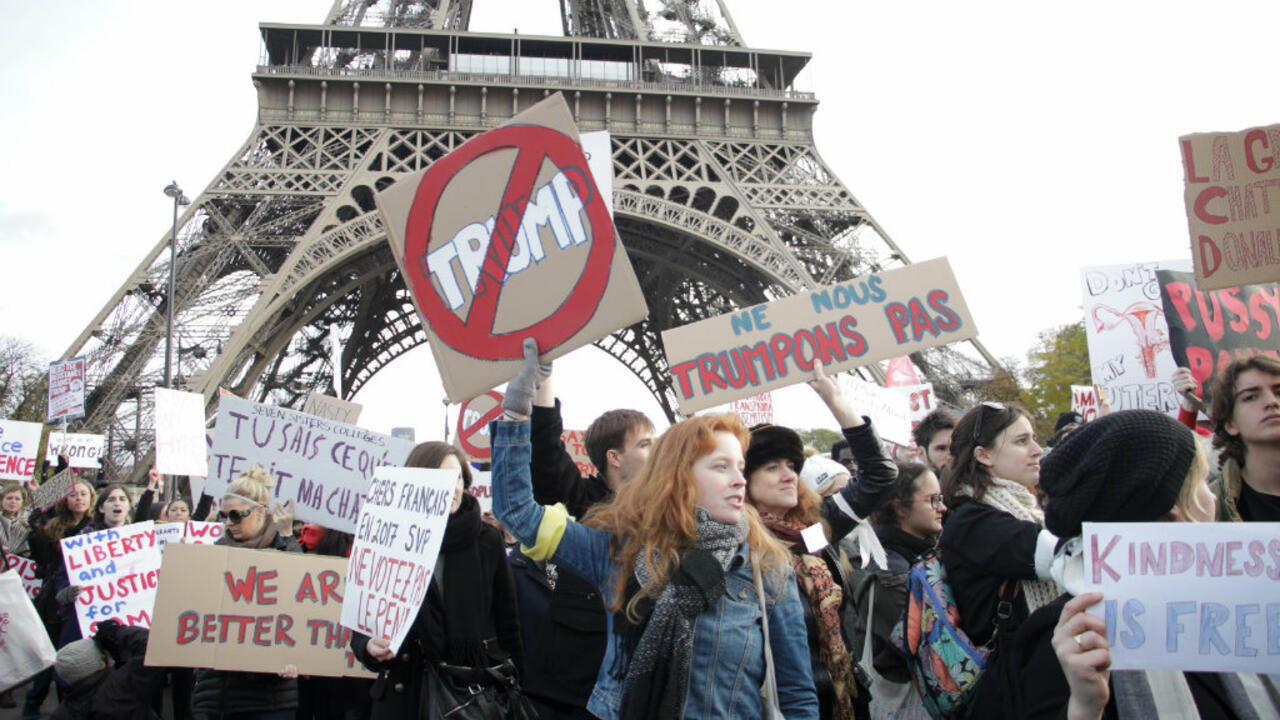
Cover graph: France24