

The fiat money regime has reached its limits.
The fiat money regime has reached its limits.
By Serhat Latifoğlu
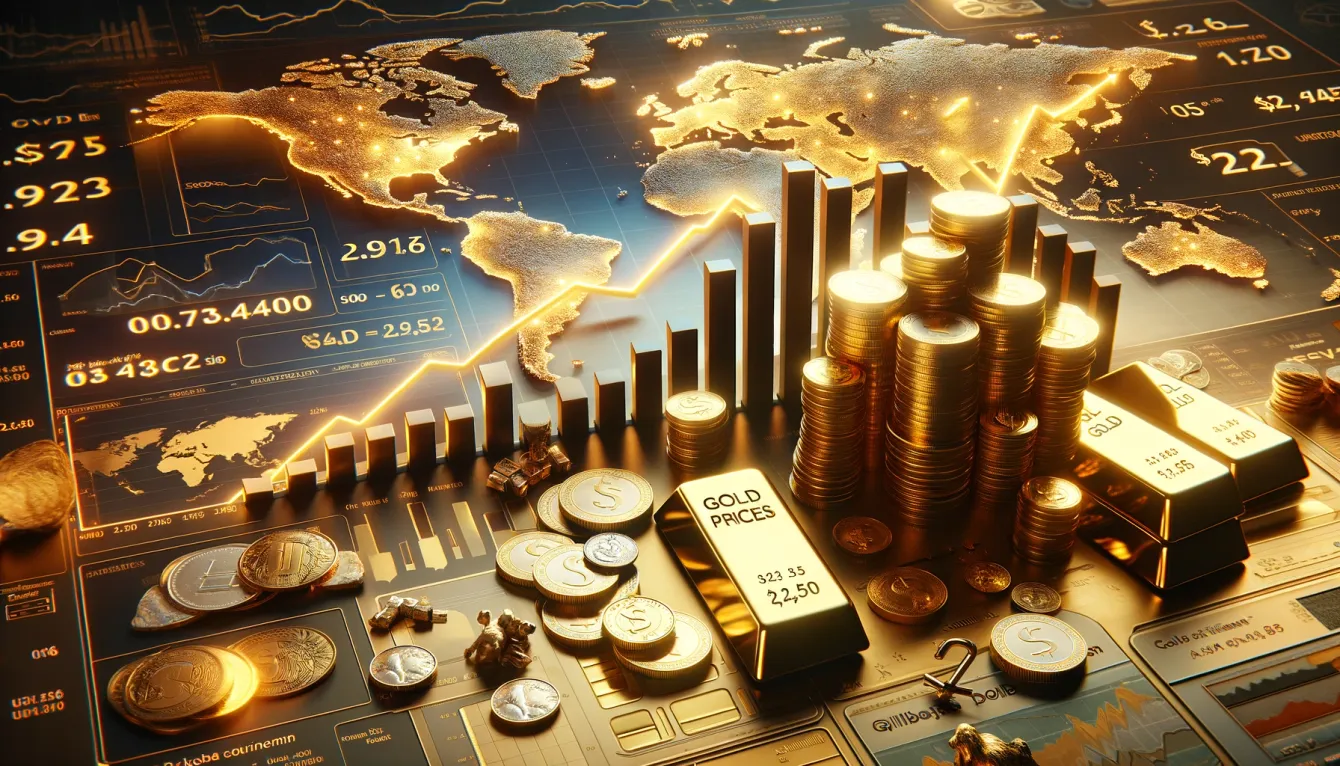
Gold has risen by 130 percent since the start of 2024, and silver is up nearly 175 percent since mid-2025. As the first quarter of the twenty-first century draws to a close, the global economic and financial system is undergoing not merely a cyclical fluctuation but a structural transformation. The 2008 Global Financial Crisis, the unprecedented monetary expansion that followed the COVID-19 pandemic, supply-chain disruptions, shifting balances of productive power, and intensifying geopolitical tensions have all laid bare the limits of the current economic order.
The period beginning in 2026 will stand out as a time when the core assumptions of the neoliberal model are increasingly questioned and the relationship between money, debt, sovereignty, and strategic resources is redefined. In this context, gold and silver, long pushed to the margins, are becoming central pillars of the global system.
The fiat money regime has reached its limits
Let’s briefly recap: The fiat currency regime took shape after the abandonment of the gold standard and the centralization of states’ authority to issue money. The collapse of the Bretton Woods system severed the link between money and real value, enabling an economic model fueled by credit expansion and debt. Led by the neoliberal order this framework boosted growth in the short term. But it also paved the way for financial bubbles, widening inequality, and chronic crises in the longer term. The productive capacity of the West, and of the emerging economies tied to it, has weakened, and these increasingly financialized economies have grown dependent on the “easy profits” generated in financial markets. Public debt levels across Western economies have reached historically unprecedented heights. In many advanced economies, the ratio of public debt to GDP has surpassed 100 percent. More troubling still, private-sector debt relative to GDP is once again approaching levels seen during the Great Depression. It should be remembered that the primary factor of major crises has been the excessive numbers and mismanagement of private debt (1929, 1987, and 2008).
A new multipolar order
The global economic system is evolving away from the dominance of neoliberal/free-market ideology toward a more state-centric structure. Government intervention has risen in sectors such as energy, defense, food, and critical minerals. This transition is leading to replacement of market mechanisms with strategic planning.
The relative weakening of US hegemony has led to the emergence of a multipolar structure in the global system. BRICS countries have developed alternative institutions and payment systems to the Western-centered financial architecture. In this context, economic tools have become complements to traditional diplomacy and military power. Access to resources is now viewed as a core component of national security.
Although its formal role has narrowed, central banks’ continued accumulation of gold reserves underscores its enduring strategic importance. With no counterparty risk and universal acceptance, gold remains a uniquely reliable safe haven during periods of financial crisis.
Also silver, the top performer of recent months, occupies a distinctive position as both a monetary and industrial metal. Rapid expansion in renewable energy, defense industries, and electronics is structurally increasing demand for silver.
Flow from the West to Asia
The growing flow of physical precious metals from Western vaults to Asia reflects a broader shift in the global balance of power. Industrial firms and governments are reshaping their stockpiling strategies to mitigate supply-chain risks. As a result, price formation in metal markets is becoming increasingly influenced by strategic and political factors.
Current trends suggest that the global financial system is unsustainable in its present form. Debt burdens, geopolitical risks, and competition for resources make sharp prices unavoidable. Gold and silver stand out not only as investment vehicles but also as strategic safeguards against systemic risk.
Türkiye is prepared
Thanks to a reserve diversification strategy pursued over the past decade, Türkiye is among the countries with relatively strong gold holdings. This is an important advantage in the face of looming global turbulence. Nevertheless, the neoliberal policies still in force remain one of the main factors deepening the structural vulnerabilities of the Turkish economy.
Under conditions shaped by an emerging multipolar world, adopting a security-oriented economic framework rather than a narrowly defined free-market approach has become a strategic necessity. Policies that prioritize production and prosperity of the public and deepen planned public-private cooperation would strengthen Türkiye’s economic sovereignty, enhance its resilience to external shocks, and enable it to capitalize more effectively on the geoeconomic opportunities presented by this multipolar system.