


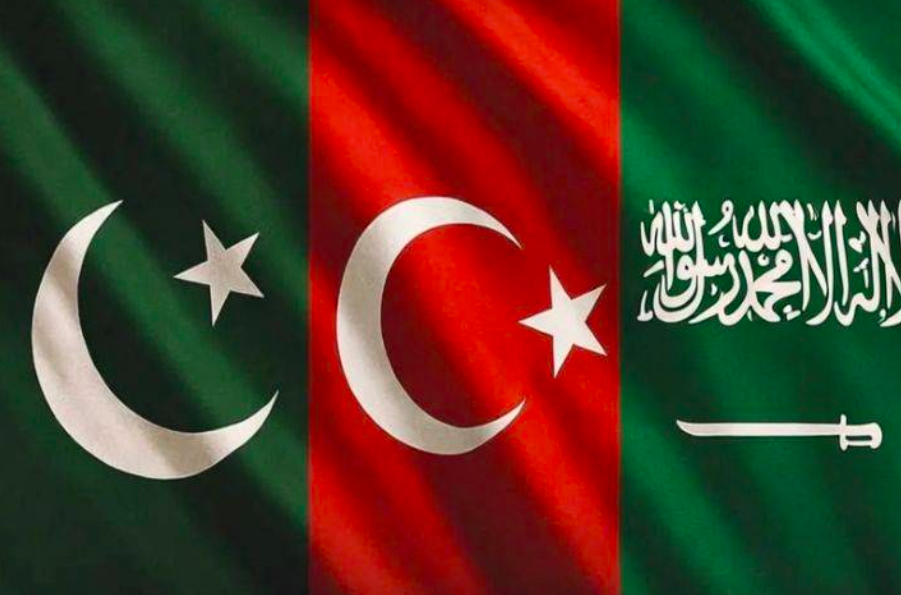
The threat it responds to and the possible first steps ahead.
The threat it responds to and the possible first steps ahead.
As debates intensify over the future of the global system and NATO, middle powers are pursuing regional alliances. One example is the ongoing talks between Turkey, Saudi Arabia, and Pakistan regarding a potential new defense alliance. Details from our correspondent Yunus Soner in Istanbul.
For Türkiye, the latest actions by the United States call into question the international system, argues expert Yusuf Erim.
“The Turks see what is happening in Venezuela. The Turks see what could happen in Greenland. There are threats to the international order, threats to the rule of law and the international legal order. And these threats directly and indirectly threaten NATO. I mean, if Greenland is taken or annexed, how will Europe react to the United States? Will this mean the end of NATO? If NATO is deteriorated, what happens to this premier defensive alliance? So obviously, new regional alliances like Pakistan, Saudi Arabia, will they want their own alliance under their own leadership with the Turkic world?”
Adding to this instability is a regional threat, says Furkan Hamit from the Institute of Strategic Thinking.
“Apart from and alongside the United States it is Israel. Israel believes itself powerful and can harm Turkey or Pakistan at any moment, countries that have always stood with the Palestinians. And although their relations are calm today, Saudi Arabia knows that Israel will expand into its territory tomorrow.”
Under this understanding, these three countries — Türkiye, Saudi Arabia, and Pakistan—are advancing talks on a mutual defense pact, as confirmed by Turkish Foreign Minister Hakan Fidan. Pakistani Defense Production Minister Raza Hayat Harraj stated that a draft already exists.
“This will be a pact similar to NATO, but for the first time between Muslim countries. If one of the three attacks, the others will defend it.”
Pakistan and Saudi Arabia already signed a mutual defense pact between them in September 2025. Türkiye and Pakistan have a deep tradition of cooperation in the defense industry, which includes training, joint maneuvers, arms trade, and even warships.
“Both Türkiye and Pakistan are strong in terms of their military potential. Türkiye has its defense industry, including drones, while Pakistan has the atomic bomb. Saudi Arabia is weaker in this regard, but it is a rich country.”
Hamit hopes that, once the alliance is established, other countries like Malaysia, Indonesia, and Iran will also want to join. Yusuf Erim has a more cautious expectation but confirms the complementarity. The expert emphasizes that Turkish President Recep Tayyip Erdoğan will travel to Saudi Arabia at the beginning of February, where the first results of this process may be achieved.
“I think that meeting will probably bear some type of fruit in expanding defensive cooperation, most likely defense industry cooperation, where we’ll probably see some MOUs, we’ll probably see some promises of technology transfer. maybe some joint military exercises, increased intelligence sharing, and this would be the bedrock to move forward towards what could be a collective defense agreement in the future.”
Both experts agree that the transatlantic crisis amplifies the need for and possibility of regional cooperation in the Global South. How far these challenge US threats to regions, or become a part of those against rebelling states, remains to be seen.