


Main political events in Türkiye in the last week.
Main political events in Türkiye in the last week.
Last week’s agenda in Türkiye was busy, as usual.
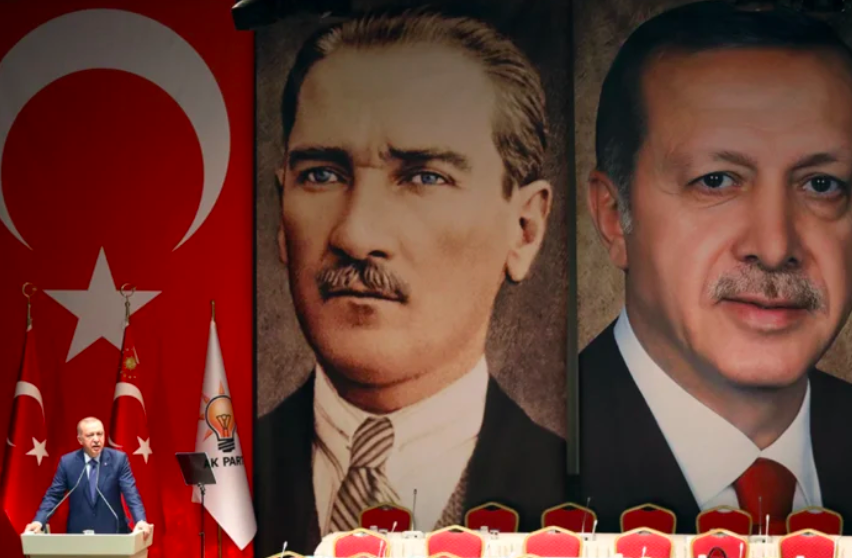
President Recep Tayyip Erdoğan delivered a speech assessing rising global tensions and Türkiye’s position in it.
Foreign Minister Hakan Fidan issued a pointed warning over developments in Iran.
And the official minutes from a meeting between jailed PKK leader Abdullah Öcalan and MP were released.
Erdoğan: Türkiye is one of the poles of the new global order
Speaking at the 7th Extraordinary General Assembly of the Confederation of Turkish Entrepreneurial Businesspeople (TÜGİK), President Erdoğan last week laid out his reading of both the domestic economy and the broader global picture.
Türkiye, Erdoğan argued, is a country that “refuses to accept the roles assigned to it in the global economy, and instead challenges them.” Backed by the business community, he said, Türkiye is now “surging ahead.”
After what he described as a long and patient struggle, Erdoğan said:
“But in the end, we did whatever it took not to disappoint our people, those who believed in us, trusted us, and entrusted their future to us with complete peace of mind. Today, I want to say this once again with pride: Even if some still struggle to accept it, there is now a Türkiye that produces, designs, and develops its own technology, and exports it to the world. There is a Türkiye breaking records in growth and exports. A Türkiye expanding into new markets and strengthening its global position day by day. The national electric vehicle they once said having ‘no factory,’ Togg, is now on Turkish roads and also across Europe. The defense systems they opposed with claims like ‘you’ll scare the fish’ are now engineering marvels in high demand around the world. There is such high demand for our airplanes, helicopters, UAVs and UCAVs, naval platforms and many more that we are struggling to keep up with orders.”
Erdoğan framed these gains as proof that Türkiye is no longer a peripheral player — but one of the emerging poles of what he called a “new global order.”
Erdoğan said the Turkish economy grew 3.7 percent in the third quarter of last year, and continued:
“At a time when uncertainty in the global economy is rising, trade wars driven by tariff hikes are intensifying, and tensions are flaring both in our immediate neighborhood and around the world, we managed 21 consecutive quarters of uninterrupted growth. With that record, Türkiye became the third-fastest growing economy in the OECD.”
Erdoğan also pointed to last year’s $273.4 billion in goods exports, the highest figure in the history of the Republic:
“Over the same period, our services exports climbed past $123.1 billion. By 2025, total exports of goods and services reached $396.5 billion. In defense and aviation exports, we made a revolution. Back in 2002, our defense exports were just $248 million. By 2025, we increased that figure 40-fold, reaching $10.554 billion.”
He added, “On employment, too, we’re in a good state. Our unemployment rate has remained in single digits for 31 consecutive months.”
Erdoğan also claimed progress on inflation and the cost-of-living crisis. Noting that Türkiye had an inflation rate of 30.9 percent in the end of the last year he said:
“Inshallah, this year we will reach much lower figures. We’re fighting inflation not with a single tool, but through a comprehensive and coordinated set of policies. The impact of these steps will increasingly be felt in kitchens, at markets, and in rents. Our citizens will feel the easing of the cost of living more clearly in their daily lives.”
Erdoğan then returned to his broader picture. He said that Türkiye is positioning itself as one of the poles of a reshaping global order:
“Rising trade wars, growing uncertainty, and crises breaking out one after another should not push you into despair. And don’t listen to the colonial-minded economists who’ve been waiting for years, like waiting for Godot, for Türkiye to plunge into crisis, chaos, and economic collapse. With Allah’s permission, Türkiye will overcome this difficult phase with honor. In fact, it will be among the countries that emerge as the biggest winners.”
Foreign Minister Fidan talks on the US, Israel, Iran and Gaza
Speaking on NTV’s live broadcast, Foreign Minister Hakan Fidan shared his assessments of recent global developments.
Addressing the situation in Syria, Fidan said Türkiye remains in close contact with US Ambassador to Ankara and Special Envoy for Syria Tom Barrack, and there is an ongoing exchange of views and a diplomatic engagement.
Pointing to the fragile conditions on the ground, Fidan said:
“Because there are US forces and detained ISIS militants. With their presence, the dispute between the SDF and government forces becomes more complicated. There is now a diplomatic effort to simplify the situation and make it more manageable. We are a part of that.
Commenting on the ceasefire between Damascus and the YPG, Fidan stated:
“Our preference is clear: there should be no fighting at all. Both sides should come together peacefully and address their problems in negotiation, in a civilized manner. I’ve been saying this from the very beginning: Talk and resolve it.”
Fidan also stated that the Syrian army’s advance against the YPG did not come as a surprise to Ankara:
“It wasn’t surprising for this reason: it was only a matter of time. What was needed was a start. We have long been closely observing the dynamics in the Arab-populated areas occupied by the YPG. The tribal structures, the conditions under which tribes might rise up: these were all well within our field of knowledge. We were also discussing these issues with Syria.”
Also, Fidan underlined that US’ regional policy aligns with Türkiye’s approach:
“Trump’s foreign policy aims to avoid getting the US directly involved in regional problems as much as possible, instead encouraging regional countries to take ownership of these issues and act in coordination. This overlaps with the policy we want to pursue in the region. Türkiye’s sensitivity in the fight against ISIS is already well known, as is our commitment to Syria’s unity and territorial integrity, and our respect for the cultural identities of minorities, ethnic groups, and religious communities. When you put all of this together, frankly speaking, there is no other reason for the US to remain there”.
Foreign Minister Hakan Fidan also evaluated Türkiye’s participation in the Gaza-related committee under the Trump administration’s Board of Peace. He explained that the Board has subcommittees, one of which is solely focused on Gaza. He continued:
“There’s a 15-person committee that will take charge of Gaza’s national administration. All members of this committee is Palestinian. Another committee will handle the Board of Peace’s secretariat. Later, a Stabilization Force will be added. There are also other bodies under these structures, and more may be created if needed. When you look at the Board’s mandate, its mission and duties have actually been expanded considerably. Right now, Gaza is the priority, but later what other regions this structure might address? This is an issue for the future. We’re still very new, but we have already started working on Gaza immediately. Our urgent issue is Gaza.”
On the planned International Stabilization Force for Gaza, Fidan was asked: “Netanyahu said two days ago that Qatar and Türkiye won’t be part of the Stabilization Force. Will Türkiye be part?” Fidan replied: “Netanyahu opposed Türkiye and our President being a part of the Board of Peace. He opposed me personally in the Committee for the Administration of Gaza. He has always been against it, and he will be. And we will continue our own struggle.”
Also, Fidan discussed the protests in Iran and the possibility of a US-Israeli attack. Noting that Iran has faced such periods before, sometimes with massive demonstrations, Fidan said:
“There is clearly strong public frustration over economic hardship. But framing this as anti-regime sentiment, as people are protesting to remove the government, isn’t necessarily an accurate reading. The situation is complex, with overlapping and intertwined domestic factors. There are gray areas that need to be understood carefully. From what we see, external actors shouldn’t expect these protests to yield the outcomes they might hope for. But yes, these are genuine demonstrations. Their needs and demands should be considered.”
On the possibility of a U.S. or Israeli strike against Iran, Foreign Minister said:
“We don’t want a new major wound while Syria and Iraq are still recovering from the previous ones. But we have to do our utmost to help resolve these problems. As a friend, I have told Iran exactly what needs to be said. We shared our perspective on what’s right, what should be done, and what shouldn’t. I hope they find a path forward. But I have to say that there are still signs that Israel is looking for an opportunity to strike Iran.”
Minutes of meeting with Öcalan go public
The minutes from a meeting between imprisoned PKK leader Abdullah Öcalan and Turkish MPs were made public last week on the Turkish Grand National Assembly’s website. Held at İmralı Prison in connection with the “Terror-free Türkiye” process, representatives from the AK Party, MHP, and DEM Party were present in the meeting.
The notes drew attention for Öcalan’s comments on Israel and Syria.
According to the document, Öcalan told MPs that the SDF in Syria, backed by the US and Israel, had grown to a 100,000-armed force, but that its commander, Ferhat Abdi Sahin, remained loyal to him.
Öcalan said Israel seeks a “Kurdish statelet” to secure its regional hegemony, but he opposes that, advocating instead for “local democracy” and “communal governance system” within Syria’s territorial integrity.
Öcalan emphasized the need for dialogue with the Syrian government and el-Sharaa, arguing that the solution should be democratic integration into Syria, not the creation of a separatist state. He added that if given the chance, he could handle the SDF issue “skillfully and fraternally,” develop a fair model for sharing oil resources and border gates and prevent Syria from falling under Israeli influence.
When MHP MP Feti Yıldız asked whether local democracies in Syria could have their own defense forces, Öcalan said that “defense forces should exist within public security structures for Syria and Rojava.” Similarly, when AK Party MP Hüseyin Yayman asked about the future of oil resources and border crossings, Öcalan suggested that a sharing model could be devised.
He noted that following his call, the PKK issued its February 27 declaration, dissolved itself, and burned its weapons under Bese Hozat (Hülya Oran)’s leadership, PKK members withdrew from Türkiye under the leadership of Sabri Ok, with the process 70% complete, and no clashes over the past year marked a major achievement.
He expressed regret over incidents like the TUSAŞ attack on 23 October 2024, where seven people were killed and twenty-two people were injured on the headquarters of Turkish Aerospace Industries in Ankara. Öcalan attributed this kind of action to “different voices” within Qandil.
Öcalan reminded that Turks are also part of the organization and gave Duran Kalkan as an example. He argued that the PKK must not only lay down arms physically but also end hostility mentally, and he can ensure this transformation.
Öcalan highlighted the Kurdish-Jewish Congress in Europe in Berlin on September 7, 2025, and the 6th Middle East Peace and Security Forum in Erbil on November 17–19, 2025. He said these events, held under German sponsorship, pursue a Kurdish statelet agenda, while he represents “Democratic Society” project.
Öcalan explained his vision for the solution is not a “separate Kurdish state” or “federation”, but “integration with the Republic of Türkiye” by saying “The model I propose is a Democratic Republic with local democracy. There is no Kurd without a Turk, no Turk without a Kurd. I feel the pain of the families of martyrs; every soldier lost is a tragedy for me.”
It is worth noting that the publication of these minutes came two months after the meeting and immediately after developments in Syria.