


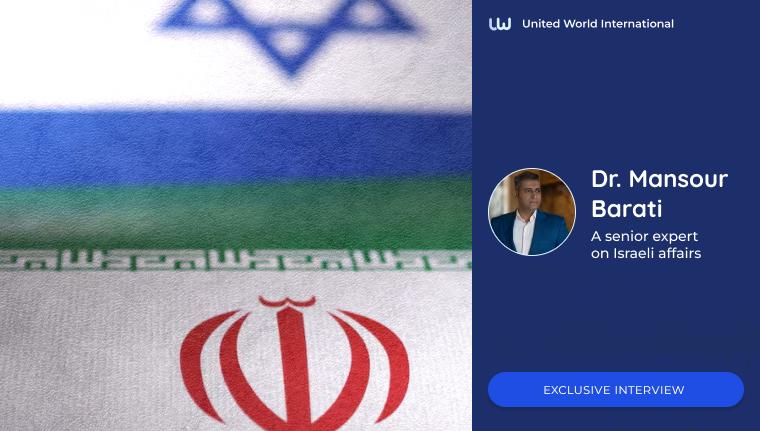
Here are the reasons according to the Iranian expert on Israeli politics.
Here are the reasons according to the Iranian expert on Israeli politics.
By Azar Mahdavan, Tehran / Iran
An Iranian expert, referring to the clashes between Tehran and Tel Aviv, said: Netanyahu, who must hold the next elections in 6 to 10 months, is still in a losing position, and this increases the likelihood of renewed conflict for him.
The war between Iran and Israel is recognized as one of the most significant and influential conflicts in the contemporary history of the Middle East. This war, which began with extensive Israeli airstrikes on Iran’s military and nuclear facilities, continued with Iran’s missile responses to these attacks, and eventually, after 12 days, resulted in a ceasefire agreement.
Although more than five months have passed since this 12-day war, there are still speculations in public circles about the possibility of Israel attacking Iranian territory again. While Iran has never been a supporter of war and even during Tehran-Washington negotiations we witnessed Israeli and then American aggression, the question arises: do Israel’s political and social circles also desire renewed war with Iran?
To analyze the likelihood of another war between Iran and Israel, we conducted an interview with Dr. Mansour Barati, a senior expert on Israeli affairs.
Let’s first return to the 12-day war; a war in which Iran was practically attacked. A notable point was Iran being caught by surprise on the first day of the war. Why did Israel’s attacks last only 12 days?
The duration of wars that Israel engages in depends directly on the goals of this regime and, of course, the strength of the opposing side. The 12-day war was the first Israeli war in 52 years in which it faced a real state.
Prior to this, the Yom Kippur War of 1973 was the last war in which Israel confronted states (Egypt and Syria), and that war lasted 19 days. After the Yom Kippur War, due to multiple military defeats, Arab states closed the chapter of conventional warfare with Israel, and some also entered the path of normalizing relations with it.
From that time on, hostility toward Israel was mainly pursued at the level of movements and organizations. In all these wars, except for the October 7 war in Gaza, despite facing movements that were certainly militarily weaker than a fully armed state and army, wars lasted less than two months; for example, Israel’s 2014 war in Gaza lasted 48 days, but in 2018, the clashes were much shorter, or, for instance, during the events known as Operation Seif al-Quds, the conflict lasted only 15 days. Also, although military clashes between Hezbollah in Lebanon and Israel have been ongoing since October 8, 2023, this conflict only turned into a war during 60 days from late September 2024 to November 27 of the same year.
Generally, the stronger Israel’s enemy is, the shorter the wars last. The 12-day war with Iran was no exception. During the 12-day war, alongside Israel’s extensive air attacks on Iran, Iranian missile strikes continued, and Iran’s missile capabilities not only did not decrease during the war but in the second half of the war showed more successful and targeted performance, even employing heavier missiles.
This trend was usually different in previous wars: as the war neared its end, Israel’s strength would increase while the opponent’s offensive and defensive capabilities declined. However, in this war, despite damage to military and nuclear infrastructure, Iran’s missile attacks pressured the United States to call for a ceasefire, and practically, Israel and its allies requested the ceasefire.
In my opinion, it cannot be said that Israel was defeated in the 12-day war. Israel certainly did not achieve all of its goals during this war, but we should not view this issue in absolute terms.
From an absolute perspective, as long as Israel cannot overthrow the Islamic Republic system, it is unsuccessful in achieving its goals, but from a relative perspective, one can say that significant damage to military and nuclear infrastructure (with direct U.S. assistance) and removing the monopoly of Iran’s airspace from the Islamic Republic’s control were among the successes of this regime.
It is also worth noting that Israel expected that due to internal dissatisfaction with the government, a large part of society would welcome Israel’s attacks, which, contrary to this expectation, the majority of Iranian society, despite existing disagreements, considered Israel a foreign aggressor and united against it.
On the other hand, Israel was unable to extend the surprise created in Iran’s military and turn its achievements into political victory, or, by assassinating the country’s political leaders, practically pave the way to decapitate the Islamic Republic government, though serious efforts were made for this purpose.
Thus, it should be said that Israel failed in some of its objectives and achieved relative military success in others.
In recent days, there have been rumors about the possibility of a large-scale conflict between Iran and Israel. You are well-acquainted with Israel’s domestic politics. What is the current Israeli political perspective on a renewed attack against Iran?
Yes, in recent days, rumors of renewed conflict with Iran have risen within Israel. Among various Israeli circles, there is some consensus on the principle of enmity with Iran and the necessity of confronting it, but there are also disagreements on how to do so; for example, Naftali Bennett, former Prime Minister, who seems to be Netanyahu’s main competitor in the 2026 elections, praised the principle of the 12-day war but considered it insufficient to achieve Israel’s objectives and stated that Netanyahu should have prolonged the war for Israel to reach more goals.
Also, the centrist faction, centered on Yair Lapid, Benny Gantz, and Gadi Eisenkot, along with Avigdor Lieberman, leader of the right-wing Israeli party Yisrael Beiteinu, has consistently criticized Netanyahu’s short response to Yemeni attacks and believed that Israel should have targeted Tehran in response to every attack from Yemen! Of course, part of this rhetoric should be understood merely as the result of internal Israeli political disputes between the cabinet and opposition.
On the other hand, Israeli media and think tanks are reporting on Iran’s military reconstruction and support for rebuilding the Resistance Axis, particularly Hezbollah in Lebanon. In the context of politics, many recommend that Iran must be dealt with before it gains the opportunity for full reconstruction, and, of course, Donald Trump’s return to the White House also provides Israel with a golden opportunity.
It seems that two other points regarding the Israeli perspective on conflict with Iran should be noted: first, Netanyahu’s need for renewed conflict to restore his popularity, and second, the need for domestic protests and unrest to return to confrontation with Iran.
In fact, Netanyahu, who must hold the next elections in 6 to 10 months, is still in a losing position, and this increases the likelihood of renewed conflict for him.
On the other hand, the experience of Israel’s failure in the 12-day war to mobilize people against the Islamic Republic has caused Israelis to see the existence of unrest and street protests in Iran as the golden opportunity for the next strike. This time, at least part of Iranian society would see them as saviors rather than foreign aggressors.
Analysis after the war suggested the legendary failure of Israel’s military power. After the 12-day war, has Israel been able to restore its military strength? Does Israel have the military power and readiness to attack Iran again? Considering Israel’s shortage of military personnel, the challenges of conscription between Haredim and seculars, and the consequences of the 12-day war, how prepared is Israeli society for a new war?
The war between Israel and Iran, due to the absence of a shared land border, will not be primarily based on infantry and ground forces, but, like the 12-day war of 2025, the Israeli air force and missile strikes will form the core of the attacks, with artificial intelligence and advanced military equipment playing an important role. Finally, commando forces and Israeli-aligned mercenaries and infiltrators will execute part of the plan.
It seems that if serious ground forces are required for executing a plan on the ground, Israel will resort to forces allied with the opposition to the Islamic Republic, as well as dissatisfied individuals or some non-Iranian nationals.
Thus, the shortage of reserve forces has little effect on this war, and the intensification of disputes between Haredim and seculars and the conscription challenge could, conversely, become a driving force for a new war, as we have repeatedly witnessed Israeli politicians using the tactic of shifting crises beyond borders to temporarily halt internal conflicts. It is also interesting to note that exactly four days before Israel’s attacks on Iran on June 13, 2025, the leader of the Haredi United Torah Party met with Netanyahu to inform him about the party’s exit from the cabinet due to disagreement over military service, but Netanyahu, citing the imminent attack on Iran, prevented this action.
However, another point to consider is that Israel also suffered serious economic damage as a result of the 12-day war and depleted part of its military capacity. Replenishing it will take some time. In any case, Iran must be at peak readiness for a new Israeli attack, because it currently seems that the window for war between Iran and Israel remains open until three months before the next elections. That is, if the next elections are to be held in June 2026, the window remains open until early March, and if in October, until early July 2026.