


How a Silk Road Civilization Is Reclaiming Its Global Voice
How a Silk Road Civilization Is Reclaiming Its Global Voice
As Uzbekistan undergoes a remarkable cultural renaissance, Gayane Umerova—Head of the Department of Creative Economy and Tourism at the Presidential Administration and Chairperson of the Uzbekistan Art and Culture Development Foundation—outlines how heritage, creativity, and cultural diplomacy are helping transform the nation into a global cultural hub while opening a new chapter in relations with Egypt and the Arab world.
For centuries, Uzbekistan stood at the heart of the Silk Road, connecting civilizations, faiths, and cultures across Asia, the Middle East, and Europe. Today, the country is once again attracting global attention—not only through economic reforms and investment opportunities, but through an ambitious cultural renaissance that seeks to reposition Uzbekistan as one of the world’s leading centers of heritage, creativity, and cultural diplomacy.
According to Gayane Umerova, the driving force behind this transformation begins with a clear national vision championed at the highest political level. She explains to Al-Ahram weekly that President Shavkat Mirziyoyev has placed culture, tourism, and the creative economy at the center of Uzbekistan’s development strategy, treating them not as secondary sectors but as fundamental pillars of the country’s future alongside infrastructure and industry. This vision, she says, provided institutions with a clear mandate to open Uzbekistan to the world and to bring the world back to Uzbekistan.
The strategy extends far beyond restoring historical monuments. Uzbekistan has invested in creating entirely new cultural platforms capable of engaging with contemporary global audiences. Initiatives such as the Bukhara Biennial, the Centre for Contemporary Arts Tashkent (CCA Tashkent), the forthcoming Jadid’s Legacy Museum, and Uzbekistan’s participation in major international exhibitions have all been designed to position the country’s heritage within an ongoing dialogue with modern culture.
For Umerova, heritage is not merely a collection of preserved artifacts. It is a living force capable of shaping contemporary identity and future development.
This philosophy also underpins Uzbekistan’s approach to economic growth. In her view, culture, tourism, and investment are deeply interconnected. A dynamic economy requires a strong cultural identity, while cultural projects generate trust, attract visitors, and open doors that traditional economic diplomacy alone cannot achieve.
Every major cultural initiative undertaken by Uzbekistan is designed with tourism and investment objectives from the outset. One recent example is the Samarkand Express project, developed in partnership with Italy’s Arsenale Group. The luxury rail service linking Tashkent, Samarkand, Bukhara, and Khiva is intended not merely as a transportation project, but as a cultural experience that allows travelers to immerse themselves in Uzbekistan’s historic cities and rich heritage.
Reflecting on the achievements of recent years, Umerova points to several landmark projects that have helped redefine Uzbekistan’s cultural landscape. Among them is the Bukhara Biennial, which has become the country’s first major recurring platform for contemporary art rooted in traditional craftsmanship and heritage.
Equally significant is the forthcoming opening of the Centre for Contemporary Arts Tashkent, a project she describes as a defining moment in the development of Uzbekistan’s cultural institutions and one that has already contributed to elevating Uzbek artists onto the international stage.
International recognition has followed. Uzbekistan’s National Pavilion at Expo 2025 Osaka, entitled “Garden of Knowledge” and designed by Atelier Brückner, received the prestigious Red Dot: Best of the Best Award, placing the country among the world’s most acclaimed cultural presentations.
Behind these accomplishments lies a broader narrative: a nation determined to remain faithful to its traditions while confidently embracing progress and innovation.
The protection and promotion of Islamic heritage occupies a central place within this vision. Cities such as Bukhara, Samarkand, and Khiva remain among the most important centers of Islamic civilization, scholarship, architecture, and artistic achievement.
According to Umerova, Uzbekistan is committed not only to preserving these treasures but also to presenting them with the ambition and sophistication they deserve.
Alongside conservation efforts, the country is investing in modern infrastructure and new cultural institutions capable of interpreting historical heritage for contemporary audiences. One notable example is the urban development master plan for Bukhara prepared by the renowned French architectural firm Wilmotte & Associés. Such projects aim to ensure that visitors experience a living connection between the Islamic civilization that flourished along the Silk Road and modern Uzbekistan.
The discussion naturally turns to cultural cooperation with the Arab world, particularly Egypt—a country Umerova regards as a strategic cultural partner. She recalls a recent visit by an Uzbek delegation to the Grand Egyptian Museum, describing it as an inspiring demonstration of how a nation can present its heritage to the world with exceptional ambition and vision.
Interestingly, a creative link already exists between the two countries. Atelier Brückner, the firm involved in exhibition design for parts of the Grand Egyptian Museum, was also responsible for Uzbekistan’s award-winning pavilion at Expo 2025 Osaka and is currently working on the interior and exhibition design of the National Museum of Uzbekistan in Tashkent, a landmark institution designed by renowned Japanese architect Tadao Ando and scheduled to open in 2028.
For Umerova, this shared partnership reflects something deeper: Egypt and Uzbekistan are two ancient civilizations seeking to tell their stories anew to a global audience at a pivotal moment in history. This spirit of cooperation has also been reflected in high-level official contacts. During meetings with Egypt’s Minister of Tourism and Antiquities, Sherif Fathy Attia, discussions focused on practical opportunities for collaboration in museum affairs, tourism, cultural exchange, and the preservation of historical heritage.
Such initiatives, she notes, represent the foundation for meaningful institutional partnerships between the two countries.
The growing convergence between Egypt and Uzbekistan was further highlighted during the 43rd session of UNESCO’s General Conference, hosted by Samarkand, where Professor Khaled El-Enany was elected Director-General of UNESCO.
Umerova describes El-Enany as a figure who embodies the connection between heritage, tourism, and culture that Uzbekistan seeks to strengthen. His election in Samarkand, she suggests, symbolized the increasingly close cultural ties linking the two nations.
Looking ahead, Umerova believes that the future of Uzbekistan’s cultural sector will largely be shaped by its younger generation and the expansion of the creative economy.
She notes that the Uzbekistan Art and Culture Development Foundation played a leading role in establishing the legal framework that ultimately contributed to the country’s Law on the Creative Economy and the launch of Uzbekistan Creative Park.
The initiative provides creative entrepreneurs, designers, architects, and digital innovators with both infrastructure and specialized tax incentives, enabling them to operate as fully-fledged businesses within a growing creative ecosystem.
Programs such as the “Creative Algorithms” Central Asia–Italy Youth Forum in Khiva are designed to equip young Uzbeks with the skills, networks, and confidence necessary to build creative careers while remaining connected to international best practices.
For Uzbekistan, investment in craftsmanship, design, and digital creativity is ultimately an investment in the country’s future.
When asked what message she would like to convey to Arab audiences, Umerova’s answer is both simple and deeply personal.
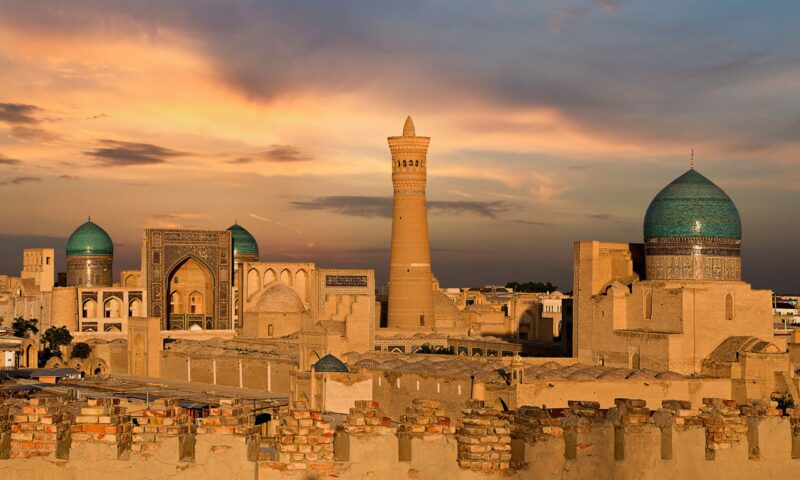
She invites visitors to experience Uzbekistan directly rather than through screens or books. Walking through the courtyards of Bukhara at sunset, standing beneath the turquoise domes of Samarkand, or wandering through the ancient streets of Khiva reveals a reality that no historical account can fully capture.
The Silk Road, she says, was never merely a trade route. It was a meeting place for cultures, ideas, and faiths—and that spirit remains alive today.
She believes Arab visitors will immediately recognize shared values rooted in Islamic heritage, craftsmanship, hospitality, and human connection. Whether through the call to prayer echoing across an ancient square, the aroma of bread emerging from a traditional tandir oven, or the warmth of an invitation to share tea with strangers, Uzbekistan offers a sense of familiarity that transcends geography.
Her final message is clear: Uzbekistan is a confident, open, and creative nation eager to engage with the world. Egypt and the Arab world, she emphasizes, will always find an open door and a warm welcome in Uzbekistan.
.