


A recent forum in Ankara presented optimistic evaluations, but there are stones on the road ahead.
A recent forum in Ankara presented optimistic evaluations, but there are stones on the road ahead.
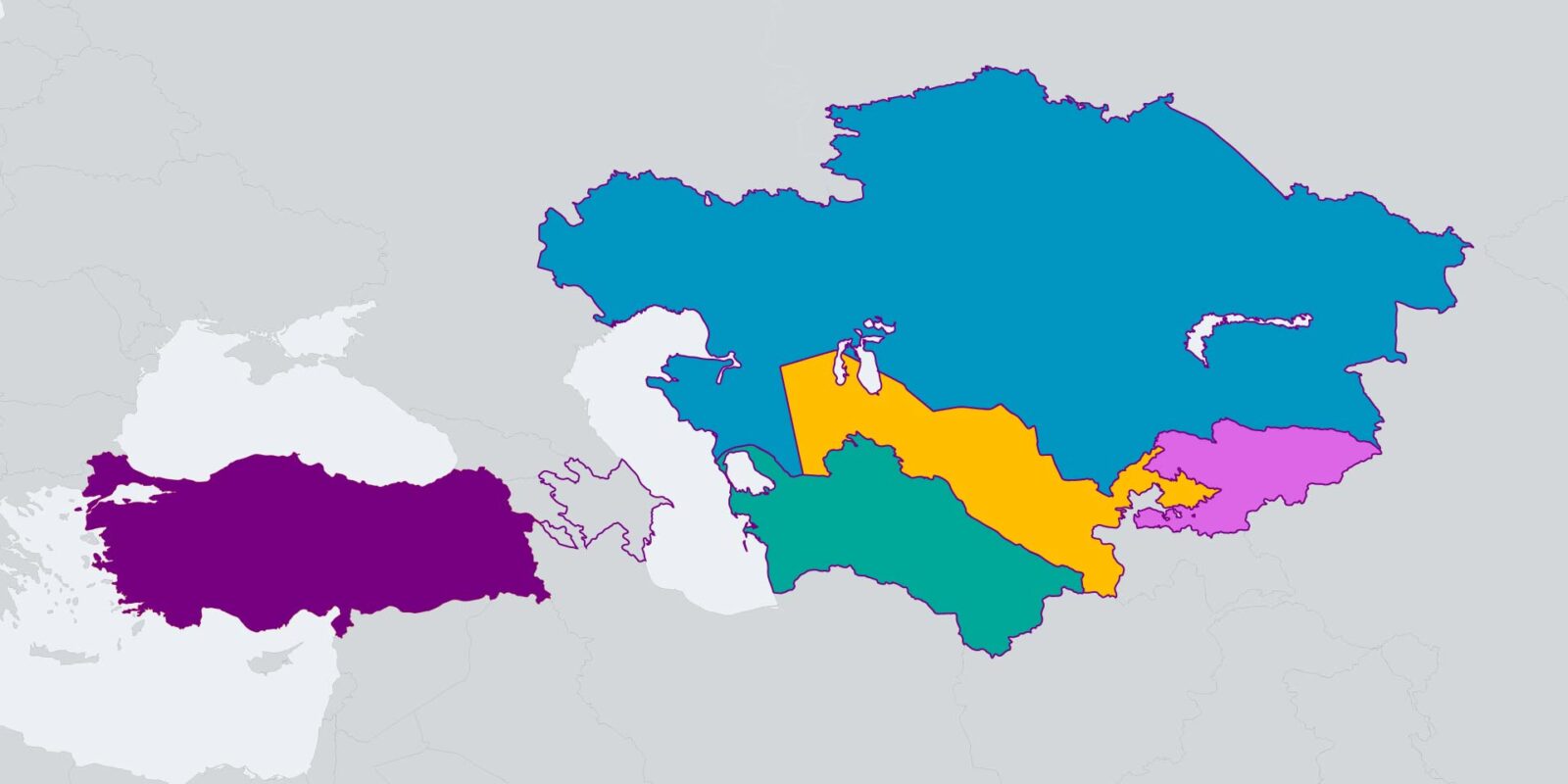
Relations between Türkiye and Central Asian countries are entering a new phase in the energy, trade, and transport sectors. At the Türkiye-Central Asia Forum in Ankara, experts and representatives from the region emphasized that cooperation has not only an economic dimension but also a strategic one, which will shape the future of Eurasia.
The forum was organized by SETA, a think tank closely linked to the government. Academics, experts, and representatives from Central Asian countries assessed the region’s economic transformation and the possibilities for collaboration with Türkiye.
Dr. Murat Aslan, researcher at the SETA Foundation, highlights that both sides are actually returning to former ties: “Today, when people talk about Türkiye and Central Asia, they are perceived as two separate geographical regions, but this is not the case. The origins are the same, the language spoken is the same; only the accents are different. And this cultural closeness has begun to be rediscovered after a period of estrangement of approximately a century.”
The driving force behind all this is the Organization of Turkish States, which has completed its institutionalization and is working, with an established fund, on various issues.
“Of course, as this identity is being discovered, a process of reconsolidation is taking place from various angles: economic, investment, linguistic, social, and, of course, political”, says Aslan.
For Ankara, the Organization of Turkic States represents far more than a cultural platform. It has become one of the pillars of Türkiye’s wider Eurasian strategy, connecting the country more closely to Central Asia while providing an institutional framework for practical cooperation. The organization has also created new opportunities for harmonizing customs procedures, facilitating investment and coordinating infrastructure projects that cross multiple national borders.
The Central Asian countries are Kazakhstan, Kyrgyzstan, Tajikistan, Turkmenistan, and Uzbekistan. They are present at the forum, whose focus, due to global geopolitics, is on energy issues, as emphasizes Javlon Vakhabov, Deputy Advisor to the President of the Republic of Uzbekistan.
“Central Asia is a vast region with great energy potential. For example, Kazakhstan has abundant oil and uranium reserves. Turkmenistan is the world’s fourth-largest producer of natural gas. Uzbekistan is well-known for the significant amount of renewable energy currently generated within its borders.”
According to the expert, thanks to the existing energy transport infrastructure in Türkiye, a wider geographical area could benefit from it:
“As Central Asia continues to open up to the world, we will undoubtedly be able to explore more opportunities, thus uniting Türkiye, the Caspian region in general, and Central Asia itself in particular through the Central Corridor, another infrastructure project connecting Europe, the South Caucasus, and Central Asia.”
Among the most significant initiatives is the Middle Corridor, officially known as the Trans-Caspian International Transport Route. Stretching from China through Kazakhstan, across the Caspian Sea to Azerbaijan, Georgia and Türkiye before reaching Europe, the corridor has gained renewed attention as companies seek alternatives to northern routes passing through Russia.
But the cooperation potential is not limited to energy, others add.
Eldor Sobirjonovich Tulyakov, Director of the Center for Development Strategy, Uzbekistan, says: “Developing tourism infrastructure in Uzbekistan with Türkiye’s experience would be very important for our country. Furthermore, Türkiye is one of the leading countries in the pharmaceutical sector, so we should consider collaborating in that area as well, since Uzbekistan wants to increase its share of pharmaceutical exports.”
Since President Shavkat Mirziyoyev initiated wide-ranging economic reforms, Turkish investment in Uzbekistan has accelerated considerably. Hundreds of Turkish companies now operate in sectors including textiles, food processing, construction, finance, healthcare and renewable energy. Bilateral trade has expanded alongside new industrial partnerships and educational exchanges.
Ankara is pursuing a step-by-step strategy, taking into account the geographical context of Central Asia, emphasizes Murat Aslan. “The objective is to strengthen a shared identity and then create a different climate; within this climate, a framework is proposed that includes respect for the political identity of each State and consideration of regional dynamics and the concerns of third parties.”
The experts gathered in Ankara argued that this transformation will extend far beyond the participating countries themselves. By connecting Europe with the Caspian region and Central Asia through new transport corridors, expanding energy cooperation and strengthening economic integration, the evolving partnership has the potential to reshape trade patterns across the Eurasian continent for decades to come.
But there are also uncertainties. Who will travel on the road that Ankara builds into Asia’s heart, and how will neighbors react? The recent settlement in the Southern Caucasus between Armenia and Azerbaijan ended with the establishment of a “Trump Road to International Peace and Prosperity”.
It is no secret that the Middle Corridor is an alternative to energy routes passing through Iran and, more importantly, through Russia.
The vast energy reserves of Central Asia may be transported through Türkiye, but those who explore, exploit and benefit of them maybe US American companies.
Hence, progress of the Turkish-Central Asian integration may well end up being challenged by Eurasian giants such as Russia and China. And even Pakistan, Ankara’s old and staunch ally, may object as it is the alternative route to connect Central Asia to the seas.
Therefore, optimism may prevail in Ankara, but the road ahead is thorny.