


By Ali Alsaç
It would be incomplete to view the marine national parks declared by Türkiye in the Eastern Mediterranean and the northern Aegean merely as an environmental measure. This decision is part of a much broader process reflecting the stage Türkiye has reached in recent years in terms of state capacity, its understanding of security, and its foreign-policy orientation.
Türkiye did not easily become a country capable of making such decisions. A Türkiye that had not defeated the Ergenekon and Balyoz plots, and had not suppressed the coup attempt of July 15–16, 2016, would have found it far more difficult to take decisions of such strategic importance. Türkiye has paid a heavy price to reach a point where it can make its own decisions with greater independence.
For this reason, the marine national parks are not an ordinary environmental policy.
What Do The Marine National Parks Mean?
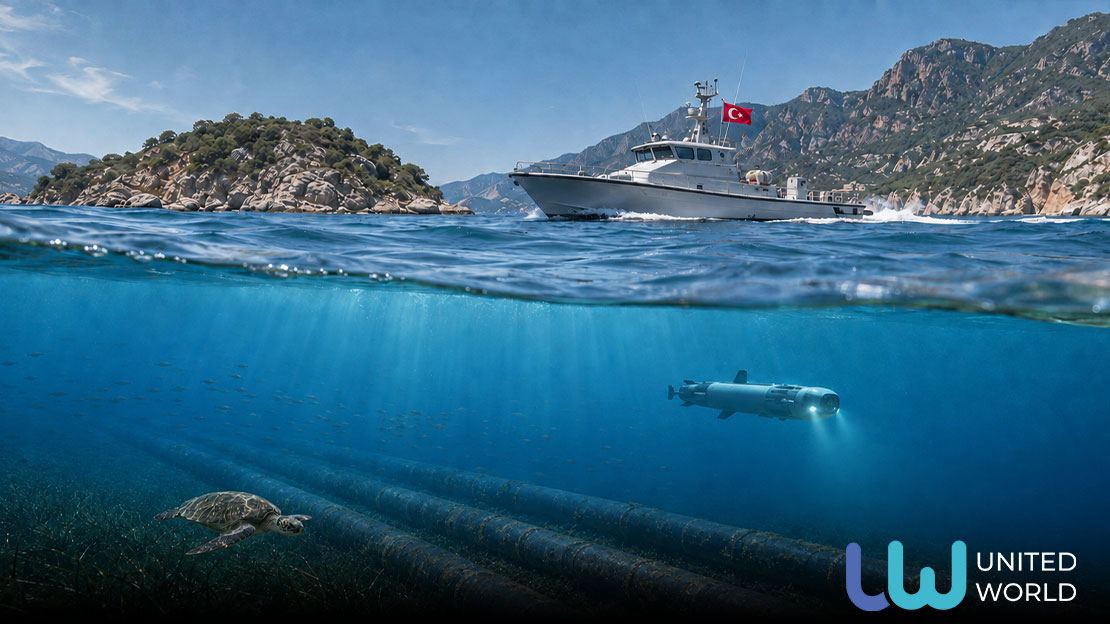
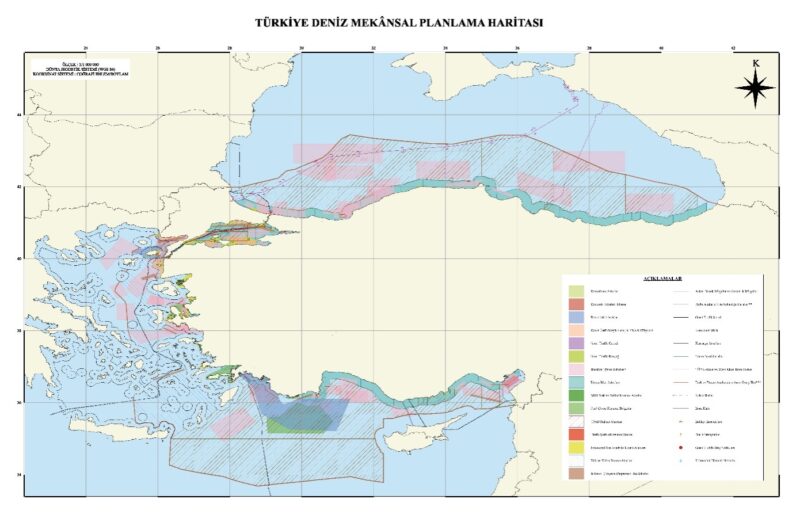
Türkiye is establishing marine national parks in areas extending from north to south across the Aegean. Scientific and seismic research will be conducted in these areas, universities will carry out underwater studies, and tourism activities will be developed.
In doing so, Türkiye is demonstrating that it is not merely a state that protects its seas, but one that maintains a scientific, economic and administrative presence in those maritime areas.
Moreover, these decisions are not being taken in a region free of disputes and tensions.
A serious global confrontation is underway. Sea routes, straits, energy networks, and supply chains have moved to the center of the struggle among major powers. Tensions and conflicts are increasing along the routes that function as the world’s “breathing tubes.”
It is precisely in such an environment that Türkiye is asserting its position at the heart of the Eastern Mediterranean more clearly.
The decision should therefore be understood as an institutional one, taken after the relevant organs of the state assessed the risks, benefits, and long-term consequences. It is one of the significant steps in a process that will directly shape Türkiye’s coming years.
The Issue Is Not Only Greece
It is clear that Greece is disturbed by Türkiye’s decision on the marine national parks. The Greek press has described it as a step toward the institutionalisation, and even the “legal codification,” of the Blue Homeland doctrine.
Yet the issue should not be reduced to Greece alone.
The Eastern Mediterranean is today one of the world’s most important energy and communications corridors. Natural gas pipelines, electricity transmission projects, and digital infrastructure all pass through this geography.
Today, more than 90 percent of global communications are carried through fiber-optic cables laid beneath the seas. From the internet we use in our homes to hospitals, from government institutions to military structures, a large part of modern life depends on this infrastructure.
The Eastern Mediterranean is one of the critical crossroads of these networks.
And Türkiye lies at its very centre.
For this reason, it would be incorrect to interpret developments in the Eastern Mediterranean solely through the Türkiye–Greece dispute. There is a broader military and political configuration in the region taking shape along a US–Israel–Greece axis.
The US military presence stretching from Alexandroupolis deeper into Greece, across the Aegean islands and down to Crete has by now become a reality widely recognized by the Turkish public. Satellite systems, missile components, military vehicles, troops and various exercises have created a strategic configuration that Türkiye must take seriously.
The threat Greece can pose to Türkiye on its own is limited. The real issue is the great-power order within which Greece is operating.
Syria and the New Struggle Beneath the Sea
Another important dimension of the struggle in the Eastern Mediterranean concerns Syria.
The steps taken by the Greek Cypriot Administration of Southern Cyprus regarding an undersea internet cable connection with Syria should be examined carefully from this perspective.
One of the defining issues in Türkiye’s recent history has been the conflict across southern Türkiye and northern Syria. Therefore, when we discuss Syria, we are simultaneously discussing Türkiye’s own security.
After many years of war, Syria has suffered enormous destruction of its infrastructure. From communications systems to public institutions, from hospitals to internet infrastructure, many areas must be rebuilt almost from scratch.
The new Syrian state will naturally seek to build a strong communications and information infrastructure capable of meeting the basic needs of its people.
This is precisely where the problem emerges.
Building such infrastructure requires an exceptionally high level of technical expertise, capital and construction capacity. A significant share of the major companies operating in these fields in our region are connected to the American system. One of the principal centers of this structure in the Eastern Mediterranean is Israel.
Therefore, no matter how much we speak of political independence, if we cannot create our own alternatives in critical infrastructure, we remain dependent on American options.
Before asking other countries, “Why are you working with the United States or Israel?” we must first create a genuine alternative.
The Chinese Option Is Strategic
At this point, China offers an extremely important alternative.
In the future, Türkiye should bring more of China’s infrastructure and technological capacity into our region. Together with China, Türkiye can develop partnerships capable of meeting not only its own needs but also the communications, energy, and digital infrastructure requirements of neighboring countries.
For this reason, cooperation between Türkiye, Russia, China and Iran in the Eastern Mediterranean carries not only political significance but also economic and technological significance.
Infrastructure partnerships with China, in particular, could reduce the dependence of regional countries on US and Israeli companies.
True independence in the region cannot be built through political declarations alone. If your energy systems, communications networks, digital infrastructure, and other critical systems are controlled by others, your independence will inevitably remain limited.
Identifying The Real Threat Correctly
Israel is one of the region’s serious states. Yet no assessment can be adequate unless it also recognizes the American power standing behind Israel.
Without US support, it would be far more difficult for Israel to act toward the countries of the region with the degree of audacity it displays today.
Türkiye must therefore correctly identify where the threat comes from when building its alliances.
Alliance policy cannot be considered independently of threat assessment.
Türkiye is currently working on various regional options. The participation of Egypt, Iran and other regional actors in such frameworks could create new balances in the future.
Strengthening Türkiye’s Asian option and bringing regional dynamics alongside it are in the interests not only of Türkiye but of the entire Mediterranean geography.
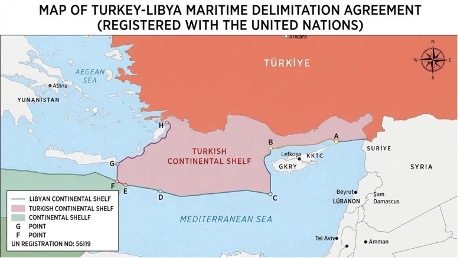
Look at the Mediterranean belt stretching from Morocco through Tunisia and Algeria, from Libya, with which we have established strategic agreements, all the way to Syria. All these countries possess exceptionally valuable geographies and significant energy resources. They stand on the shores of the Mediterranean, one of the most valuable basins in the world.
Yet whenever they attempt to sit at the table of this wealth, they encounter civil wars, coups, provocations, and destruction.
As a result, the wealth of the region fails to translate sufficiently into prosperity for the peoples of the region.
A New Balance In The Mediterranean
A stronger presence by Türkiye, Russia and China in the Mediterranean, together with deeper cooperation with Iran and other countries of the region, could create a new balance against imperialist intervention.
If such a balance can be established, a new era may become possible in the Mediterranean—one in which cooperation, rather than conflict, grows stronger.
Such an environment would also make it easier for Türkiye to achieve its maritime objectives. Egypt, Libya and other regional countries would likewise benefit.
Even Greece would benefit from a more independent regional order. The Greek people have nothing to gain from Greece being continually pushed into confrontation with Türkiye as a state under American influence or as a proxy force.
There is no strategic gain for Greece in conflict with Türkiye.
There Is No Turning Back For Türkiye
The decision on the marine national parks must be evaluated within this broader framework.
Türkiye did not reach its present position easily. Enormous costs were paid in terms of human resources, the economy, and state capacity.
However, I believe there is now no turning back from this process.
It is no longer possible for Türkiye to return to the old order in which Westernist and Atlanticist thinking dictated its direction and American strategic equations pushed it into hostility with its neighbours.
Türkiye is going through a process of purification from this legacy.
As this process advances, Türkiye is becoming increasingly capable of making decisions that correspond to its own national interests.
And as it moves forward, Türkiye will take stronger steps in the Sea of Islands, the Mediterranean and the other strategic areas surrounding it.
The marine national parks are one of the seemingly small, yet profoundly important, signs of this larger transformation.
Note : TRCI is an alliance of Türkiye, Russia, China and Iran supported by Dr. Doğu Perinçek, Chairman of the Patriotic Party (VP). The necessity of such an alliance has also been voiced by national-minded forces within Türkiye’s governing circles and by Dr. Devlet Bahçeli, Chairman of the Nationalist Movement Party (MHP).