

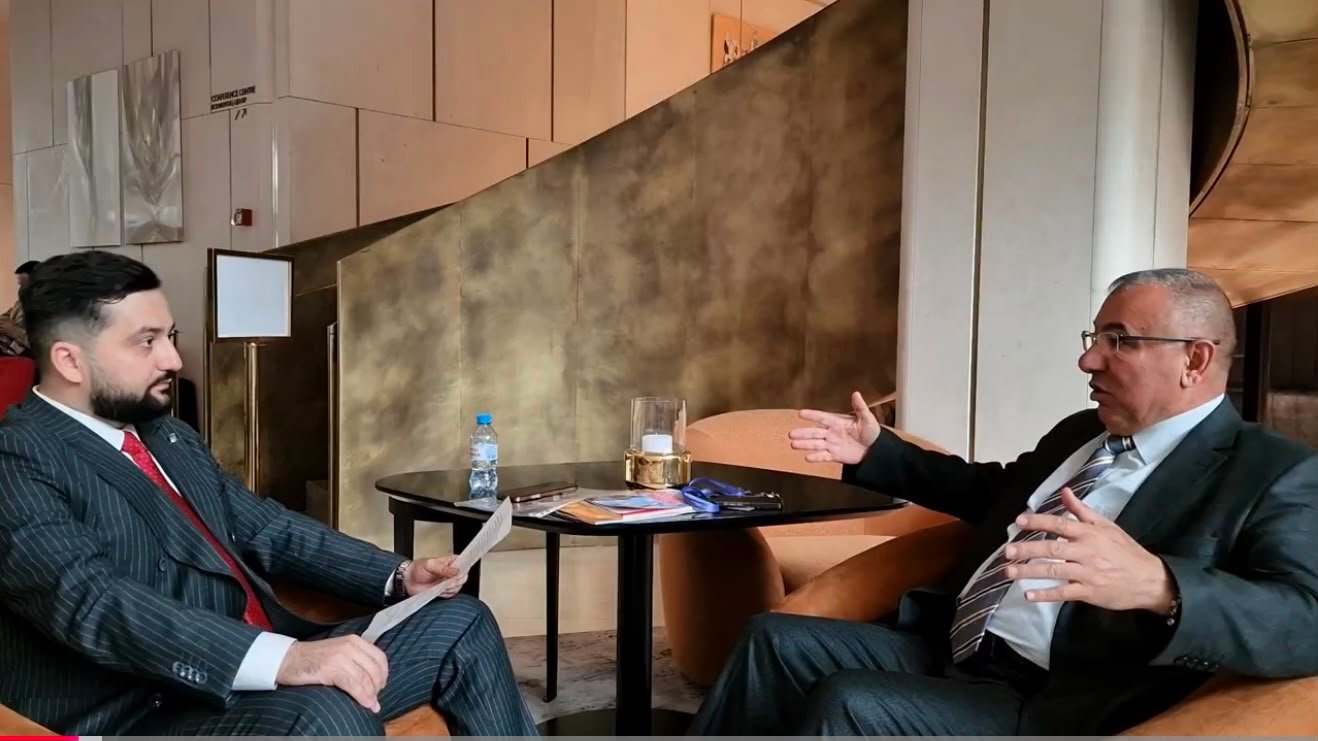
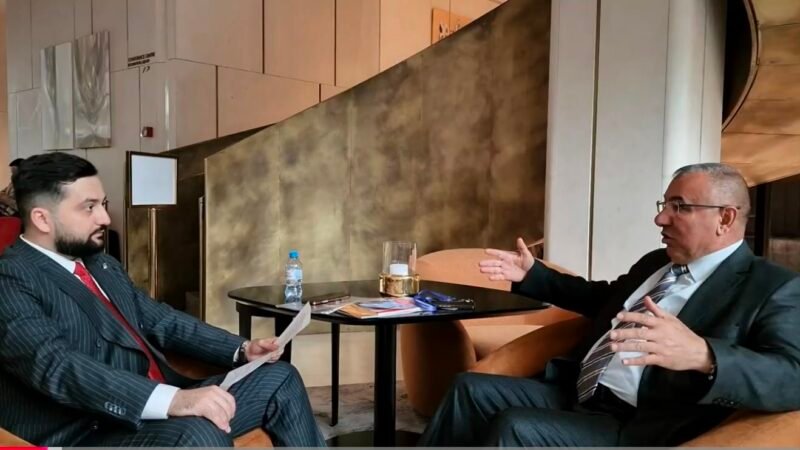
Interview with ret. Major General Assoc. Prof. Dr. Güray Alpar
Interview with ret. Major General Assoc. Prof. Dr. Güray Alpar
By Yıldıran Acar, Political Scientist
As the international system undergoes one of the most significant upheavals of the post-Cold War era, global power balances are also being reshaped. The war in Ukraine, U.S.-Russia competition, Europe’s quest for security, the future of NATO, and the rise of new power centers constitutes the key topics of discussion regarding the coming period in world politics.
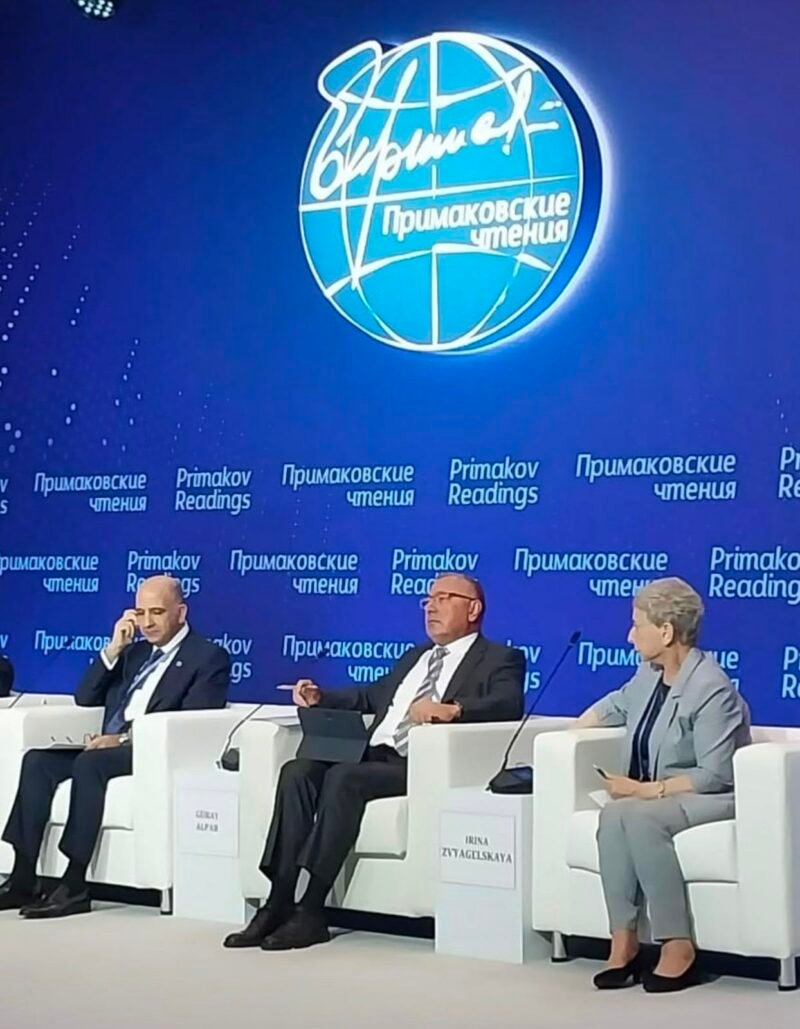
One of the key platforms where this transformation process was discussed was the Primakov Readings International Forum held in Moscow. Organized by the Primakov Institute of World Economy and International Relations (IMEMO) under the Russian Academy of Sciences, the forum brings together leading academics, diplomats, and policymakers specializing in international relations each year, providing a platform to examine global developments from diverse perspectives.
Held in 2026 under the title “A Rule-Free World: A Power Game?”, the forum addressed the new security architecture emerging in the wake of the war in Ukraine, global power competition, U.S. foreign policy priorities, Europe’s security challenges, and the transformation taking place within the international system.
Ret. Major General Assoc. Prof. Dr. Güray Alpar, who participated in the forum as President of the Geopolitical Forecasting Institute operating in Türkiye, shared his assessments on security, strategy, and international relations.
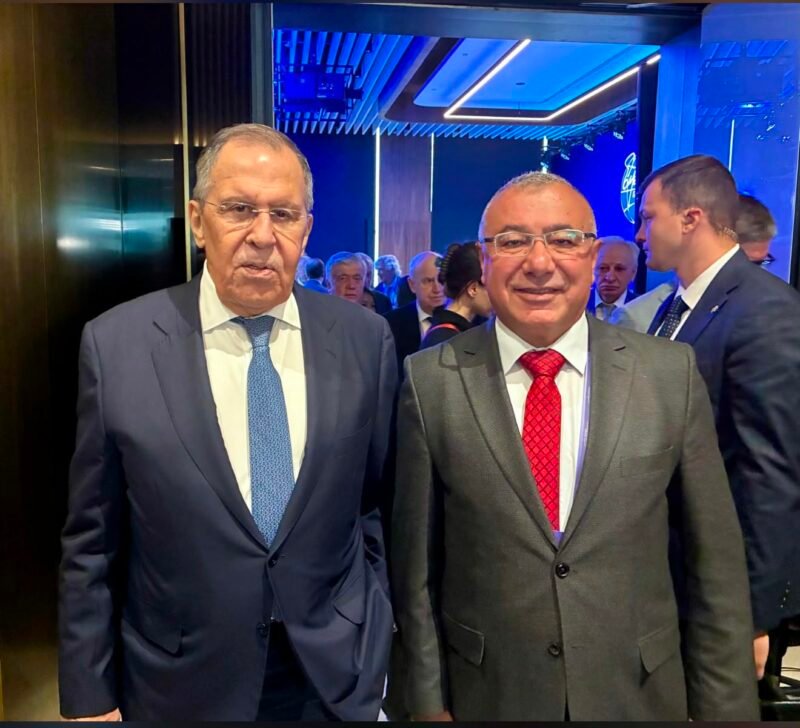
As part of his meetings in Moscow, Alpar also held discussions with Russian Foreign Minister Sergey Lavrov and Kremlin Spokesperson Dmitriy Peskov. We spoke with him about the changing world order, the future of NATO, the impacts of the Russia-Ukraine war, and Türkiye’s geopolitical position.
“The forum in Moscow was important for understanding the changing world system”
Professor, first of all, I’d like to start with your meetings in Moscow. You attended an important conference there as part of the Primakov Readings. There, you held meetings with key figures such as Russian Foreign Minister Sergey Lavrov and Kremlin Spokesperson Peskov. Could you tell us a little about these meetings and your observations at the conference?
Güray Alpar: First and foremost, it is important to note that international conferences such as the Primakov Readings serve as key platforms for understanding the transformations taking place in today’s world. This is because the international system today has evolved into a far more complex structure, shaped not only by traditional diplomatic relations between states but also by security, the economy, energy, technology, and geopolitical competition.
Such conferences bring together academics, diplomats, experts, and decision-makers from different countries, providing an opportunity to view events from diverse perspectives. It is crucial to be able to analyze developments not only from a single country’s perspective but also through the assessments of various actors.
The forum in Moscow was also productive in this regard. In particular, we had the opportunity to directly observe how Russia views the international system, regional developments, and global power balances.
The assessments by Russian Foreign Minister Sergey Lavrov were significant. Lavrov is a figure who has been involved in international diplomacy for many years and has witnessed numerous crisis periods in global politics. Consequently, his assessments of current international developments were valuable for understanding Russia’s perspective.
Similarly, our discussions with Kremlin Spokesperson Dmitriy Peskov were also important for gaining insight into how Russia assesses current developments.
One of the most critical issues in international relations today is the ability of countries to accurately understand one another. This is because misjudgments can lead to crises escalating further. For this reason, academic and diplomatic exchanges are of great importance not only for sharing information but also for fostering mutual understanding.
The NATO Summit and the Future of the Alliance
The NATO Summit will be held in Türkiye on July 7–8. In your opinion, what are the key security threats NATO faces today, and what will be the main agenda items at the summit? Also, what outcomes do you expect from this summit regarding the future of the alliance?
One of the most important topics at the NATO Summit will undoubtedly be the future of the alliance. This is because, unlike during the Cold War era, NATO today faces far more complex security challenges.
In the past, NATO’s fundamental raison d’être was a common defense strategy in the face of a specific military threat. However, the nature of threats has changed today. The concept of security is no longer limited to the military sphere.
Cyberattacks, artificial intelligence, energy security, economic dependencies, information warfare, and hybrid threats have become integral parts of today’s security landscape.
For this reason, NATO must also reassess itself in light of the conditions of this new era.
In particular, there have been recent debates between the United States and European countries regarding defense spending and the sharing of responsibilities. The United States has long maintained that European countries must assume greater responsibility in the security sphere.
At this point, one of the fundamental debates within NATO will be: What kind of structure will the Alliance have in the future?
Will it be merely an alliance with strong military capabilities, or will it evolve into a broader security framework that also encompasses economic, technological, and strategic resilience?
In my view, this will be one of the key factors determining NATO’s future in the coming period.
The Russia-Ukraine War, Türkiye-Russia Relations, and New Security Balances
While the Russia-Ukraine war has caused significant disruptions in the global security architecture, its effects have not been limited to the front lines. Energy security, economic balances, Europe’s defense policies, and the competition for power within the international system have been among the key issues brought to the fore by the war.
As the war drags on, the policies of both regional actors and global powers are being reshaped, and Türkiye’s relations with both Russia and the West have emerged as a notable balancing factor.
In this context, we continue our discussion with Major General Assoc. Prof. Dr. Güray Alpar on the future of the Russia-Ukraine war, the strategic dimension of Türkiye-Russia relations, and Türkiye’s position in the Eastern Mediterranean and within NATO.
“The prolonged nature of the war is negatively affecting all parties”
As the war in Ukraine approaches its fifth year, various scenarios regarding the conflict’s future are being discussed. In your opinion, in which direction is the war evolving? Is there a possibility of lasting peace in the near term, or are we looking at a protracted war of attrition?
When we look at wars from a humanitarian perspective, we must first and foremost make it clear that we do not want war. We must always think positively and hope that wars will end as soon as possible. Türkiye has also taken significant initiatives in this regard. The Istanbul Process and Türkiye’s mediation efforts are important examples of this. However, at certain times, developments have hindered peace efforts. As the war continues, both sides suffer greater harm. Recently, we have seen that attacks are no longer limited to the front lines. Attacks are taking place in different regions, and civilians are also being affected. In particular, attacks on energy infrastructure are spreading the effects of the war to a wider area.
There may be groups that benefit from the continuation of this war. However, the continuation of the war is not in the interest of Russia, Ukraine, or Europe. Rather than having countries in this region fight one another, it would be more appropriate to focus on establishing a peaceful environment and on projects that will enhance the well-being of the region’s people. This is because a prolonged war negatively affects not only the countries in the region but the entire world.
“Türkiye-Russia relations have the potential to develop in many areas”
Türkiye-Russia relations have reached a significant milestone in recent years in the areas of energy, defense, trade, and regional security. In your opinion, what significance do Turkish-Russian relations hold in terms of Türkiye’s foreign policy balance? In which areas could these relations develop in the coming period, and in which areas do they pose risks?
There is nothing more natural than a country developing its economic, cultural, and other relationships with its neighbors. Relations between Türkiye and Russia should also be evaluated within this framework. There are significant opportunities for cooperation between the two countries in energy, trade, tourism, and many other areas.
However, current developments in the international system and the sanctions being imposed are also affecting countries’ relations with one another. Sanctions can impact not only the targeted countries but also their neighbors and economic ties. Türkiye is a country that does not want war, because a war environment negatively affects all parties, both economically and politically.
There are many areas where Türkiye and Russia can further develop their relations. The advancement of these relations could yield outcomes beneficial to both Türkiye and Russia. However, under current conditions, fully realizing the potential of these relations is becoming difficult due to certain economic and financial constraints. While relations continue in areas such as energy, tourism, and trade, international developments are affecting this process.
“NATO must adopt a balanced approach to the issues in the Eastern Mediterranean and Cyprus”
Türkiye occasionally experiences serious differences of opinion with Western countries regarding the Eastern Mediterranean and Cyprus. How do these issues affect Türkiye-NATO relations? What might the future hold for Türkiye’s position within NATO and its relations with the alliance?
These are highly sensitive issues. NATO should not be directly involved in such matters. In particular, attempts by certain countries to shift their own problems to a different arena through NATO or international platforms could further complicate the existing balance of power.
International agreements and the existing balance of power must be taken into account here. There are also specific agreements regarding Cyprus. These agreements name Türkiye, Greece, and the United Kingdom as guarantor states. Therefore, taking new steps outside the scope of these agreements or turning the island into an even greater arena of military competition is not the right approach for regional stability.
Arming a region may create more risks rather than enhancing security. What matters in the Eastern Mediterranean is not increased tension, but the preservation of an environment of peace and stability. This is because these regions are also important areas from an economic and tourism perspective. For the future of the region, more cooperation and less tension would be in everyone’s best interest.
“The debates within NATO are not just a military issue, but also an economic one”
There have been serious differences between the United States and the European Union recently. In particular, differing approaches are emerging regarding defense spending, policy toward Ukraine, and the future of NATO. In your opinion, how might these differences of opinion lead to changes within NATO?
First of all, it should be noted that the emergence of differing views within NATO from time to time is nothing new. This is because NATO is a large alliance comprising many countries, and each country has its own national interests, economic capacity, and security priorities.
However, the debates taking place today have a dimension that differs from those of the past. This is because the issue is no longer limited to military threats and defense planning; it also concerns the sharing of the economic burden and strategic priorities.
After the end of the Cold War, a significant portion of European countries reduced their defense spending. They focused more on economic growth, social policies, and the welfare state model. In terms of security, they relied largely on U.S. military capabilities and the NATO umbrella.
However, following the war in Ukraine, there has been a significant shift in Europe’s perception of security. European countries have begun to revisit issues of military capabilities, defense investments, and strategic independence.
On the U.S. side, there has been a long-standing expectation. Washington believes that European countries must shoulder more of their responsibilities within NATO.
The key point to note here is this: Increasing defense spending is not merely a military decision. It is also a process with economic and political consequences.
When a country increases its defense budget, it affects the allocation of resources in other areas as well. For this reason, Europe will face a significant challenge in striking the right balance in the coming period.
“Türkiye’s membership in NATO does not constitute a direct threat to Russia”
NATO documents identify Russia as one of the most significant security threats. Türkiye, however, is both a NATO member and a country that maintains strategic relations with Russia. How does Ankara manage this delicate balance? In your opinion, what strategic approach should Türkiye adopt in the coming period?
This is really not an easy question. Because Türkiye’s geographical position represents a historically significant balance. During the Cold War, countries assessed one another based on specific perceptions of threat. However, as contacts with different countries increased over time, it became clear that some of these assessments needed to be reconsidered.
The key is not to exaggerate the threat. We must assess the reality as it is. Even countries with differing viewpoints can come together to discuss issues and seek common ground to resolve certain problems.
Türkiye’s membership in NATO does not constitute a direct threat to Russia. Türkiye has played a significant role during times of crisis. In particular, during the war in Ukraine, it brought the parties together on certain issues and acted as a mediator.
Türkiye’s historical background, state tradition, and diplomatic capacity provide significant advantages in this regard. For this reason, relations should not be assessed solely through the lens of opposition. Türkiye’s position can facilitate the resolution of certain crises.
“Türkiye’s greatest advantage in the new world order is its soft power”
In this new era of intensifying competition between the U.S., China, Russia, and Europe, what kind of geopolitical role can Türkiye play? In your opinion, what are the greatest opportunities and risks facing Türkiye?
Türkiye’s greatest opportunity lies in its soft power. Today, the world is undergoing a significant transformation. The international system established after World War II is now being seriously questioned.
There is a strong expectation that a more just, more acceptable, and more balanced global order must be established. This is because it is often civilians and communities that are most affected by current crises.
Türkiye is one of the countries advocating for a more just international order. In doing so, Türkiye draws strength from its history, cultural ties, economic relations, and geopolitical position.
It seems inevitable that the international system will undergo certain changes in the coming period. In particular, it has become clear that global institutions need to be made more balanced and effective. I believe Türkiye can play an important role in this process.