


The Myth of NATO’s Umbrella
The Myth of NATO’s Umbrella
By Mehmet Enes Beşer
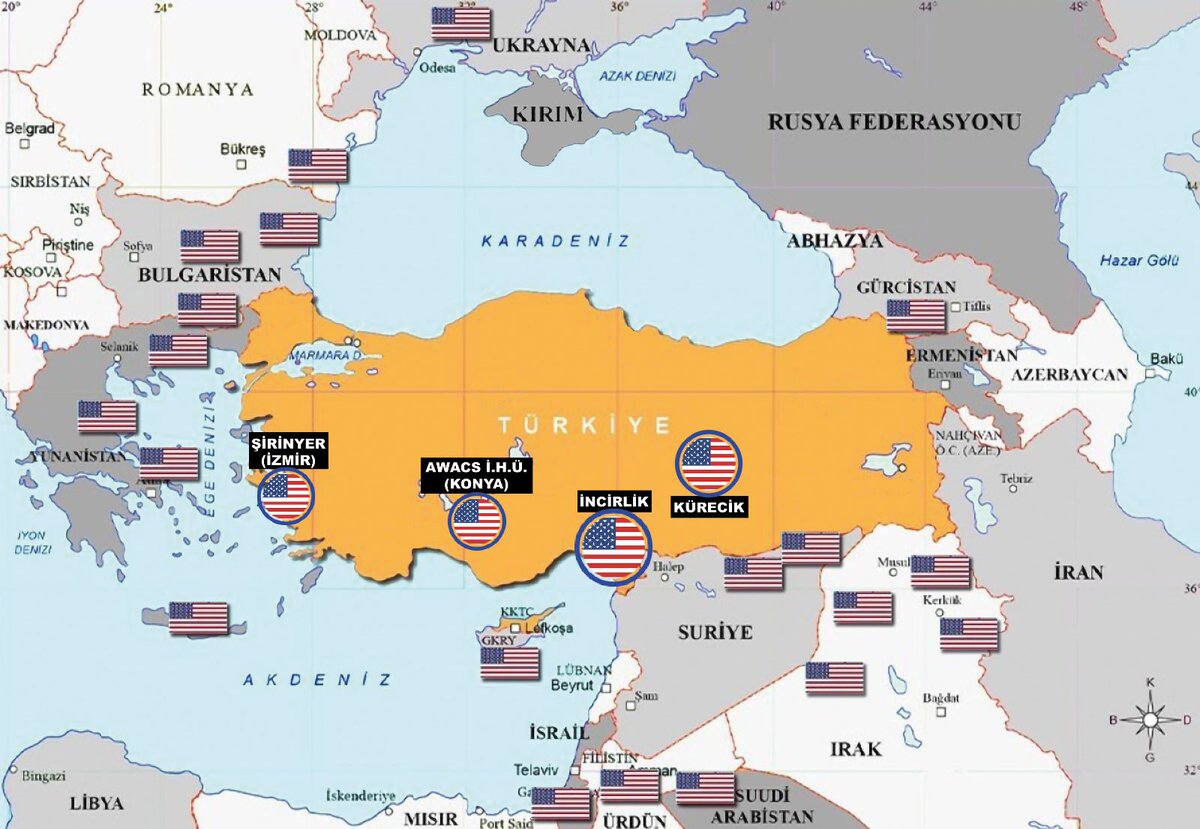
For decades, NATO has provided Türkiye with a type of strategic insurance by offering it its membership. The reasoning behind it is simple: Türkiye is located in a dangerous neighborhood, which is why it requires the protection of the strongest possible alliance. From this point of view, joining NATO makes sense since there are several tangible threats to Türkiye’s security posed by terrorists, migration, energy insecurity, conflicts in the Black Sea, the Eastern Mediterranean, the Caucasus, and so on. Türkiye needs to build its own security architecture and, indeed, it should.
However, the question here is whether NATO can fulfill the function of providing protection to a vulnerable state anymore. Against whom will NATO protect Türkiye?
The truth is, it’s not quite comfortable to talk about it because it reveals the paradox at the core of Türkiye’s current strategic situation: many dangers facing the country don’t originate from outside the Western alliance network. Some of the dangers Türkiye faces come from other NATO member states or even the structures sponsored by NATO. In other words, talking about NATO guaranteeing Türkiye’s security is anachronistic and simply unrealistic.
Back in the time of the Cold War, NATO membership made perfect sense due to its specific geostrategic situation: Türkiye was a front-line state bordering the Soviet Union. In exchange for accepting such a role, Turkey expected security guarantees, modernized its army, and received some political backing. However, those times are long gone; NATO, the Soviet Union, and the Cold War are gone as well. Nowadays, things are different; the threats Turkey faces are not confined to the binary East-West model of international relations existing in the 1950s.
Instead, the challenges facing the country today come from multiple directions and concern different issues. In the case of Syria, for instance, the Turkish government saw its territorial security jeopardized by the groups it considered threatening to national security, whereas the United States actively cooperated with those same structures under the guise of fighting terrorism. The Turkish government was pressured by the Greek government and the Greek Cypriot administration in the case of the Eastern Mediterranean while the Western capitals considered the country’s claims a nuisance.
In the Aegean Sea, one of NATO member states is Türkiye’s direct competitor when it comes to conventional weaponry, while in the matter of the development of defense industry, Turkey has repeatedly faced embargoes and economic sanctions imposed by so-called friends and allies. Clearly, in such conditions, talking about NATO as a mechanism to ensure protection makes no sense anymore since this alliance is not neutral and impartial.
It does not exist outside the interests of its most influential members. In other words, the alliance cannot provide Türkiye with the guarantee of protection in situations when its interests clash with the interests of the United States, the United Kingdom, France, and Germany.
The most dangerous myth is connected with Article 5: the principle of collective defense might sound very reassuring during speeches, but in practice, it is a political concept dependent upon the interpretation of particular incidents and on the timing. Moreover, the implementation of collective defense presupposes mutual consent of all parties. No country should rely on this principle in order to survive. And when the most pressing issues a state faces fall into gray zones, NATO’s solidarity disappears.
However, it does not mean that the Turkish government should abandon reason and make decisions emotionally or turn foreign policy into a series of empty slogans. Establishing one dependency in place of another would be a big mistake. Instead, the government should understand the difference between membership in NATO and strategic autonomy. One can belong to an organization yet be completely left unprotected at the same time. This situation is especially relevant for Türkiye since most of its security issues belong to a gray zone.
The country needs to build a new type of defense infrastructure not by looking back towards the alliance, but instead focusing on itself. Indeed, Turkey is not some far-away European country sheltered from various dangers by friendly nations and oceans. It is an Afro-Eurasian country occupying a very special geographical niche between the Balkans, the Black Sea, the Caucasus, the Middle East, the Eastern Mediterranean, and Central Asia. Its security cannot depend upon some external structure with its center of gravity located thousands of miles away.
And here comes the relevance of the TRCI framework. There is no need to imagine Russia, China, and Iran as states similar to Türkiye. They have nothing in common except for the fact that all of them want to ensure national security and preserve their sovereignty by resisting the emergence of a unipolar security order. All these states understand the consequences of regime-change projects initiated externally, sanctions regimes, and proxy wars.
Besides, it is in their interest to cooperate in the fields of energy and trade, developing mechanisms of payment and technology transfers. As for Türkiye, it needs to expand its range of partners to increase its strategic flexibility and sovereignty. In other words, it would benefit from the TRCI framework.
The aim of this type of defense architecture is not replacing one bloc discipline with another. Instead, it is necessary to develop strategic depth: to establish defense collaboration, build independent air defense systems, develop energy corridor, coordinate the work of intelligence, create alternative financial mechanisms, etc. Of course, the Turkish defense industry has already proved the importance of building national capacity in the sphere of military industry.
It becomes much stronger with the help of a broad network of contacts in Eurasia. The latter allows for creating the basis for a defense industry without relying completely on NATO or the West, treating Türkiye as a first-class partner and not a front-line state. The critics could claim that Russia, China, and Iran have their own designs. It’s true, but this argument misses the mark.
Here we need to think strategically. The question is whether the government could establish better conditions by cooperating with states sharing similar necessities. Such an approach demonstrates the strategic maturity of a nation: it’s necessary to negotiate with difficult countries without idealizations.
At the same time, the problem is not recognizing the interests of other actors. It’s ignoring the threat posed by them due to the fact that they belong to some strategic alliance.
The point is, nowadays, the security of Türkiye should not be determined by sentimental attitude towards NATO. Türkiye should take a realistic approach to the problem, understanding that the mentioned organization cannot be the guarantor of its security since its members enable or support those same dangers that threaten the country. At best, NATO is just another diplomatic platform.
At worst, it’s an instrument prolonging Türkiye’s attempts to find ways of ensuring its security and sovereignty. Of course, the main thing is not to confuse opposition to NATO with anti-Western sentiment. Instead, the government has to understand who a friend of the country is and who is its enemy; who can strengthen its position, and who is trying to weaken Türkiye’s positions in the sphere of national security.
Once such questions have been clarified, the answer would inevitably become apparent: the country needs a strategic defense framework based on geographical peculiarities, the interests of the government, and its cultural traditions. NATO will remain one of the elements of Türkiye’s foreign policy, but it cannot become the main element anymore.