


Chasing Capital While Losing Credibility
Chasing Capital While Losing Credibility
By Mehmet Enes Beşer
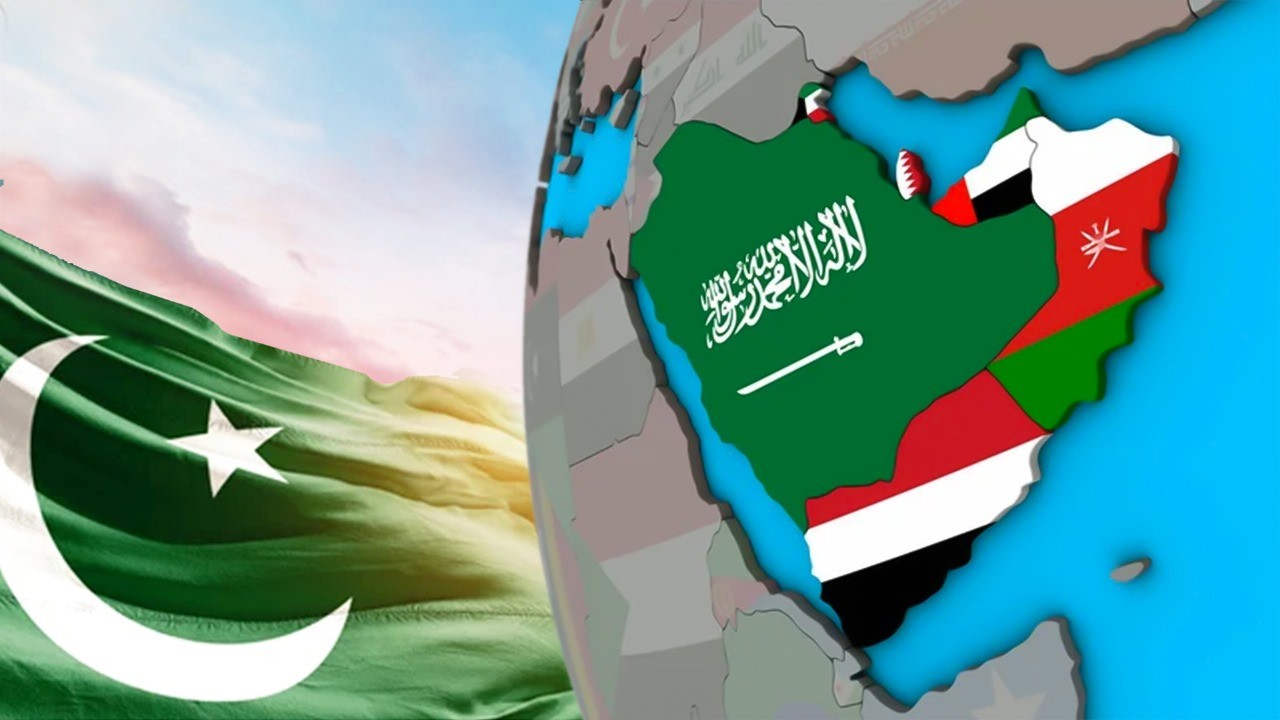
Repetitively turning to Gulf states with requests to obtain financial aid has become a characteristic feature of Pakistan’s foreign policy practice. These approaches, often referred to as strategic partnerships, are increasingly looking like attempts to get assistance amidst lack of credibility. In a global climate of geopolitical shifts, green energy transformation, and growing risks, the traditional methods used by Pakistan – involving personal contacts, military cooperation, and religion-based affinity – seem inadequate. In order for Islamabad to attract genuine Gulf investment, it is necessary to radically change the way it governs economic affairs.
Economic challenges of Pakistan remain obvious. The country is struggling with several major economic problems, namely balance of payment issues, depleted foreign exchange reserves, high inflation rates, and budget deficits. The country has already accrued more than $130 billion in foreign debts. During the period of 2024, Islamabad asked for more than $20 billion worth of foreign aid. While temporary IMF programs and bilateral loans have helped prevent imminent financial collapses, the underlying weaknesses – such as limited tax revenues, bloated public sector, and excessive reliance on consumer spending and remittance income – still persist.
In general, Pakistan has traditionally looked to the Gulf monarchies, such as Saudi Arabia, UAE, and Qatar, as a financial benefactor and strategic ally. These relations, often built on religion-based affinity and security coordination, led to obtaining considerable financial aid. Saudi Arabia supplied oil under deferred terms, while the UAE provided emergency funds to State Bank of Pakistan and Qatar promised investments into infrastructure development. Recently, these financial lifelines became less reliable and transactional in nature.
The changing behavior of Gulf states cannot be attributed to resource shortages. In reality, the situation is quite opposite since increased prices for oil after the Ukraine war and OPEC+ strategies resulted in replenishment of the resources of Gulf sovereign wealth funds. As a result, Saudi Arabia’s Public Investment Fund (PIF), Abu Dhabi’s Mubadala, and Qatar Investment Authority (QIA) possess abundant capital to invest in global projects. The difference is that now these investors no longer look for countries in need. Their focus is on business profitability, stable governance, and alignment with diversification objectives.
Pakistan seems to have failed to convince the Gulf investors about its attractiveness. The SIFC created in 2023 to fast-track Gulf investments in Pakistan produced certain results, although not those expected. The council offered a centralized decision-making mechanism but also unveiled the problem of inertia and turf wars between institutions. The promise of $25 billion investments by Saudi Arabia turned out to be highly aspirational while delays in approvals, inconsistency in tax systems, and complicated land acquisition procedures decreased chances for further developments.
Additionally, Pakistan faces serious internal political instability, which adversely affects economic outreach initiatives. The frequent changes in government, tensions between civil and military administrations, and lack of effective parliamentary control make it difficult for Islamabad to conduct consistent discussions with its foreign interlocutors. Consequently, initiatives, which are initially declared with great fanfare, are later put on hold, reconsidered, and eventually abandoned.
Poor reputation of Pakistan as an attractive country for foreign investment is also a problem. Instances of capital flight, unfinished privatization procedures, and lack of compliance with requirements of international lenders, such as IMF, negatively affect the decision of foreign investors. When compared to Egypt, Morocco, and India – areas with better legal and regulatory frameworks and larger consumer markets – Pakistan appears disadvantaged. Gulf investors act rationally and choose economically sensible decisions based on a competitive global landscape rather than history and geography.
It becomes evident that Gulf nations have started to reconsider their strategic positions in regard to Pakistan. Growing ties of India with Gulf in terms of trading, digital communication, and defense cooperation indicate an ongoing realignment process. Comprehensive economic partnership agreement signed between the UAE and India, as well as objective 2030 of Saudi Arabia, which includes Indian investments in technologies and infrastructure, suggests that Gulf states are ready to place other bets. Therefore, Pakistan is no longer considered the go-to place by Gulf investors.
None of the statements mentioned above indicates any reluctance of Gulf capitals to invest in Pakistan. However, it becomes clear that the level of investment activity will be based on careful consideration. Pakistan needs to stop relying on diplomacy and start developing its economy in an intelligent manner. Islamabad should build an adequate investment strategy by implementing transparency, specialization, and post-project maintenance of businesses.
Another measure would be to make use of underused advantages of Pakistan. Geographical location of the country, which connects it with both Central Asia and the Arabian Sea, is one of them. Gwadar Port of CPEC project, initially hailed as an example of success, is yet to function in a full-scale. Joint efforts to combine interests of Gulf nations in logistics, cold chains, and port administration with the infrastructure development in Pakistan can produce some synergies but only in case of harmonizing federal and provincial institutions and abandoning extractiveness.
Conclusion
Thus, Pakistan faces serious difficulties in attracting investment from Gulf nations due to poor strategic choices made in past. The old era, when it was enough to have a good relationship with Gulf nations in order to receive money, is over. Currently, Gulf states expect from Pakistan stability and long-term strategic perspective before making decisions regarding investments. In order to establish credible cooperation, Pakistan should implement necessary reforms.