


Financialization of medical services and the erosion of publicly provided health care systems
Financialization of medical services and the erosion of publicly provided health care systems
By Meral Akkaya
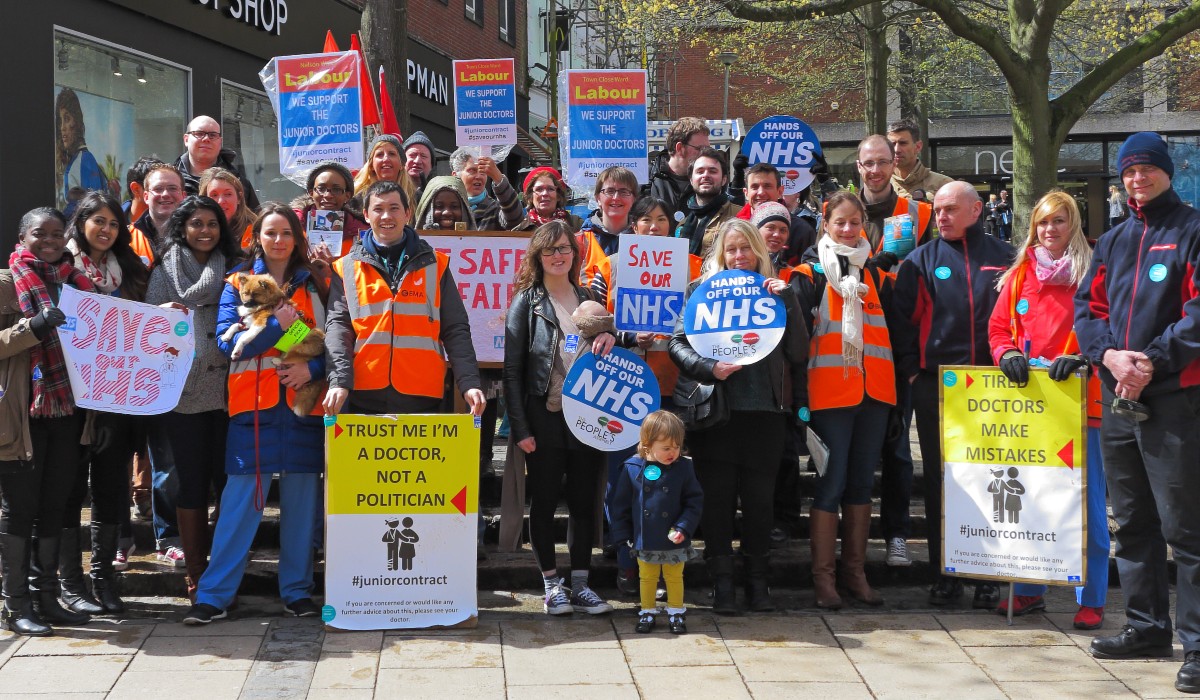
The UK’s healthcare system is sounding the alarm. As hospital corridors turn into treatment areas, millions of patients are waiting for treatment.
Doctors, meanwhile, are going on strike once again in protest against low pay, harsh working conditions and an ever-deepening staff shortage.
Junior doctors are holding a four-day strike, from Monday 15 June to Friday 19 June.
So why are the doctors going on strike? What are their demands? What is the government’s approach?
Dr John Puntis, Co-chair of the British organization Keep Our NHS Public (NHS: National Health Service), answered the questions of Aydınlık Europe newspaper.
The main demand: restoration of the eroded pay
Junior doctors in the UK are holding a four-day strike from 15th to 19th June. This will be the 16th action in the ongoing pay negotiations. Why are doctors going on strike?
Junior Doctors are now known as Resident Doctors. The main demand of the strike has been restoration of pay that has been eroded over the years by inflation. The doctors have demanded that any pay award restores wages to the level of 2008/9. The government says that this is unaffordable. The doctors are also very concerned that there are not enough specialist training posts available to them to complete their training, meaning some cannot find work in the UK.
7.11 million treatment pathways
Is the problem only related to junior doctors, or are things generally not going well in healthcare?
There are problems in the National Health Service with long waiting lists for people waiting for tests or operations, now standing at 7.11 million treatment pathways. Government claims to have brought this down over the past two years by 500,000, but the fall in numbers appears to be mainly related to taking people off the lists and not because of increased numbers being treated. The workload of primary care doctors (General Practitioners, GPs) has increased considerably through increasing population and work being transferred to them from hospital doctors. This means people have to wait longer to see a GP and not being able to see your GP quickly is a major concern to the public.
“The crisis in corridor care”
There are problems with moving sick patients who need admission to hospital from the emergency department to a hospital ward because of lack of beds. Another factor is around 1 in 7 patients in hospital beds are fit to go home but need social care or community services that are not available, so their discharge from hospital is unnecessarily delayed. Eleven years ago (in 2015) there were only around 1,000 patients over a whole year who had to wait 12 hours or more before going to a ward, whereas as last year the number had increased to over half a million. Often they are kept in hospital corridors and we refer to this as “the crisis in corridor care”. There have been five national reports on corridor care over the last 18 months showing how bad it is for patients and staff. Delays in getting patients into the right environment and starting treatment means some of them become more unwell and there is good data to suggest that last year there were about 16,600 deaths directly related to such delays.
It has been estimated that lack of investment in infrastructure means repairs in hospitals and updating of equipment does not happen as quickly as it should. This is one of the reasons why hospitals are not working as efficiently as they might do. The cost of bringing hospital estate up to standard is estimated each year and currently stands at £15.9 bn.
“Medical students may finish medical school with an average debt of £70,000”
Doctors want their salaries to be improved. How much does a doctor earn on average? Are salaries insufficient?
After deductions, first and second year doctors in training take home around £2,200–£2,700 per month and £2,500–£3,100 per month. Average take home pay for a worker in the UK is estimated at around £2,500. The salary for a doctor increase over the years of training. Training for a doctor usually goes on for about 10 years. Medical students may finish medical school with large debts from student loans, on average £70,000. House prices are high and for many, even doctors, unaffordable. The cost of childcare is also high, around £1000/month (the highest in Europe). Doctors also have to pay for things like their medical insurance, registration fees with the General Medical Council and fees for taking professional examinations.
Car parking costs for NHS staff: around £1,000 a year
Criticism especially focuses on working conditions. How do doctors work? Are working conditions poor?
Doctors work shifts and frequently move from one hospital to another, sometimes in different parts of the country. This is very disruptive of family life. Other issues that have been raised include their large student debts and regular costs of examinations, indemnity, registration etc. Other grievances are: short staffing; feeling undervalued by government; “moral injury” caused by being unable to provide the appropriate standards of care to patients; the weight of bureaucracy; lack of a quiet space to write up notes and order tests; outdated and slow IT systems; no provision for a restorative nap on a quiet night shift; no night time food availability in hospitals; nowhere to safely store personal possessions/drinks bottle/packed lunch when at work; shifts are long and involve anti-social hours with no guaranteed breaks for rehydration, eating or toilet access. Complaints also focus on strict training structures, the pressure after graduating to make an immediate career decision and a bullying and sexist culture at work.
Car parking costs for NHS staff have risen to around £1,000 a year, hospitals rarely provide staff nursery facilities.
“The current government approach will not solve problems in the NHS”
How do you view the government’s approach?
The current government approach will not solve problems in the NHS. It argues that the NHS has more funding than ever before but in historical terms its budget has fallen and because we have population increase and particularly more people with chronic conditions, spending in relation to need has actually fallen. Government does not acknowledge this to be the case.
“2.8 million are out of work through ill health“
Meanwhile, 2.8 million are out of work through ill health, and not contributing to the economy. Rates of poverty are rising and this in turn causes more ill health and greater demand on health services. The government should follow the example of the Labour government (1997-2007) which increased funding for the NHS, brought down waiting lists, improved public satisfaction, reduced health inequalities, reduced poverty and improved public health. The current government argues that it cannot afford to do this, while campaigners say it cannot afford not to. It also believes (without evidence) that the development in Artificial Intelligence will bring about huge savings and reduce the need for staff.
What should the solution be?
The solution should be to increase spending on the health service to the level of comparable European countries (about £40bn more each year); invest in staff including paying them properly; updating equipment and facilities to increase productivity; reverse privatization of services which drain funding from the NHS and distort priorities; improve the public health service through investment; tackle the long term problem of poor social care and community support; address health inequalities through the social determinants of health to reduce demand on healthcare. We also want the government to develop policy together with academics and based on a thorough review of available evidence (evidence-based policy making), and to see health and social care as a public good rather than a drain on resources.
Similar problems across Europe
The UK is not the only country dealing with doctors’ strikes. Other European countries such as Germany, Spain, and Portugal are also facing similar problems. Is the healthcare system in Europe heading into a crisis?
Yes, other countries are having similar problems. This relates to the financialization of medical services and the erosion of publicly provided health care systems as well as a lack of trained health care workers.